GTM plan for a new product
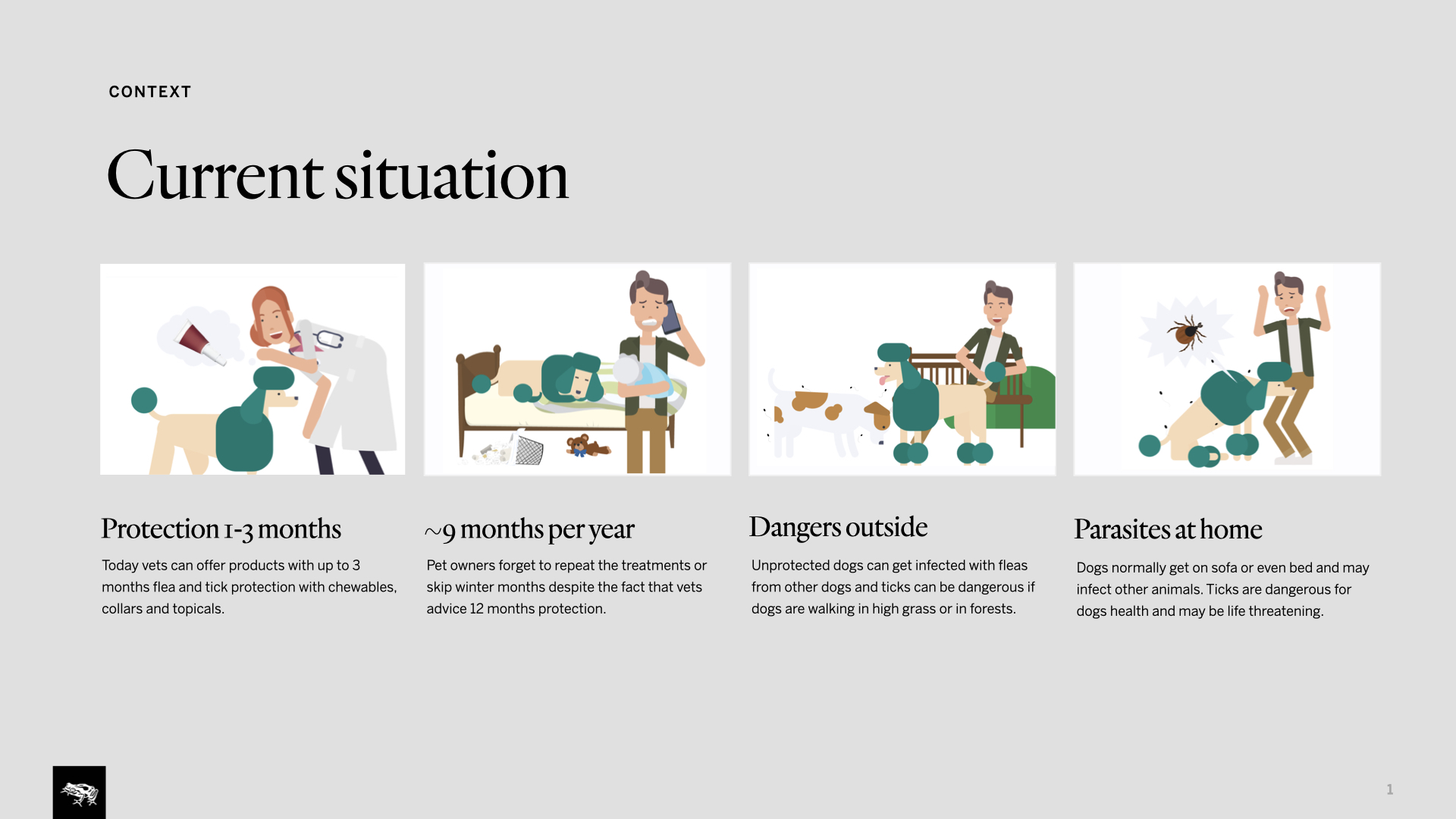
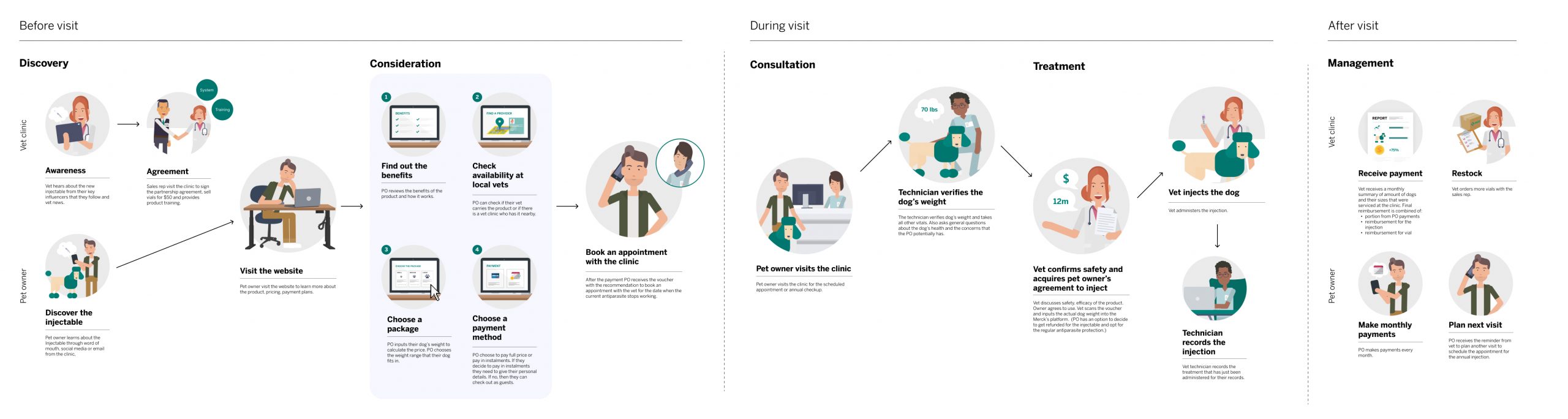
Current situation when using alternative prevention methods
Overview
MSD Animal Health had developed a groundbreaking injectable flea and tick treatment that protects dogs for 12 months — a category first. The challenge was that a traditional pay-per-product model made the treatment unviable: because dosing scales with dog size, the treatment for large dogs cost veterinarians approximately $650, making it too expensive to confidently prescribe.
The goal was to design a business model that would make the product commercially viable, support veterinarians, and reach pet owners.
Phase 1. Define the approach
Redefining the Problem
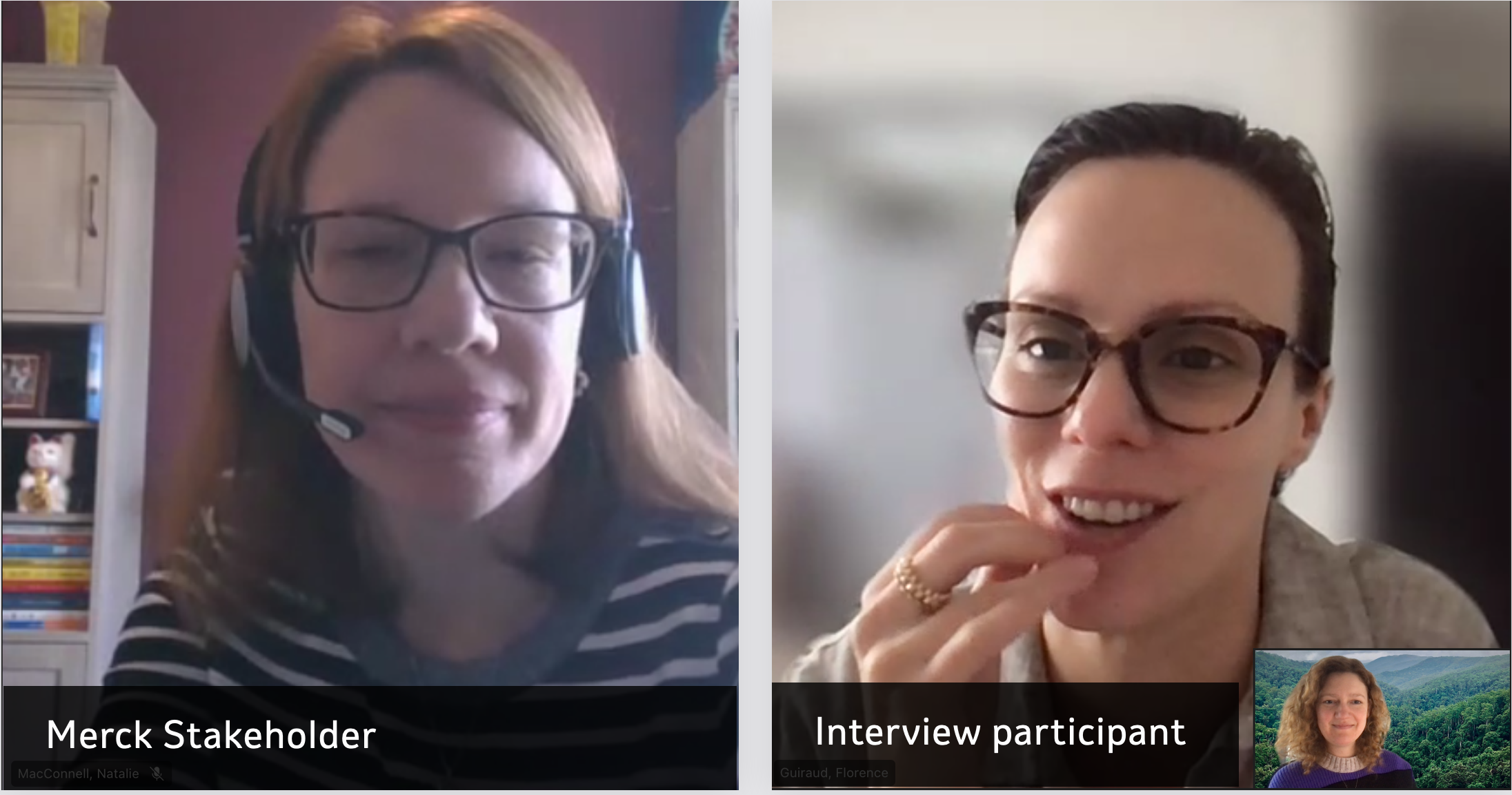
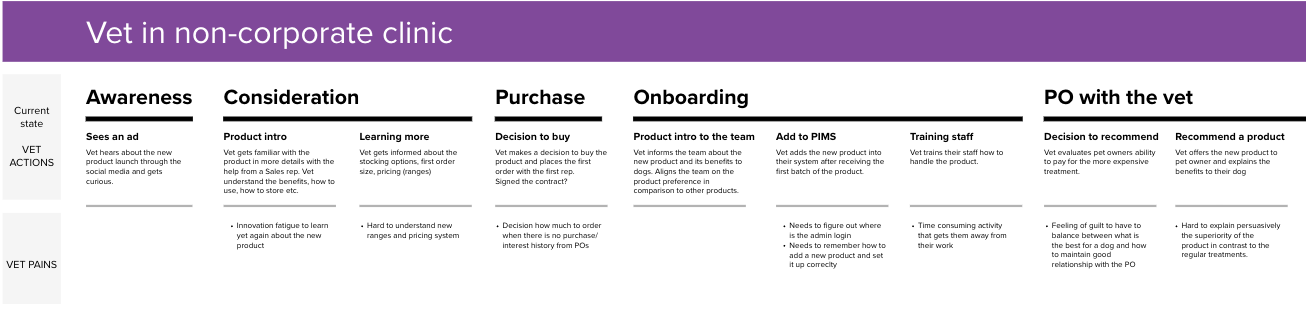
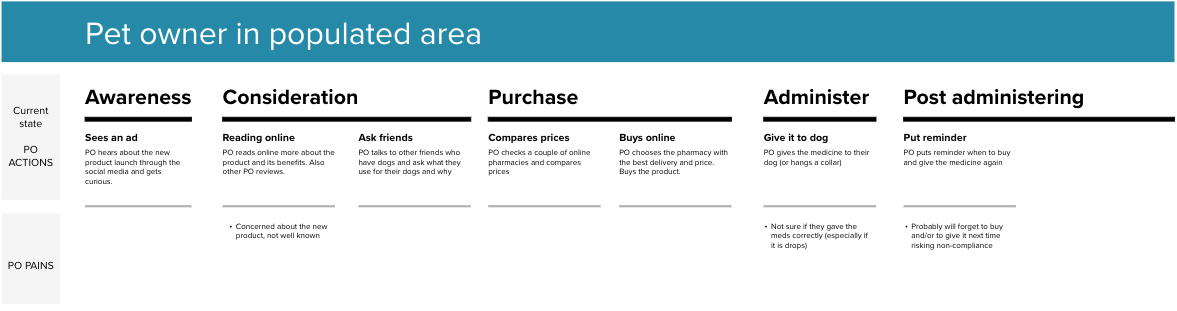
Initially our business stakeholders were talking only about the prices however veterinarian interviews revealed the more barriers: introducing this new product would increase workload and training requirements for already-overstretched clinic staff.
The challenge was reframed as:
"How might we reduce the impact on cashflow for vets and incentivise vets to treat large dogs too?"
User journeys
The “aha-moment” for the client
During the alignment workshop, I facilitated the co-creation of the new decision-making criteria which helped them broaden the focus from pricing to strategic, business, and technical fit of each idea.
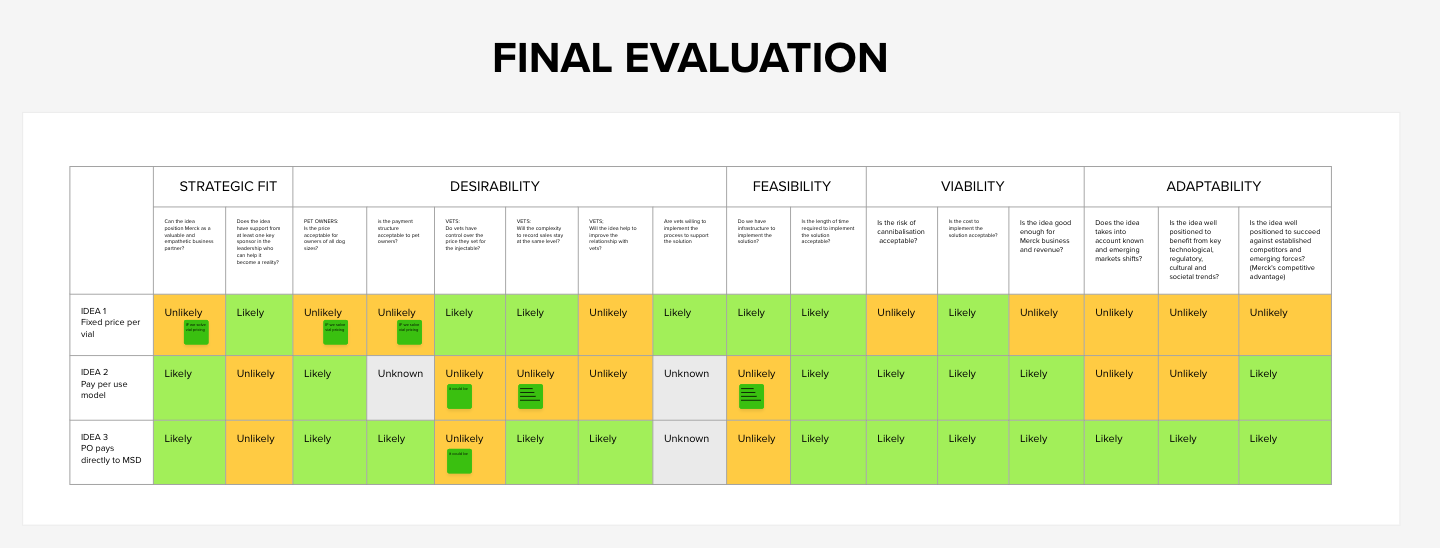
Simple workshop exercise to align stakeholders
Phase 2. The approach
Setting up the way of working
Agreed on timelines for the next phase, sprint length (2 weeks) and established RACI for 20+ team members.
Defined the core team of six people, coached them on the new process and innovation mindset. Most importantly we asked them to commit at least one hour per week for the collaborative work. Little by little we kept involving them more and in the end we collaborated almost daily.
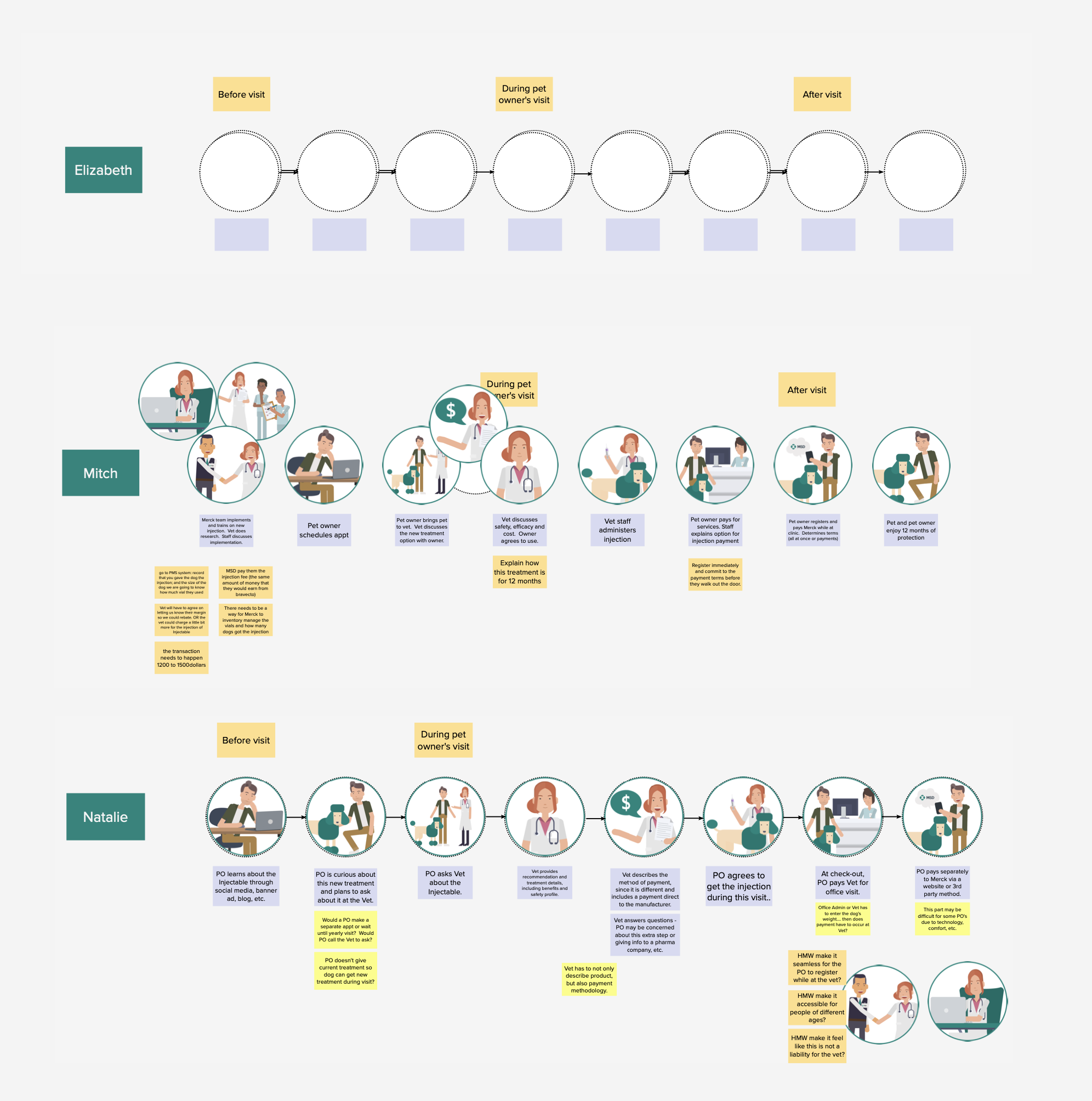
Storyboarding workshop setup
Co-creation workshops led to refined concepts
Storyboarding workshops helped to extract the knoweldge and mental models from the experts and stakeholders on how each model could potentially work step by step.
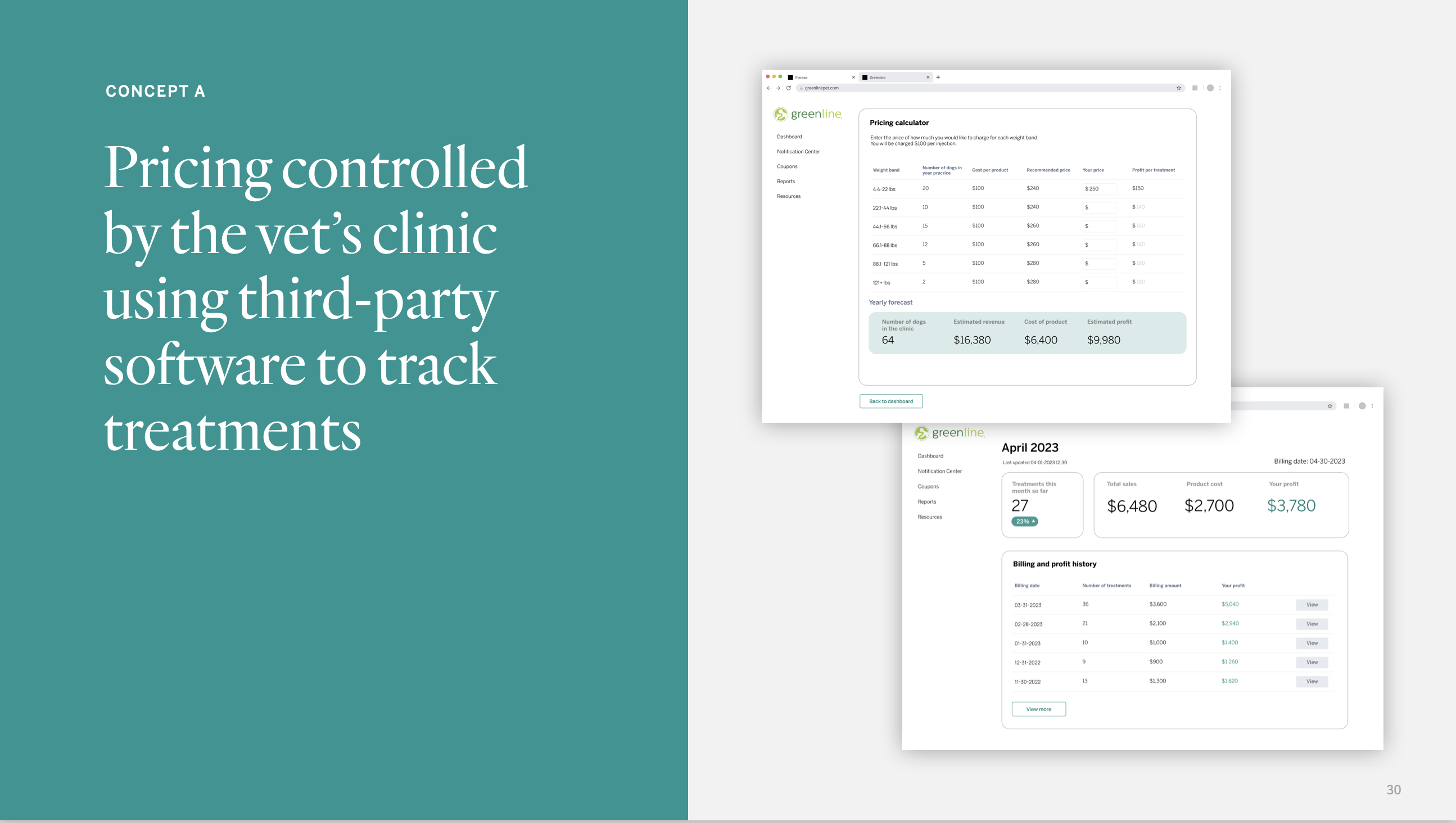
Concept A — Pay-per-Use
Pet owners pay the clinic at the point of treatment. The clinic carries no upfront inventory cost, reducing financial risk and lowering the barrier for vets to recommend the treatment regardless of dog size.
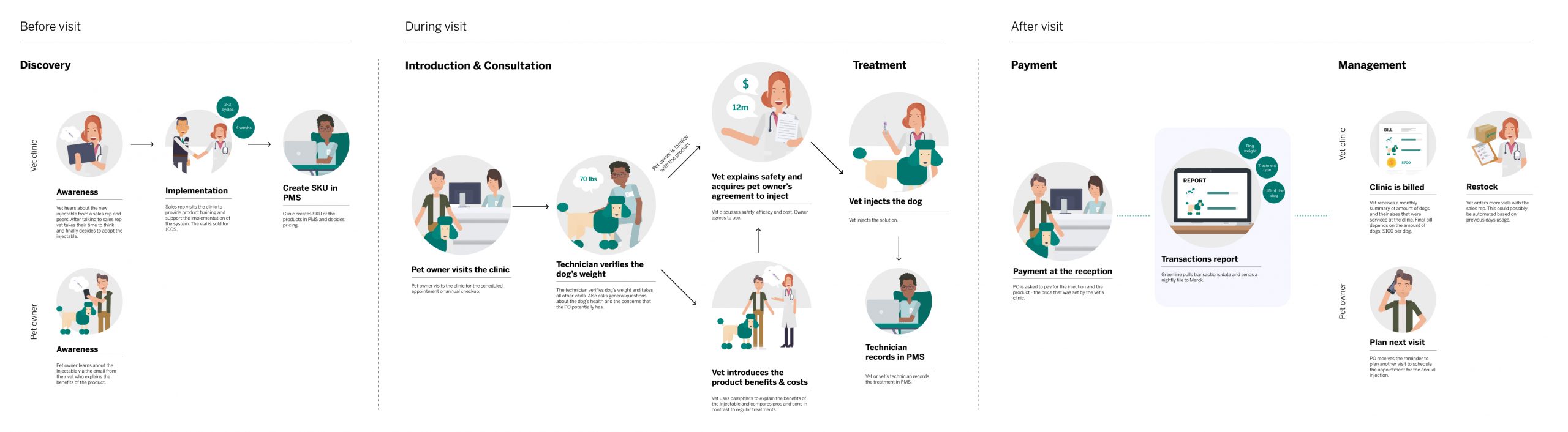
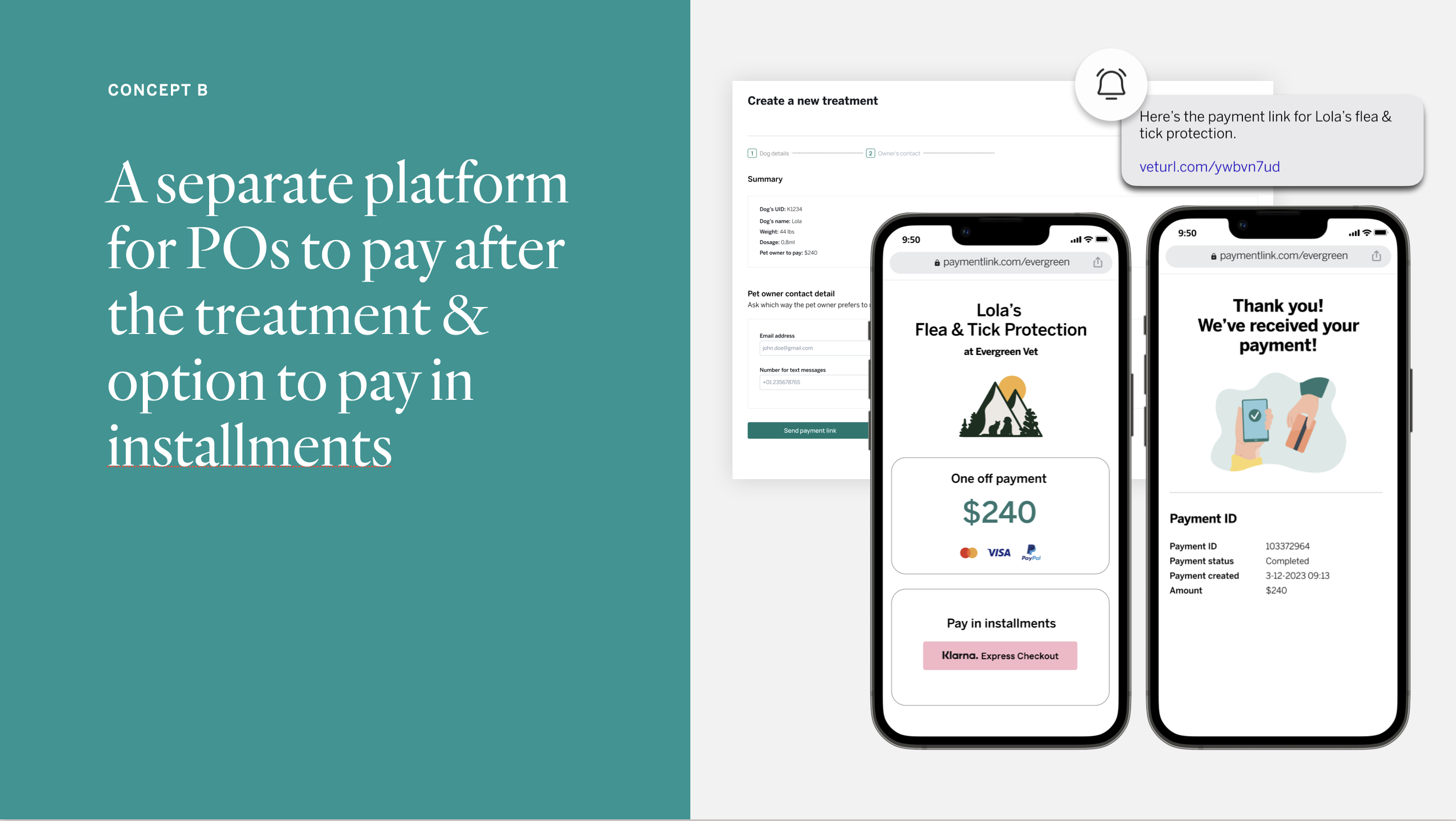
Concept B — Direct to Pet Owner (post-treatment)
Pet owners pay MSD directly after treatment. The clinic acts as an intermediary for the treatment itself, removing the billing burden from the vet practice.
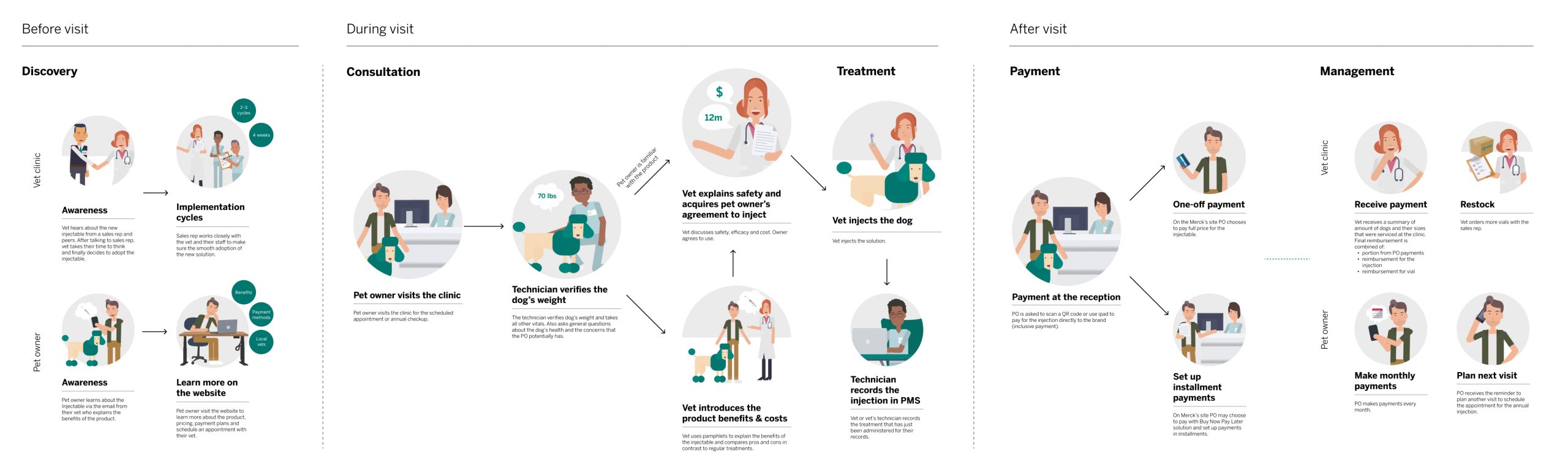
Concept C — "Burner Brand" (pre-treatment, direct to consumer)
A direct-to-consumer model where pet owners pay MSD before the treatment takes place, via a separate brand identity to avoid channel conflict. Two variants were explored: an extreme option and a team-aligned option.
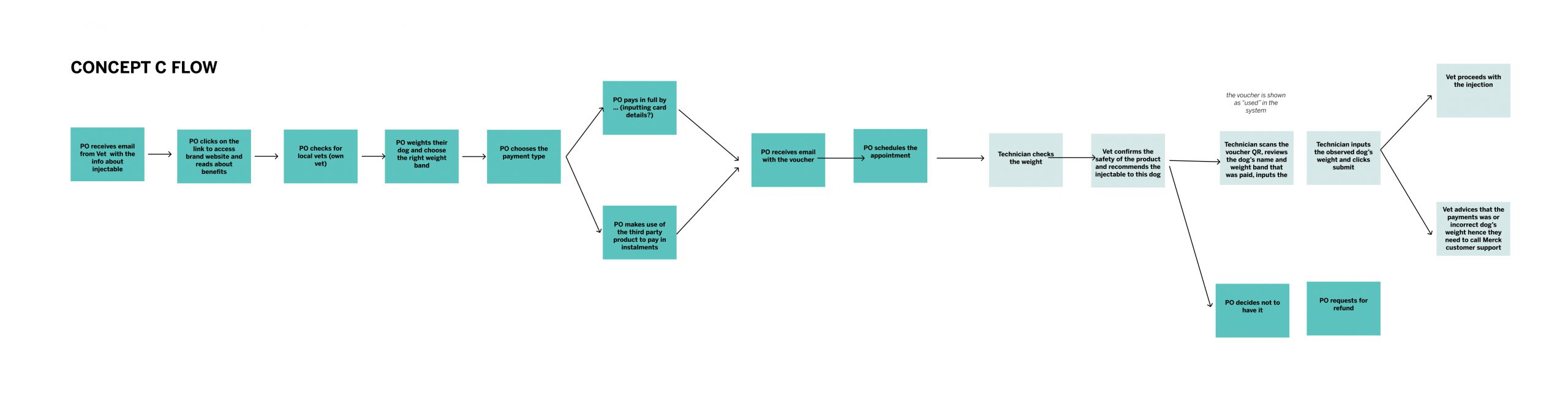
Detailed flow of Concept C
Prototyping
Interactive prototypes were built to test the user flows for each concept with veterinarians and pet owners.
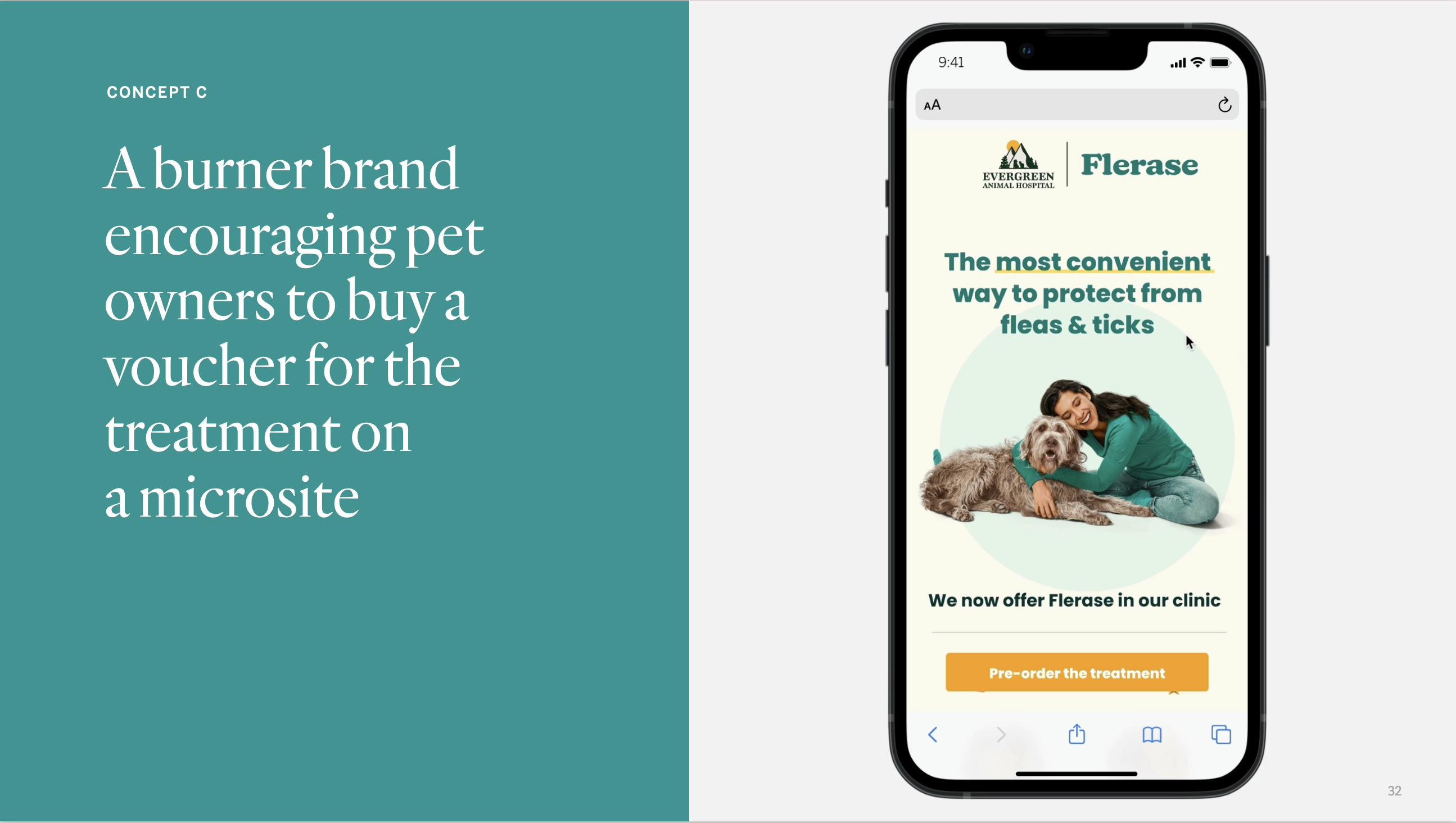
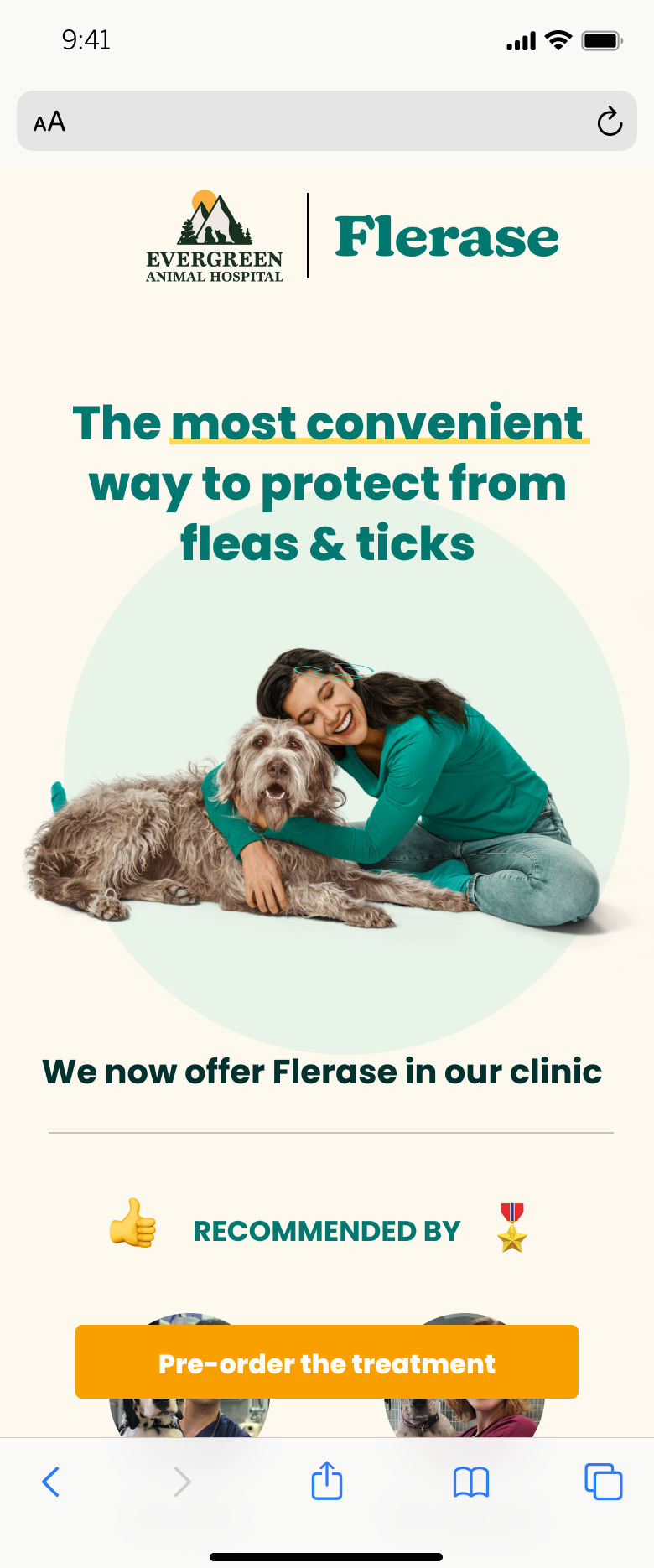
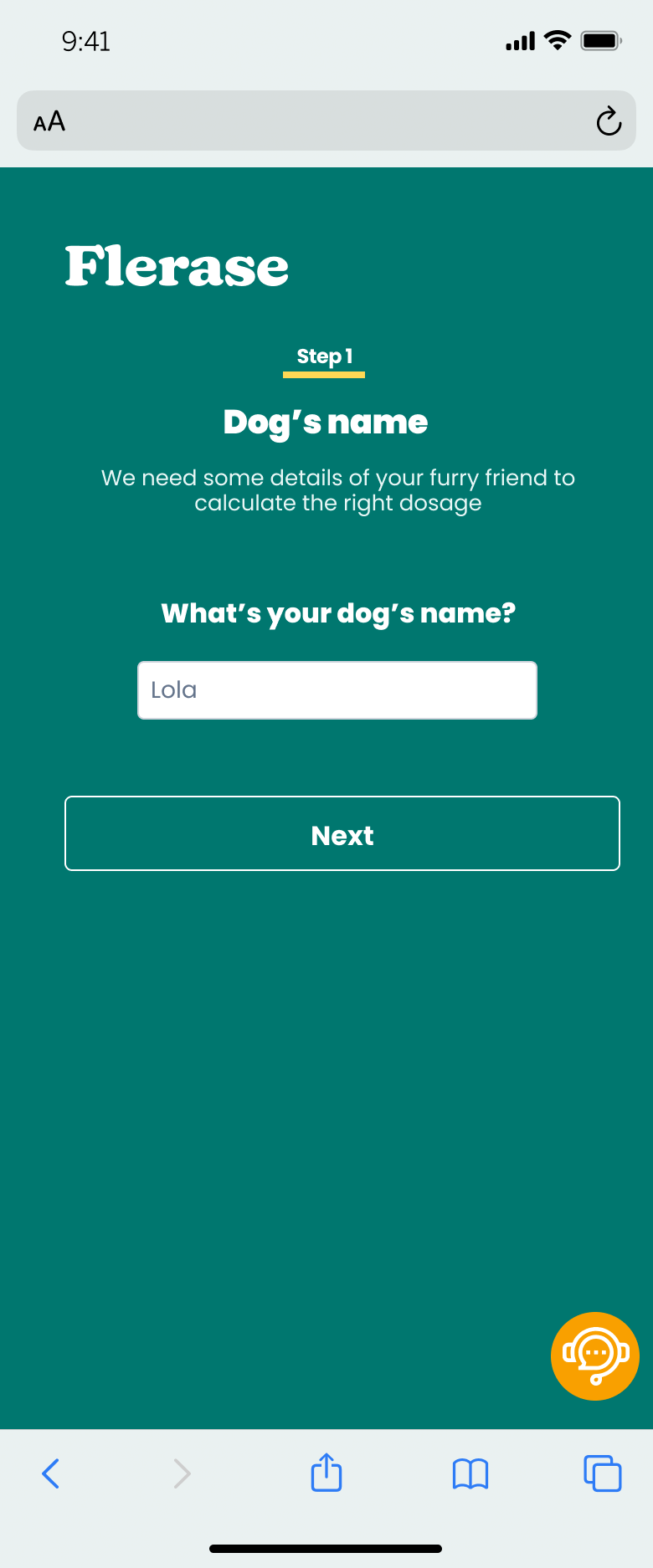
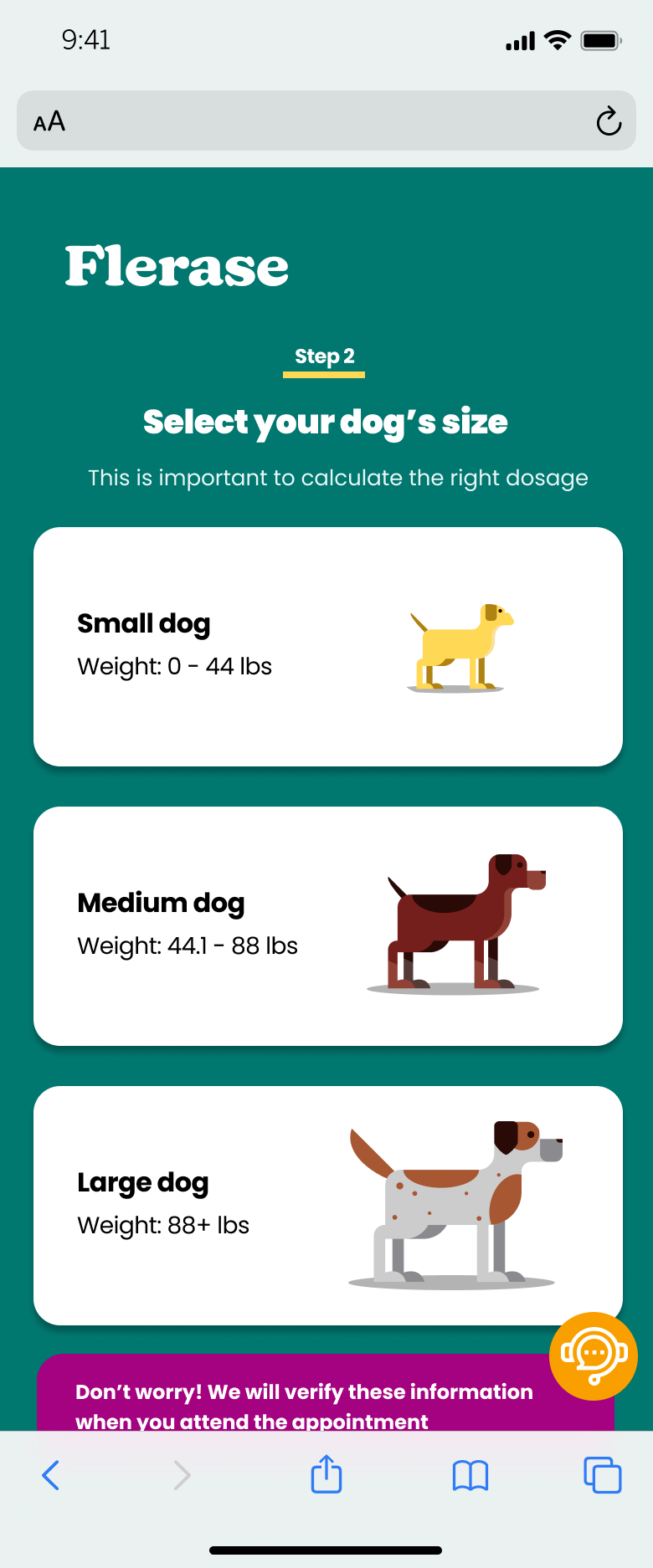
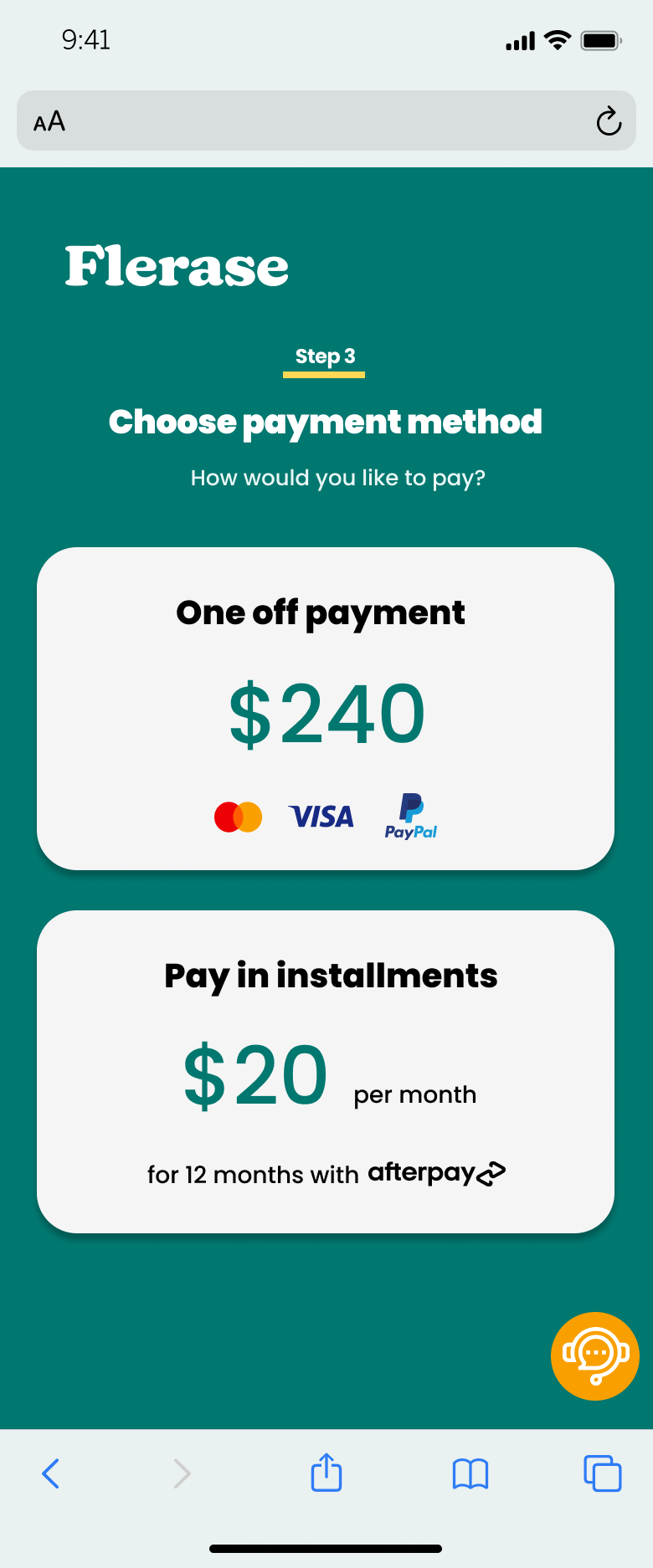
User flow of the Concept C — burner brand created to target dog owners directly
Insights from qualitative interviews
The results were processed in a couple of stages: recording main takeaways from each interview, finding common themes and deriving insights, enriching client's personas with behavioural aspects and placing them on axis in order to reflect their main behaviour drivers.
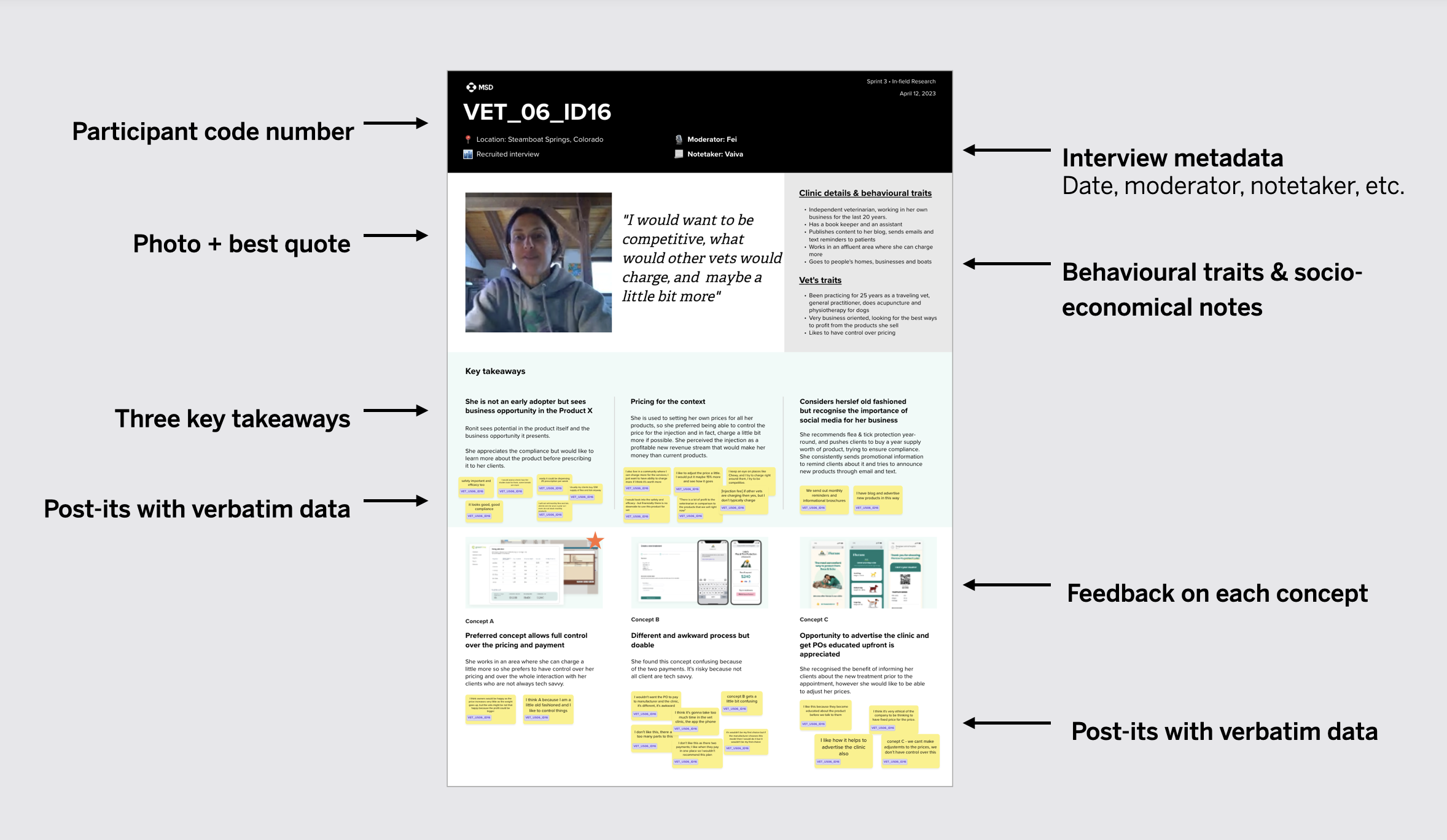
Immediately after the interview, process and discuss the main takeaways in a structured way.
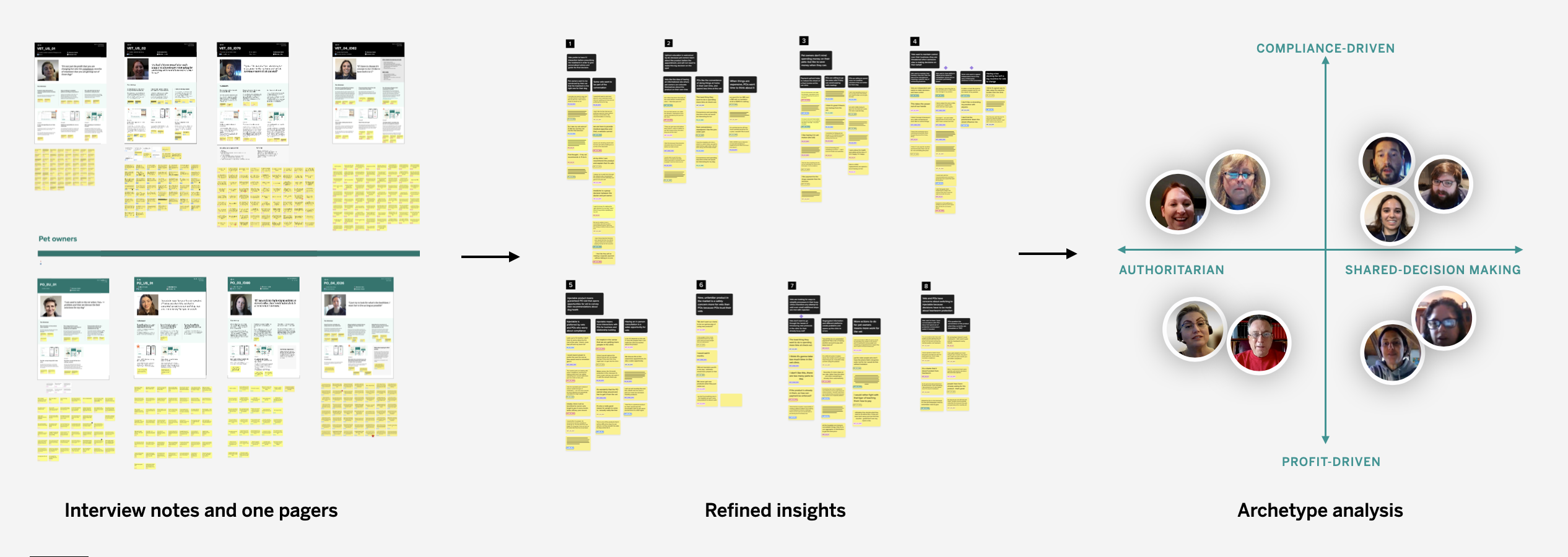
We showed the process to the client, derived insights together and placed vets in corresponding behavioural archetypes axises.
2-day in person workshop
Interview insights readout led to the conclusion that "Concept A. Pay-per-use" will be introduced first; and "Concept C. Pet owner pays before the treatment to MSD" will be introduced later to administer repeated treatments.
During the sessions 2 Service Blueprints and 1 GTM Roadmap were filled in. Together we defined project's vision and next steps going forward for the next phase.


Main deliverables
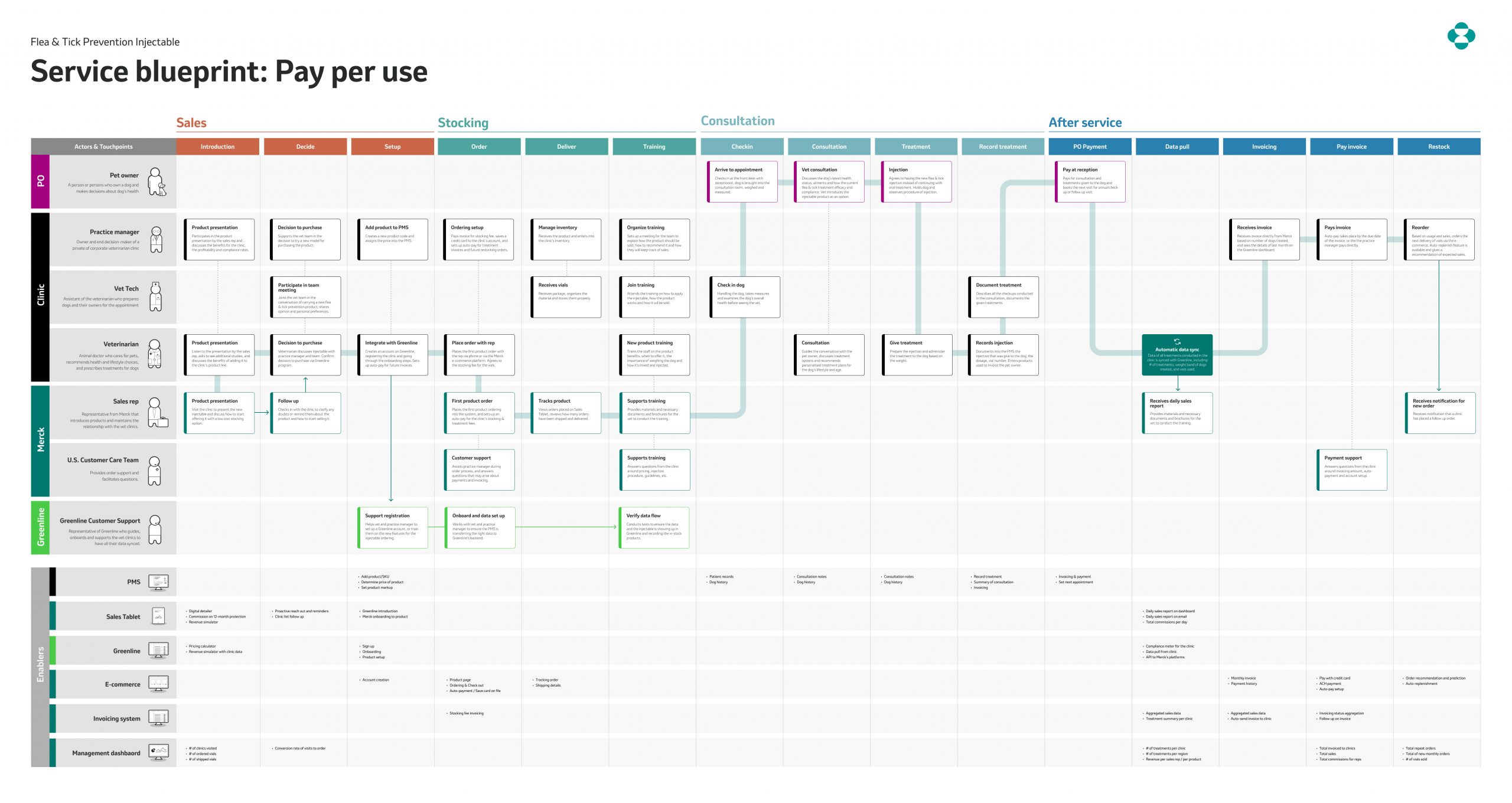
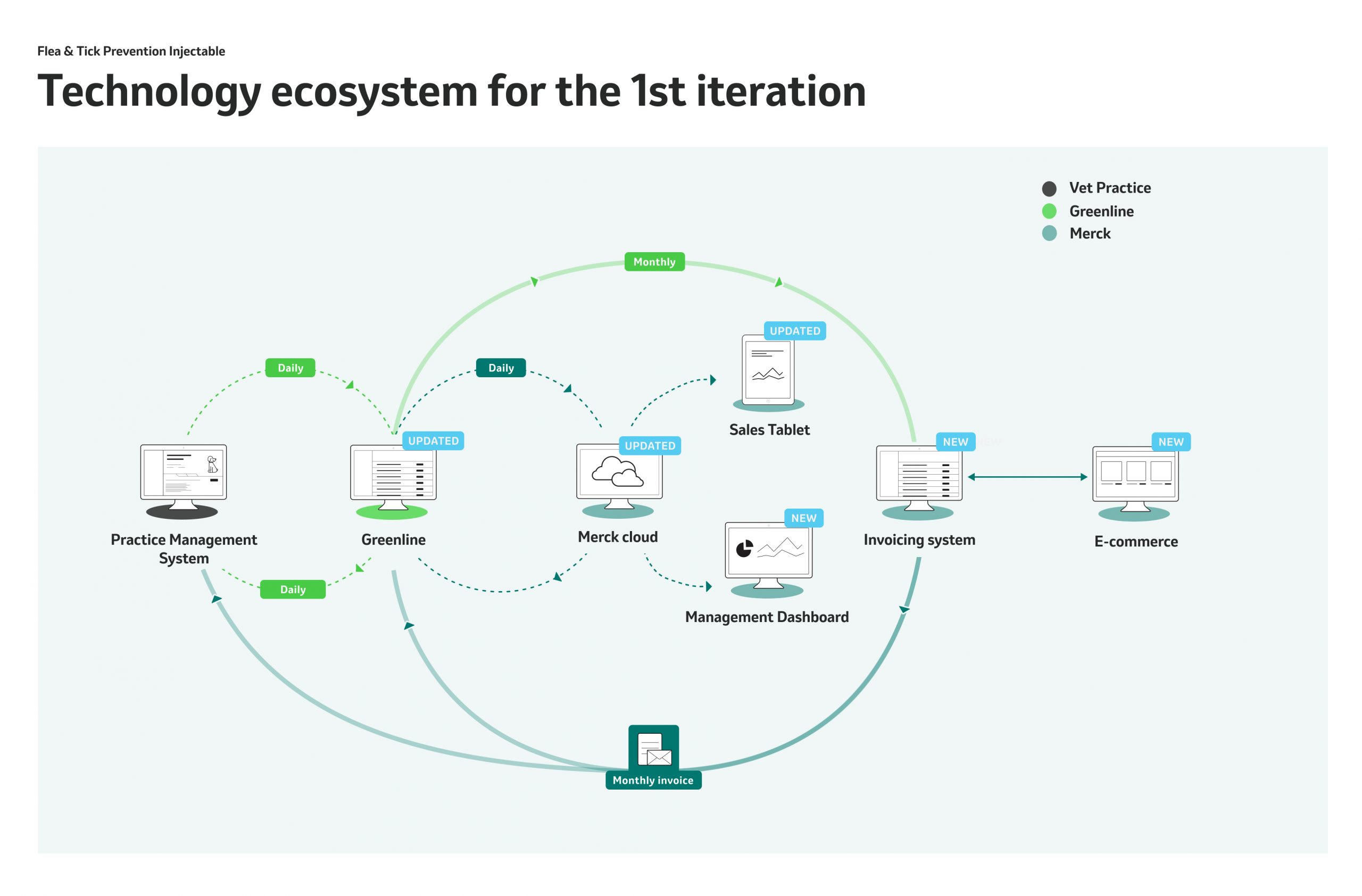
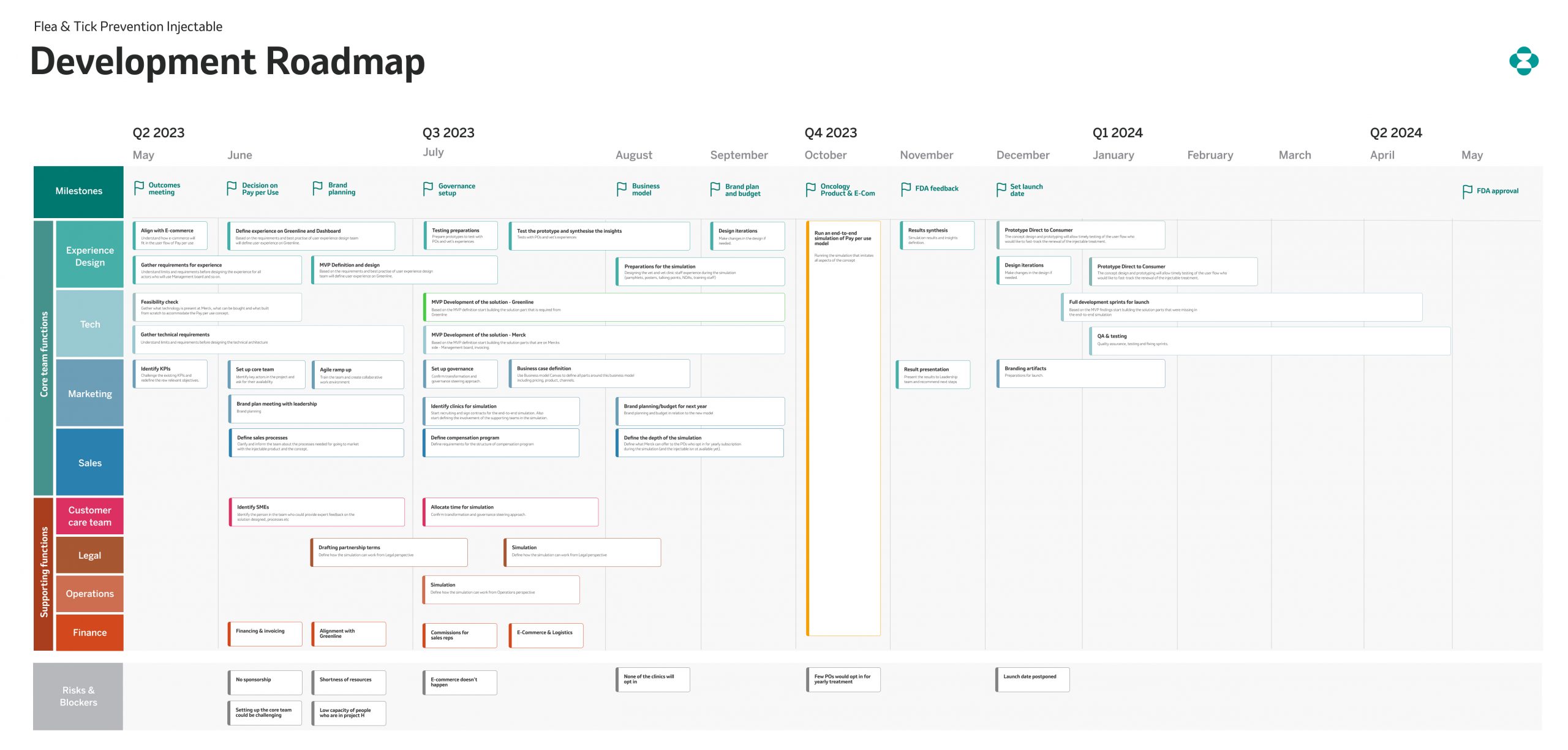
Outcome
Leadership approved the Pay-per-Use business model as the primary launch strategy, with plans to introduce the direct-to-consumer model in a subsequent phase. Quantitative research confirmed veterinarian support, validating a projected:
$200 million business opportunity over five years.
Methods & Tools
Team Structure
- 1 Strategy designer (me)
- 1 Strategic consultant
- 4 Client stakeholders
- 1 Strategy designer (me)
- 1 Interaction designer
- 1 Associate director (part-time)
- 1 Consumer engagement director (part-time)
- 2 Third-party experts
- 9 Stakeholders (4 core)
Testimonials

Matt Resnick
frog design
"Vaiva helped organize and evolve client perspectives to help get them to not only agree on an approach but see the value in partnering with frog.
Vaiva is an incredible strategic partner and helps solve the unsolvable. She's collaborative but also stands up for her perspective."

Fei
frog design
"You handled the client communication and promoted collaboration with them very well. Your efforts have not only strengthened our client relationships but have also significantly contributed to the overall success of our projects.
I look forward to working on more projects together."