Creating new offers at Philips
Leading transformational change in Innovation Department at Philips D2C
Client: Philips D2C (via frog design)
Duration: August 2021 – December 2022
Role: Strategy, research, experimentation, service and product design
Overview
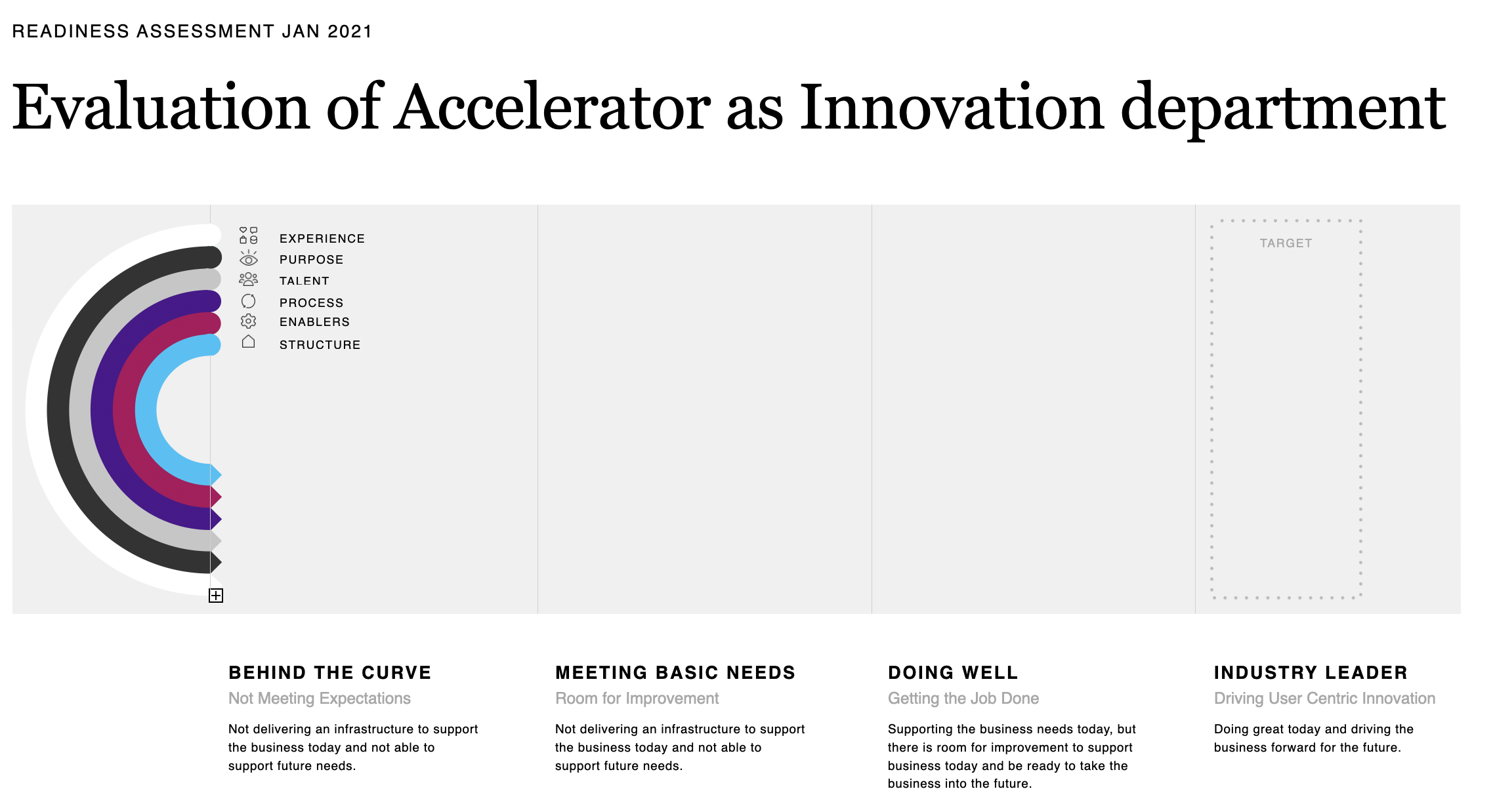
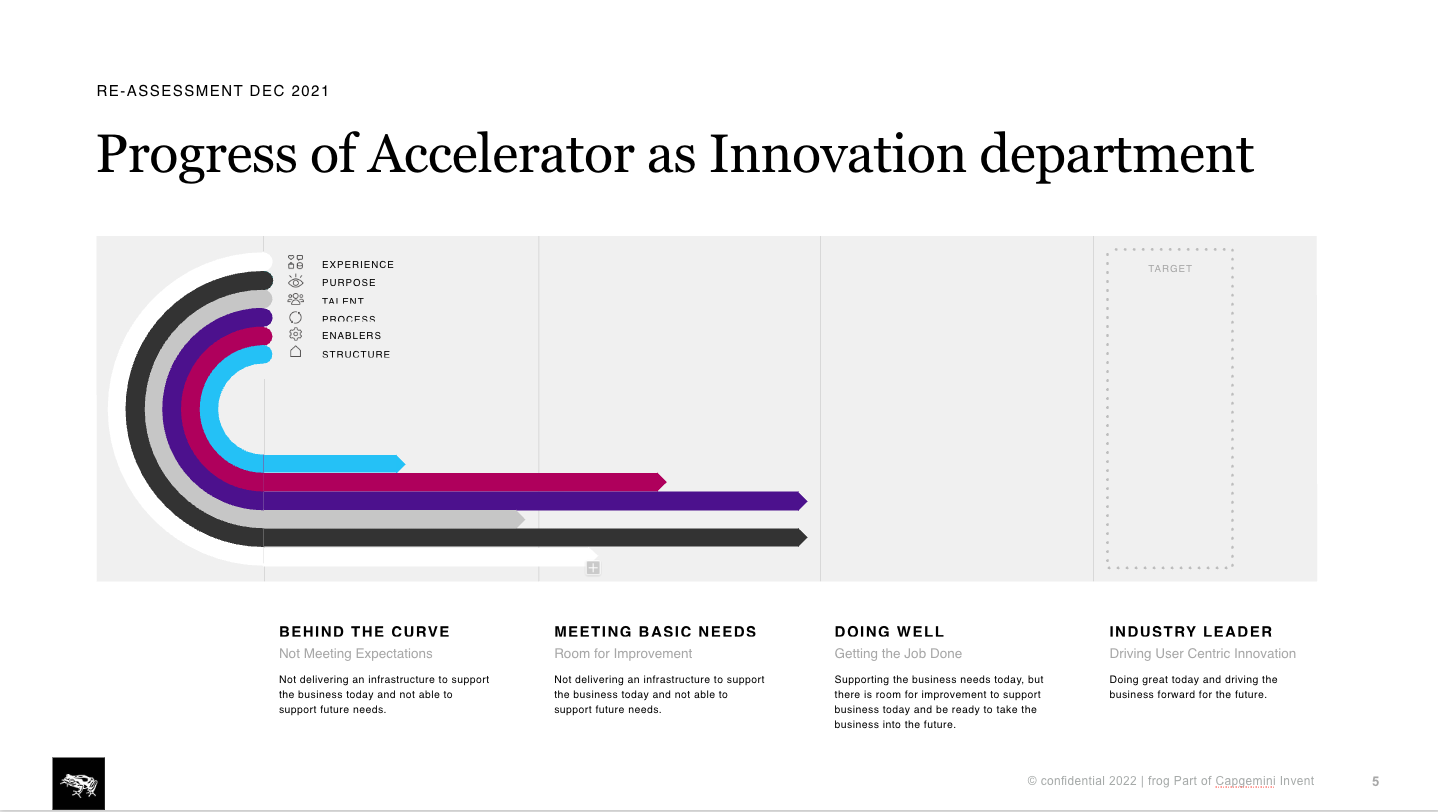
The Innovation Department at Philips D2C was running seven concurrent projects with no clear processes, no shared purpose, and a team that felt overextended and unmotivated. Every operational dimension was evaluated as "behind the curve."
The engagement established a new operating model enabling faster idea validation and concept testing — repositioning the department as "the only cross-business category innovators at Philips."
Challenge
Six structural flaws were identified across the department:
- Asks prioritised business goals over consumer goals
- Absence of shared processes led to designer overload
- Business units lacked awareness of what the Innovation Department could offer
- Team members held differing interpretations of the department's purpose
- Limited innovation mindset and internal training
- Validation outcomes were misaligned with the propositions being tested
Repositioning the Department
Mission & USP
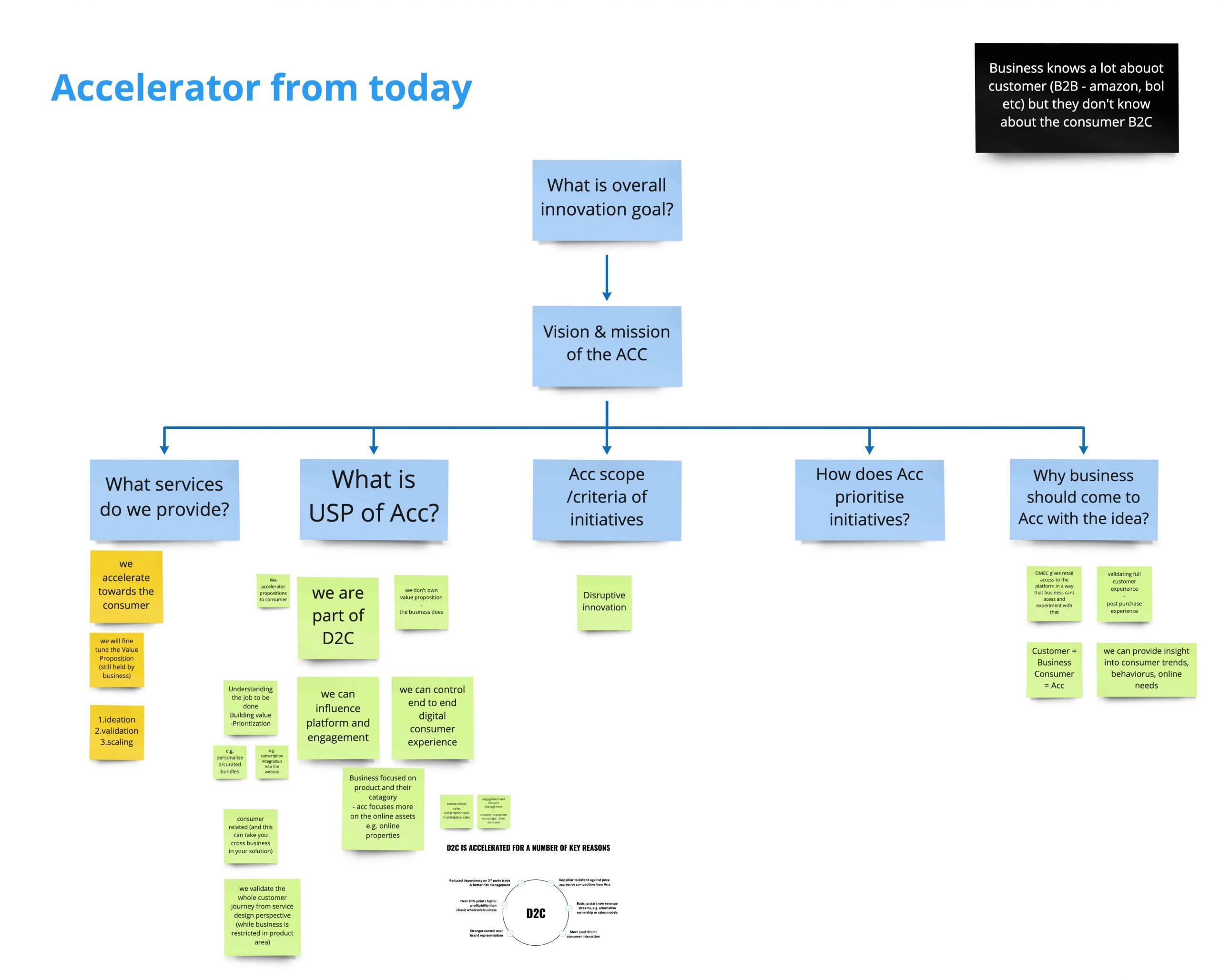
Mission: "Accelerate towards the consumer" — advocating for consumer needs within Philips' product offerings.
USP: Operating across all business categories, while competitors are limited to specific product fields.
New Innovation Model
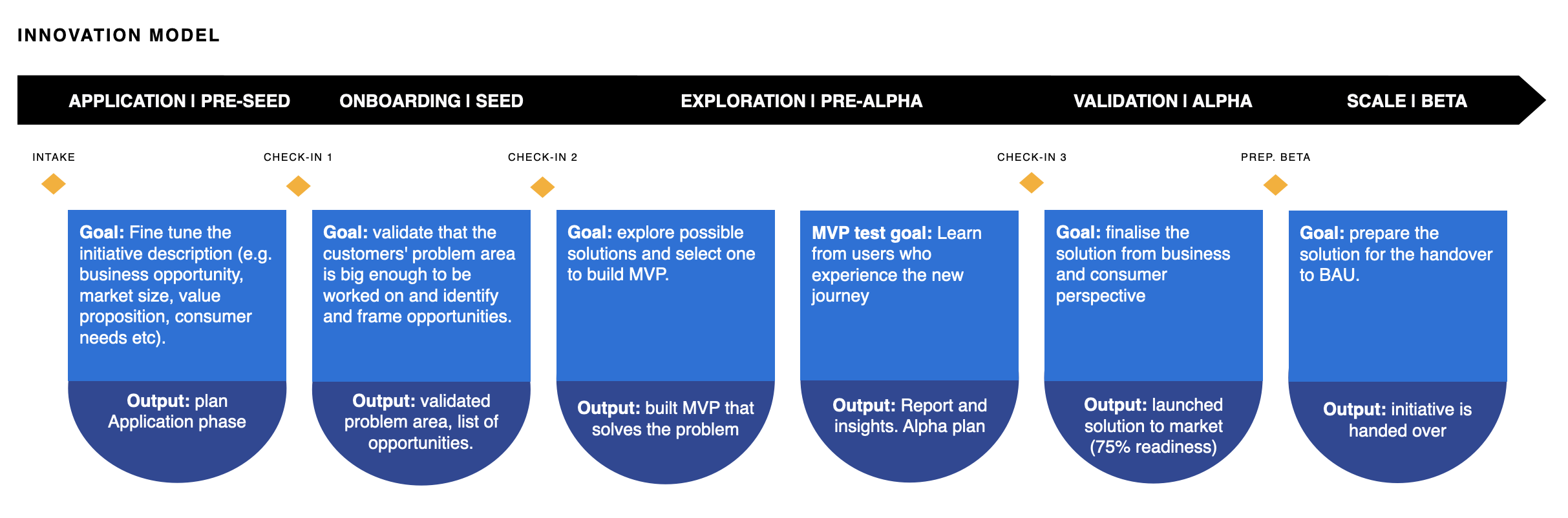
A three-phase framework was introduced with standardised tools and ceremonies to create consistency across projects.
Phases
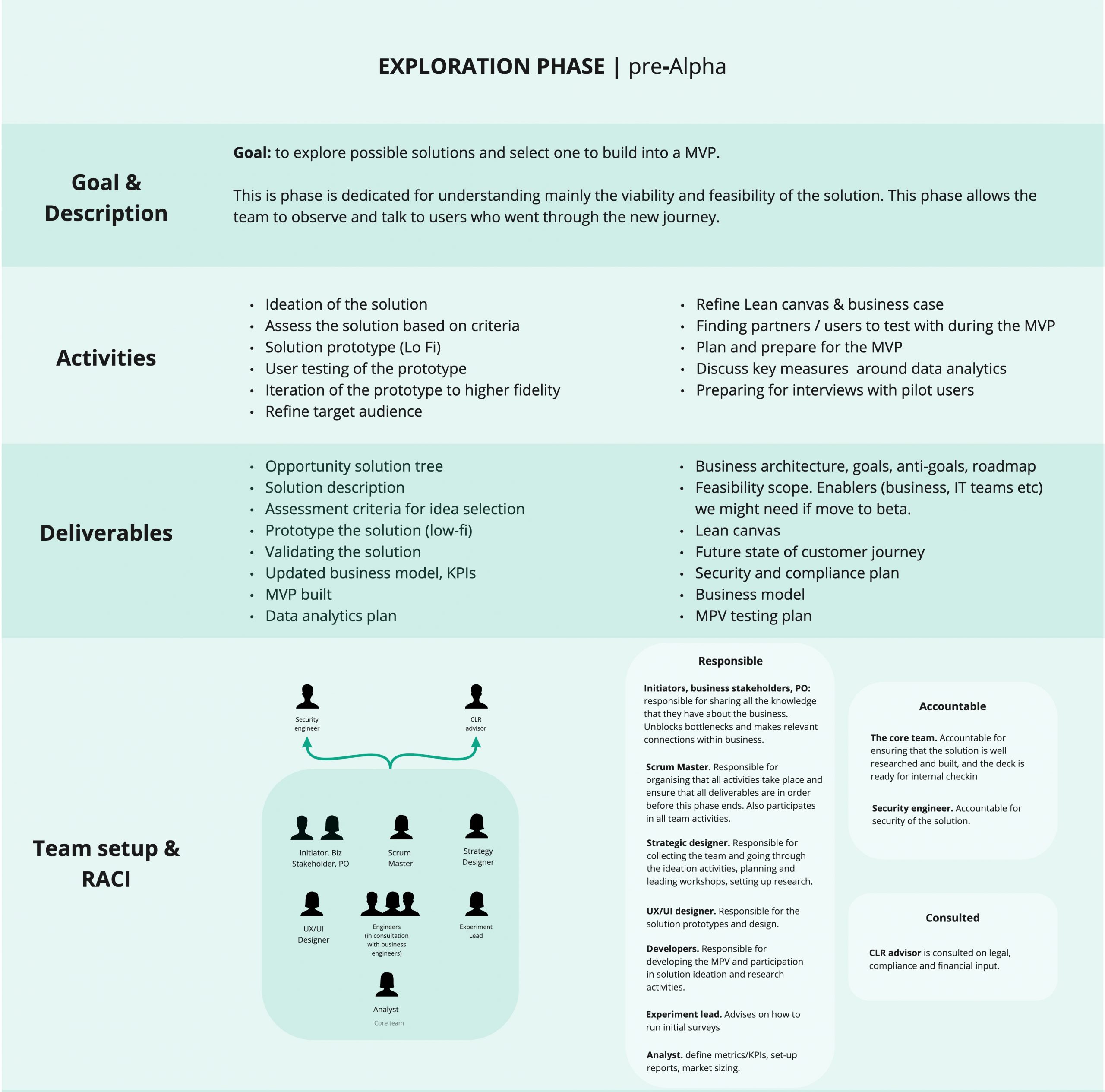
Pre-alpha phase — problem definition, consumer research, and early concept framing
Application phase — concept development, prototyping, and validation experiments
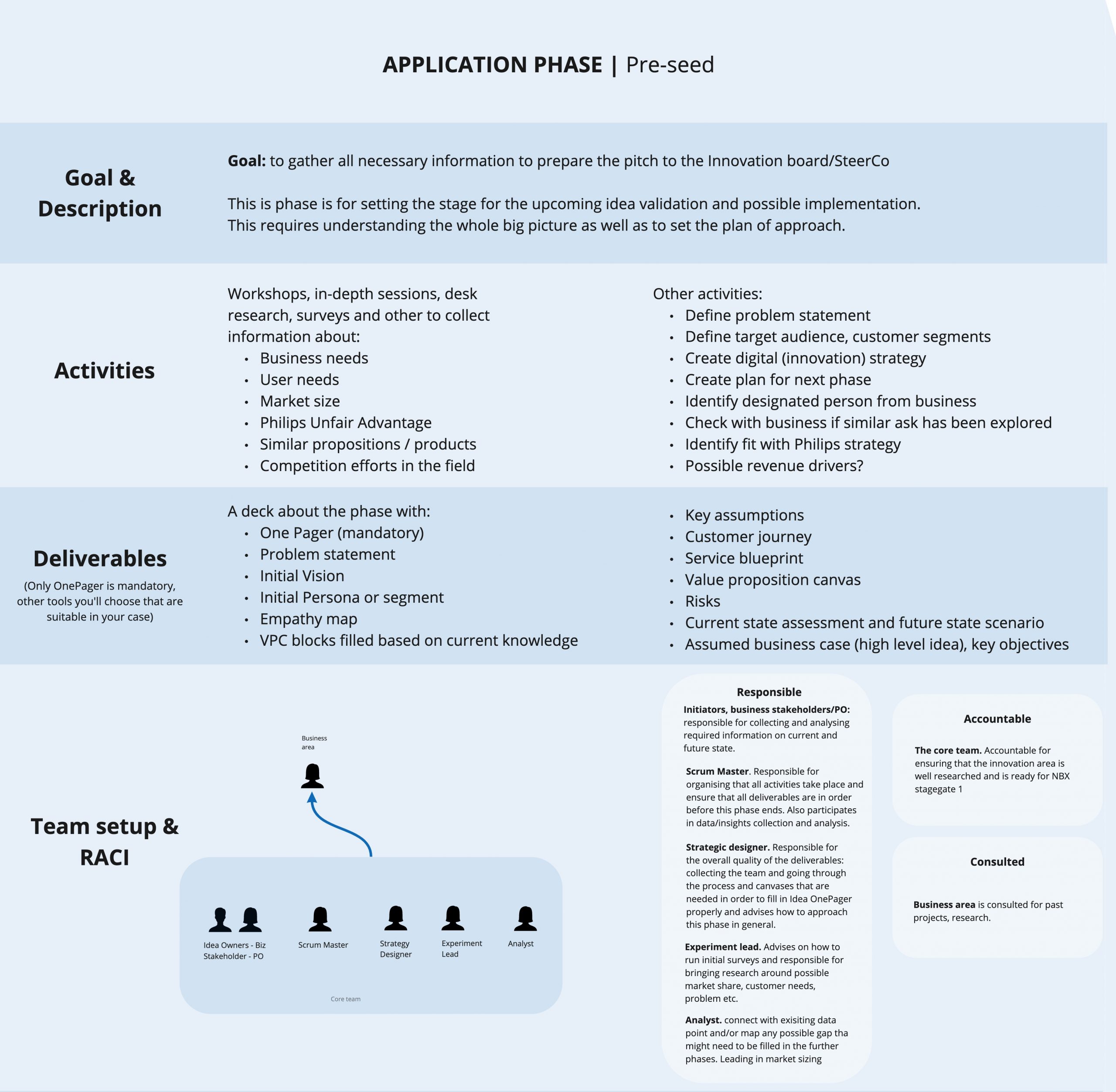
Shared tools
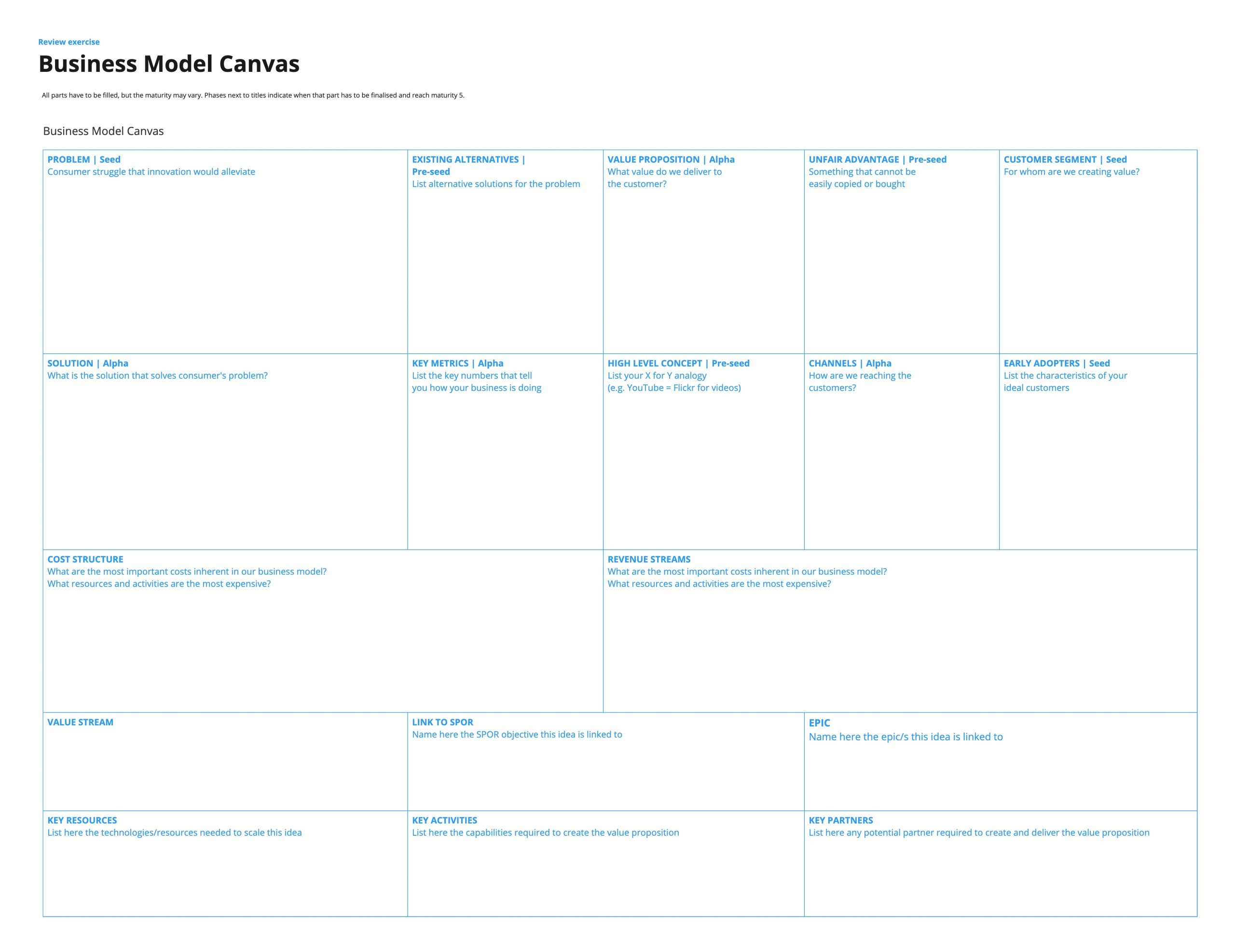
Business Model Canvas — used to align business and consumer goals at each project outset
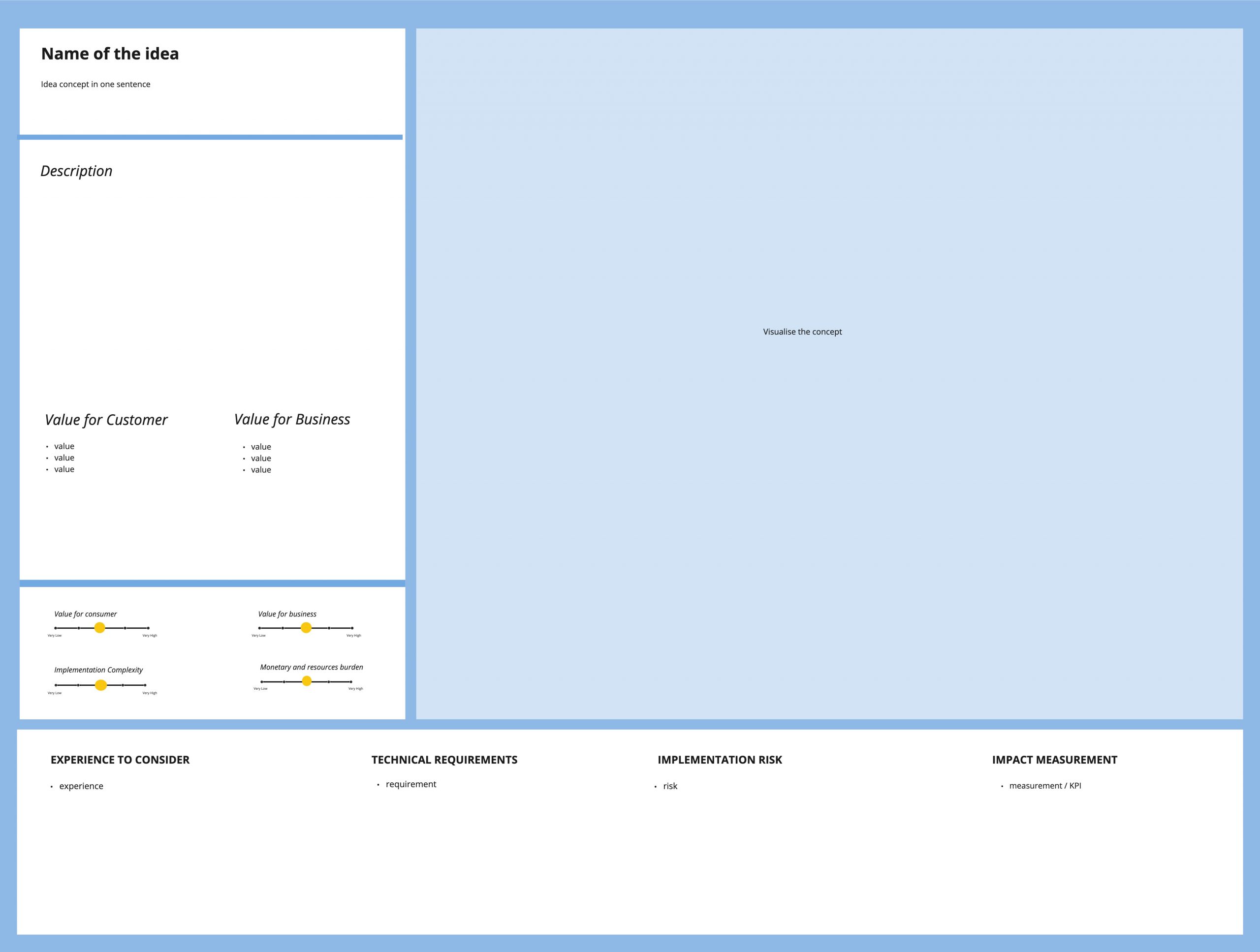
Concept Canvas — standardised template for concept articulation and assumption tracking
Ceremonies: Daily, weekly, and bi-weekly rituals structured team alignment and progress reviews.
Projects Delivered
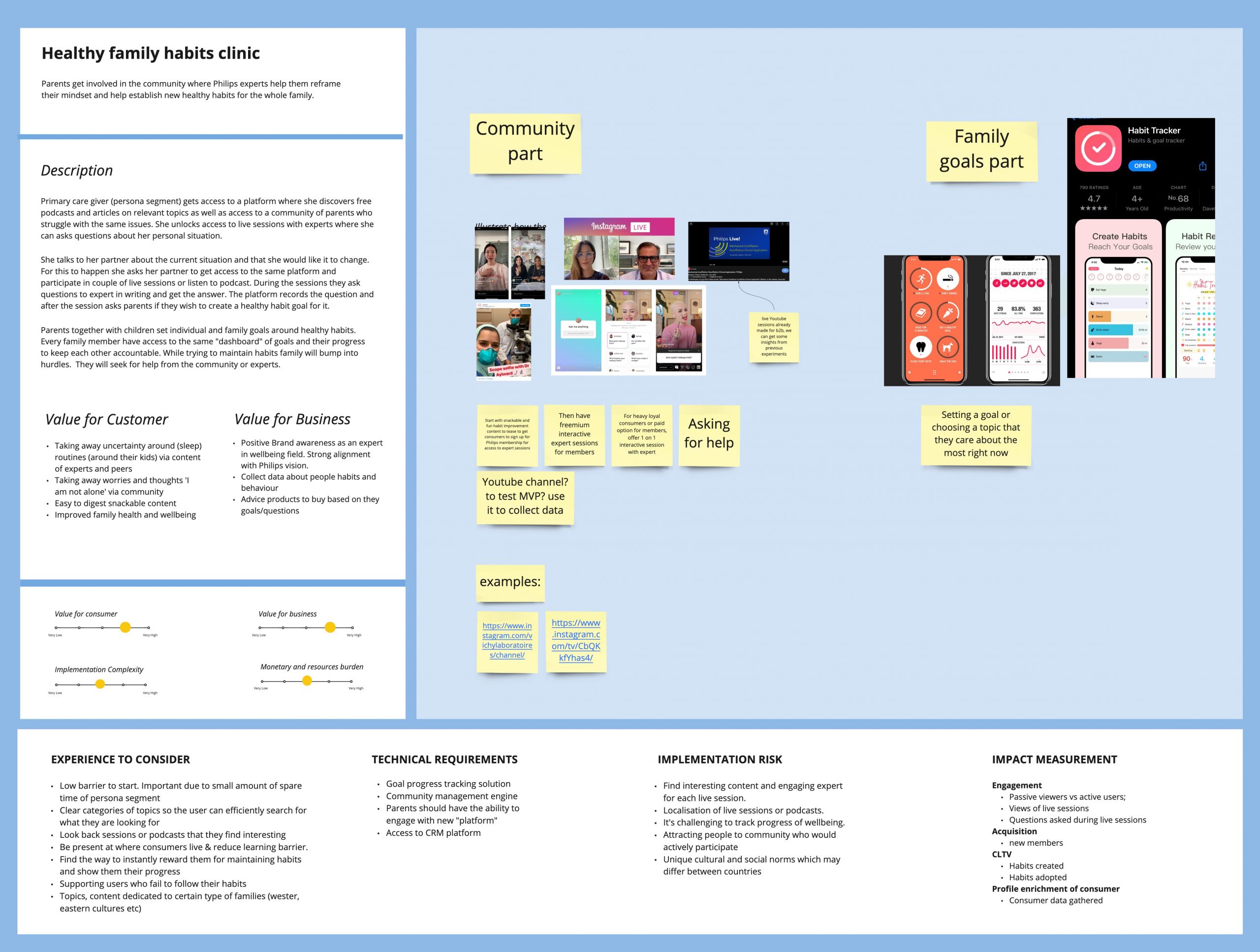
Project 1 — Healthy Routines Offering
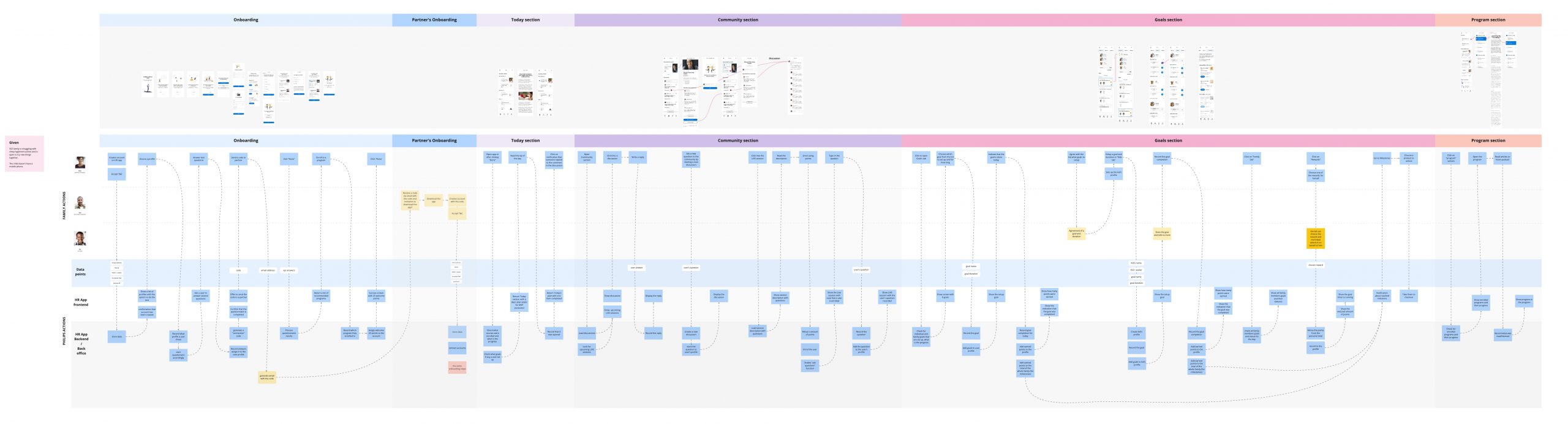
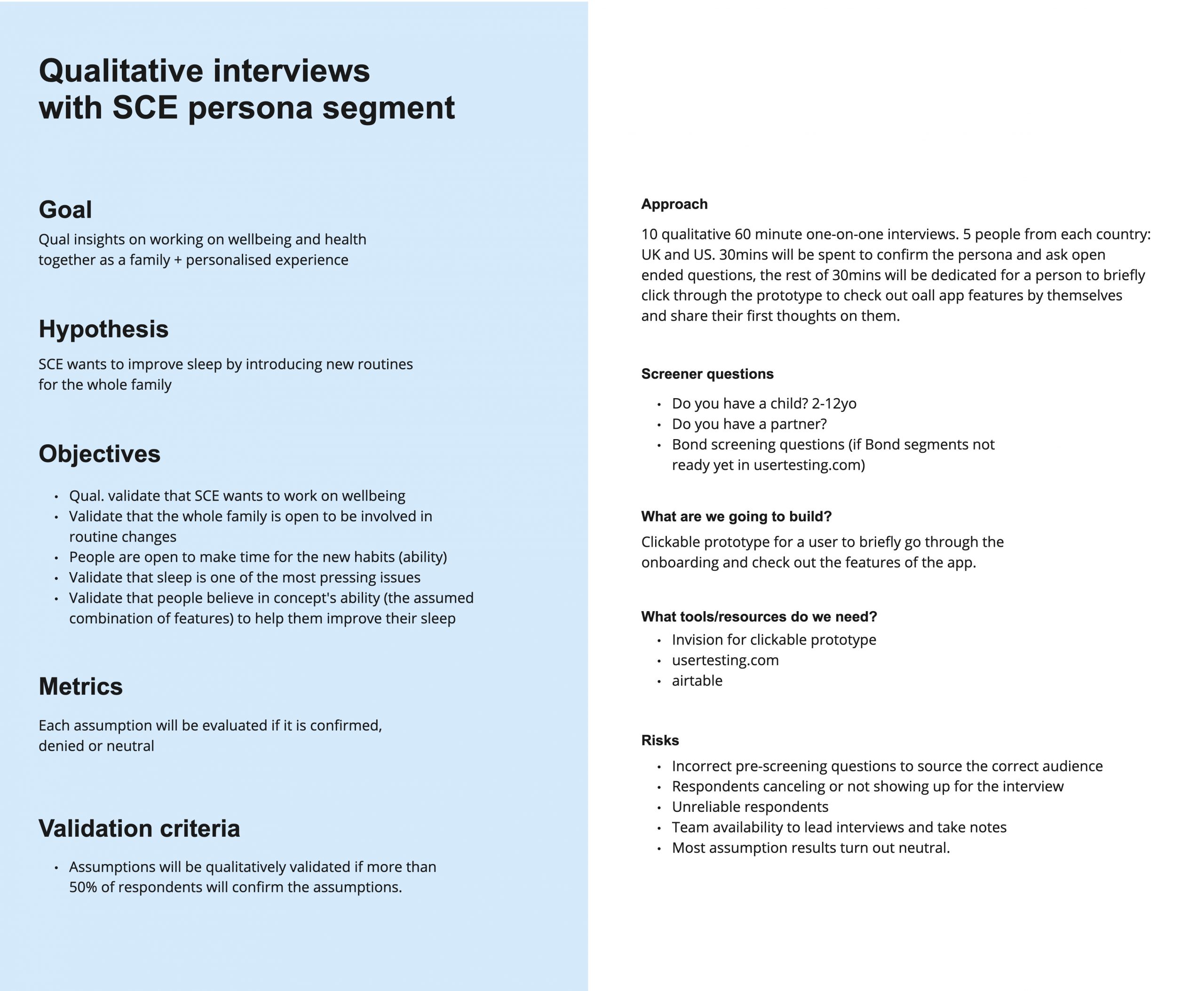
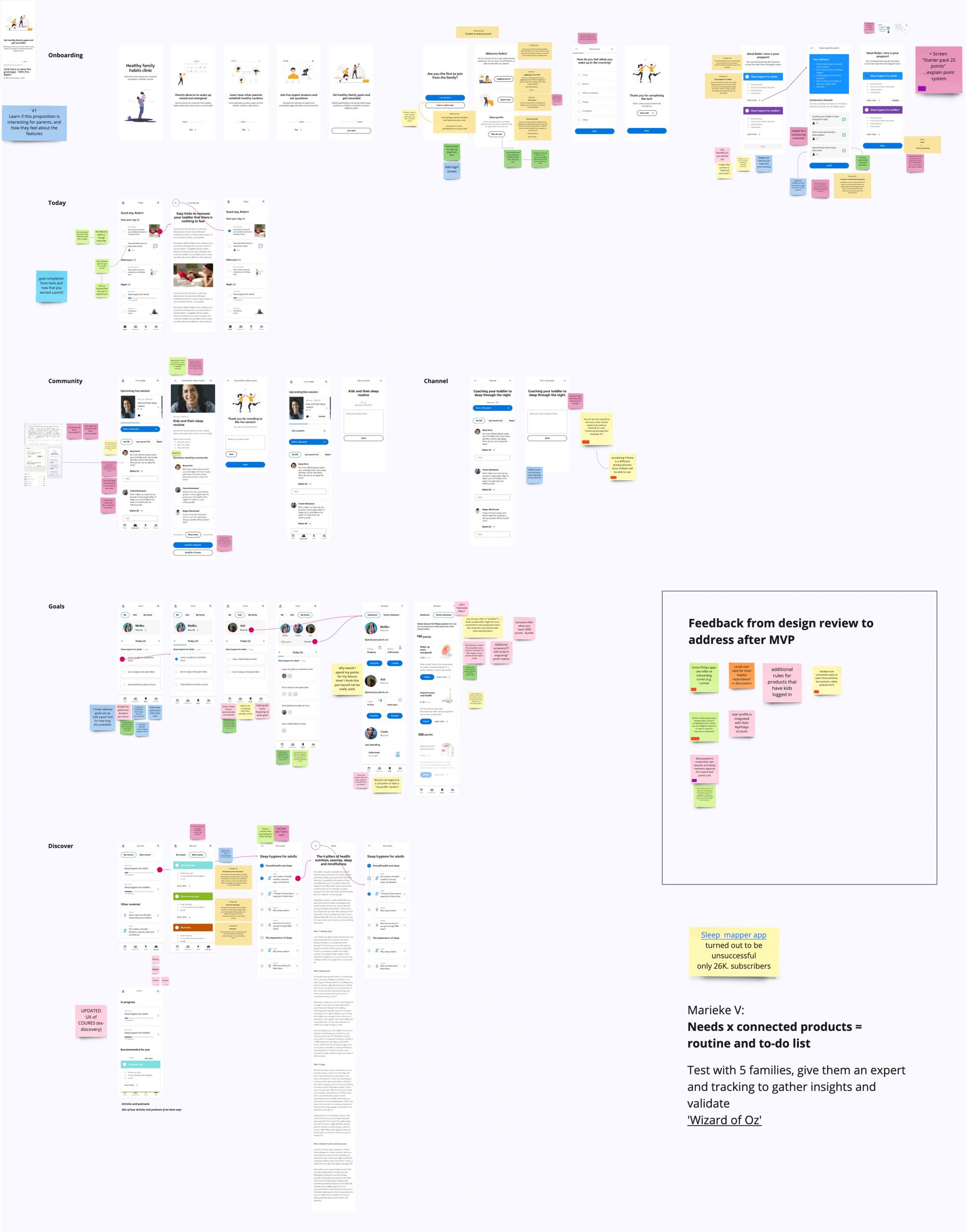
A pilot project to test the new operating model. Delivered a family-focused app promoting behavioural change for wellbeing, with an MVP launching through the Philips Membership programme.
Project 2 — Sensory Gallery
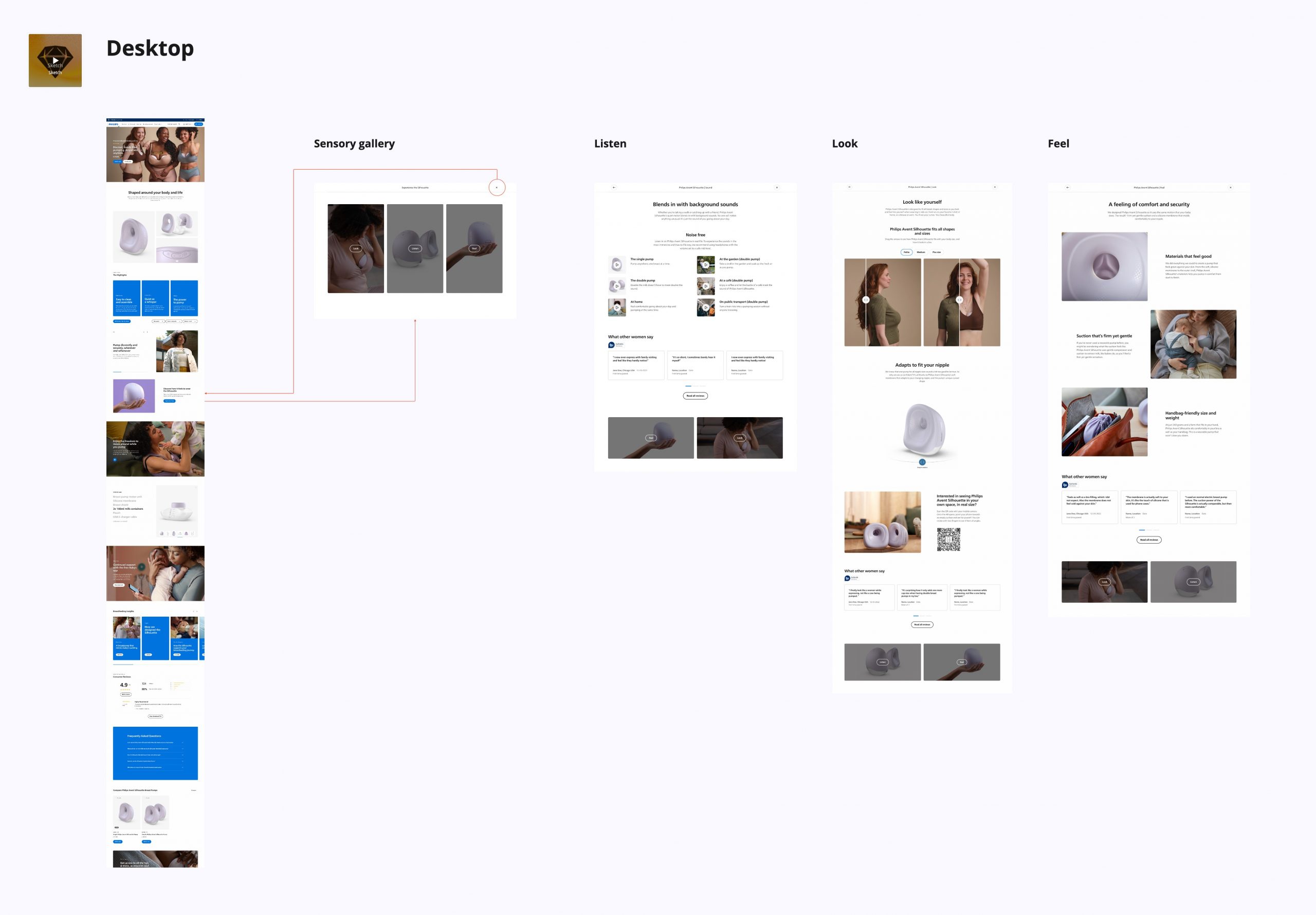
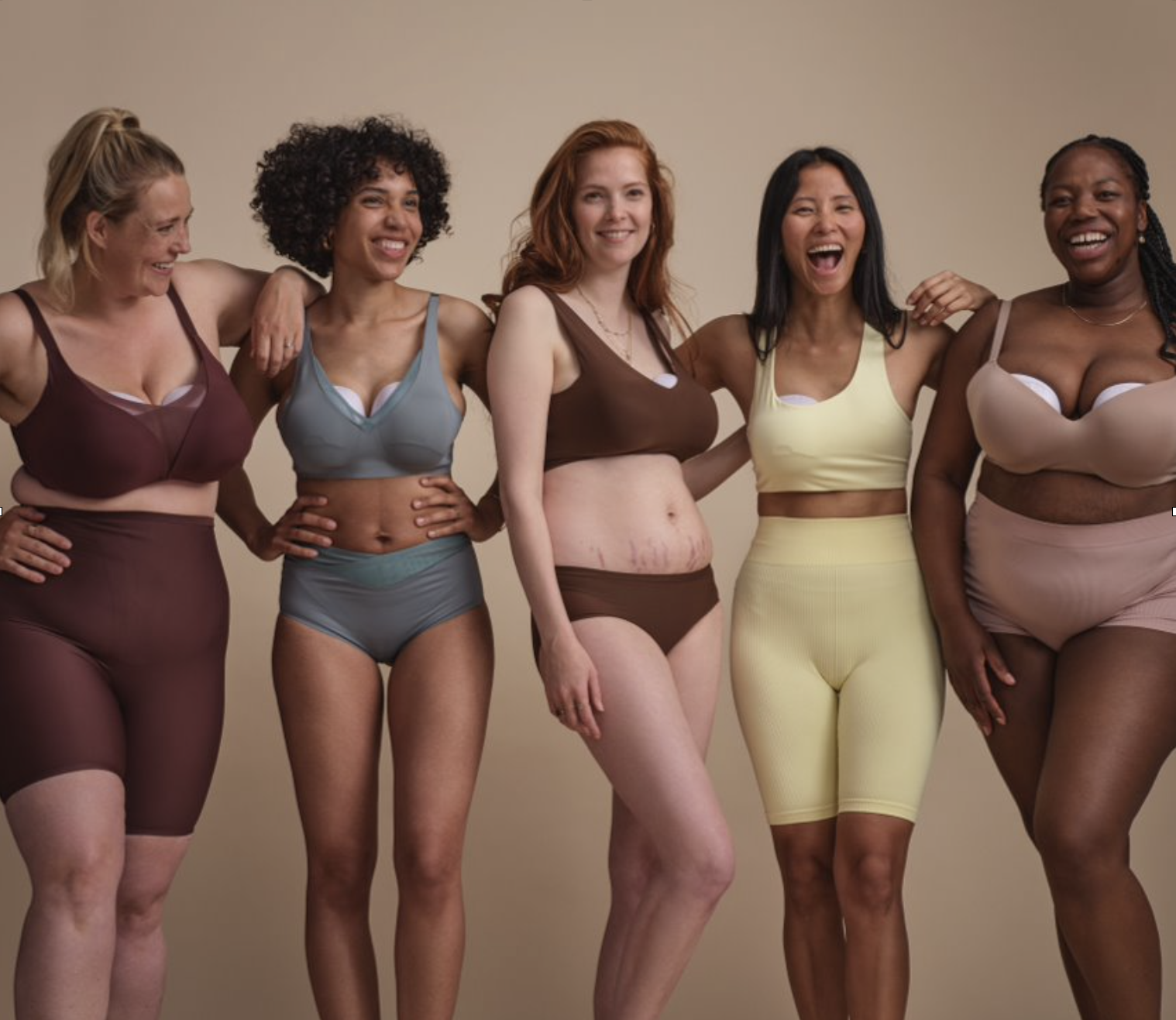
An online experience for exploring Philips' wearable breast pump across "See, Hear and Feel" sections — designed to reduce purchase hesitation for a high-consideration product.
Result: 20% uplift in purchase intent in the UK, NL, France and Germany.
Project 3 — Good Night Routine Package
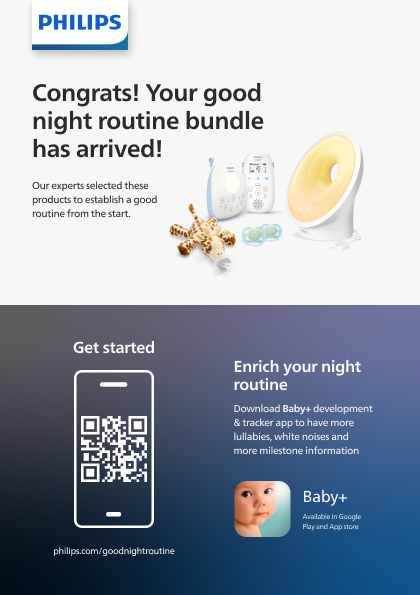
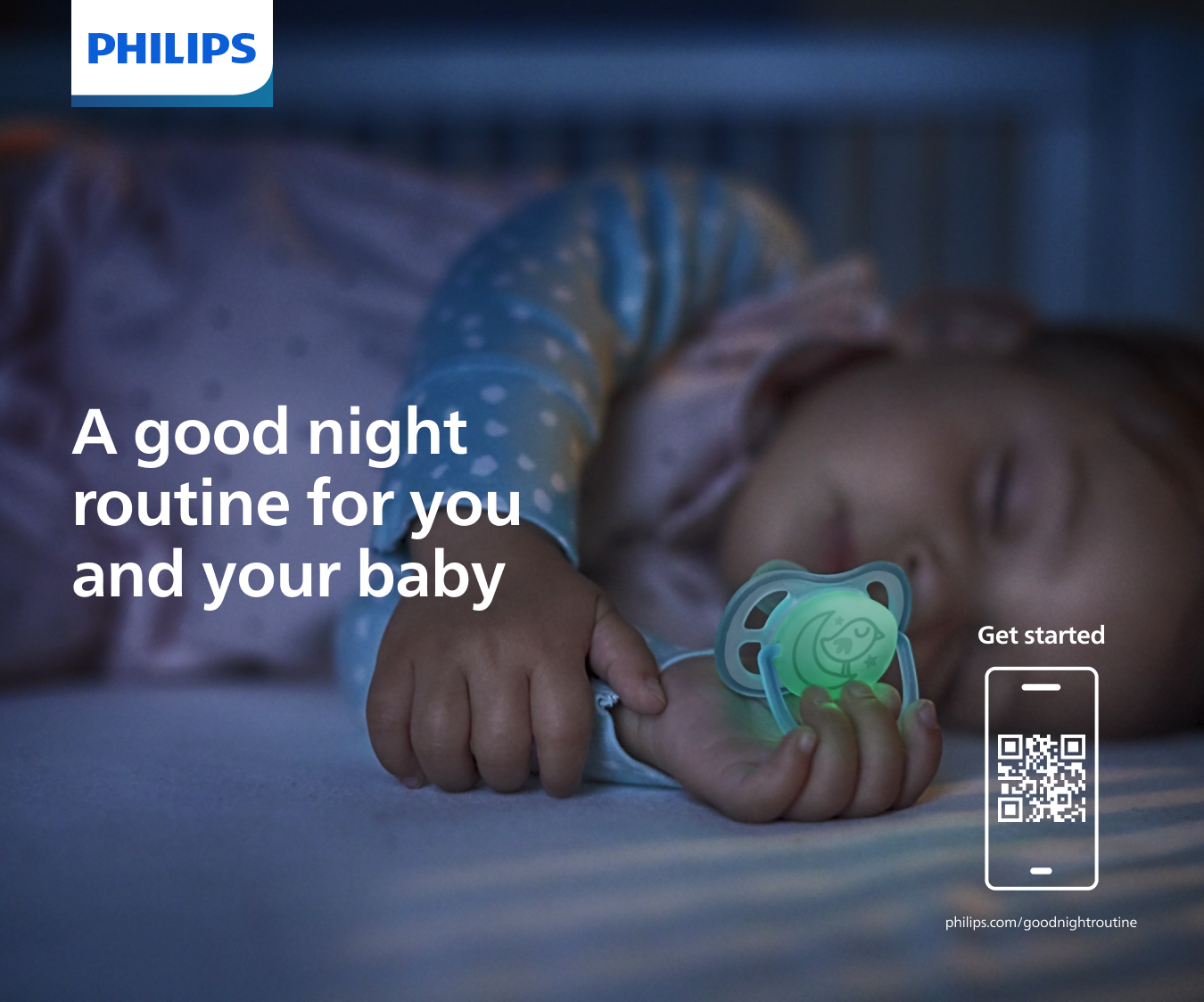
A cross-category offering addressing nighttime parenting needs, bundling products from different Philips business units into a single consumer proposition.
Impact: Increased Wake Up Light sales in Scandinavian markets during summer months.
Outcome
Within one year, the department demonstrated measurable improvement across Purpose, Process, and Enablers. Designers were established as strategic partners for business stakeholders — not just executors.
Methods & Tools
Methodologies: Qualitative interviews, usability testing, design studios, wireframing, prototyping, user journey mapping, personas, card sorting, experiments, service design, workshop facilitation
Tools: Figma, Airtable, UserTesting.com, Miro
Team
Teams of 3–11 members per project depending on scope.
Testimonials

Vero — Philips
Testimonial on strategic impact and collaboration.

Jessie — Philips
Testimonial on design quality and delivery.