3 spin-offs from 1 killed idea
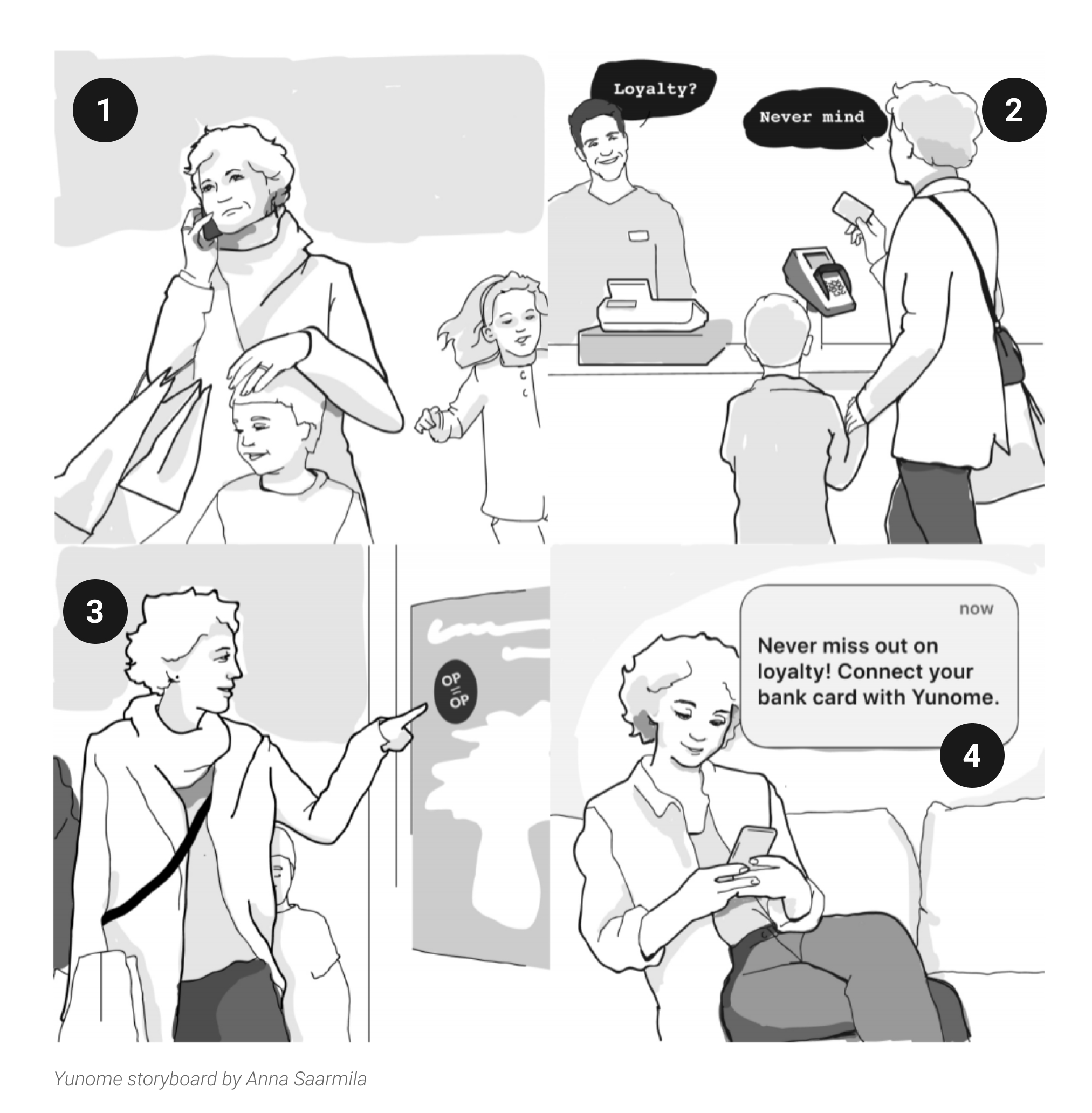
Loyalty programme project
Client: Rabobank Innovation department (via Mobiquity)
Duration: January 2019 – April 2019
Role: Service design, research, experimentation, UX/UI design
Overview
The project set out to validate an automated loyalty solution that would use consumer banking data — removing the need for physical or digital loyalty cards entirely. The research revealed a critical trust barrier, but also uncovered a more compelling opportunity that led to three spin-off product initiatives.
Challenge
How can consumers seamlessly participate in loyalty programmes without separate cards, while brands gain anonymised shopping behaviour data ethically?
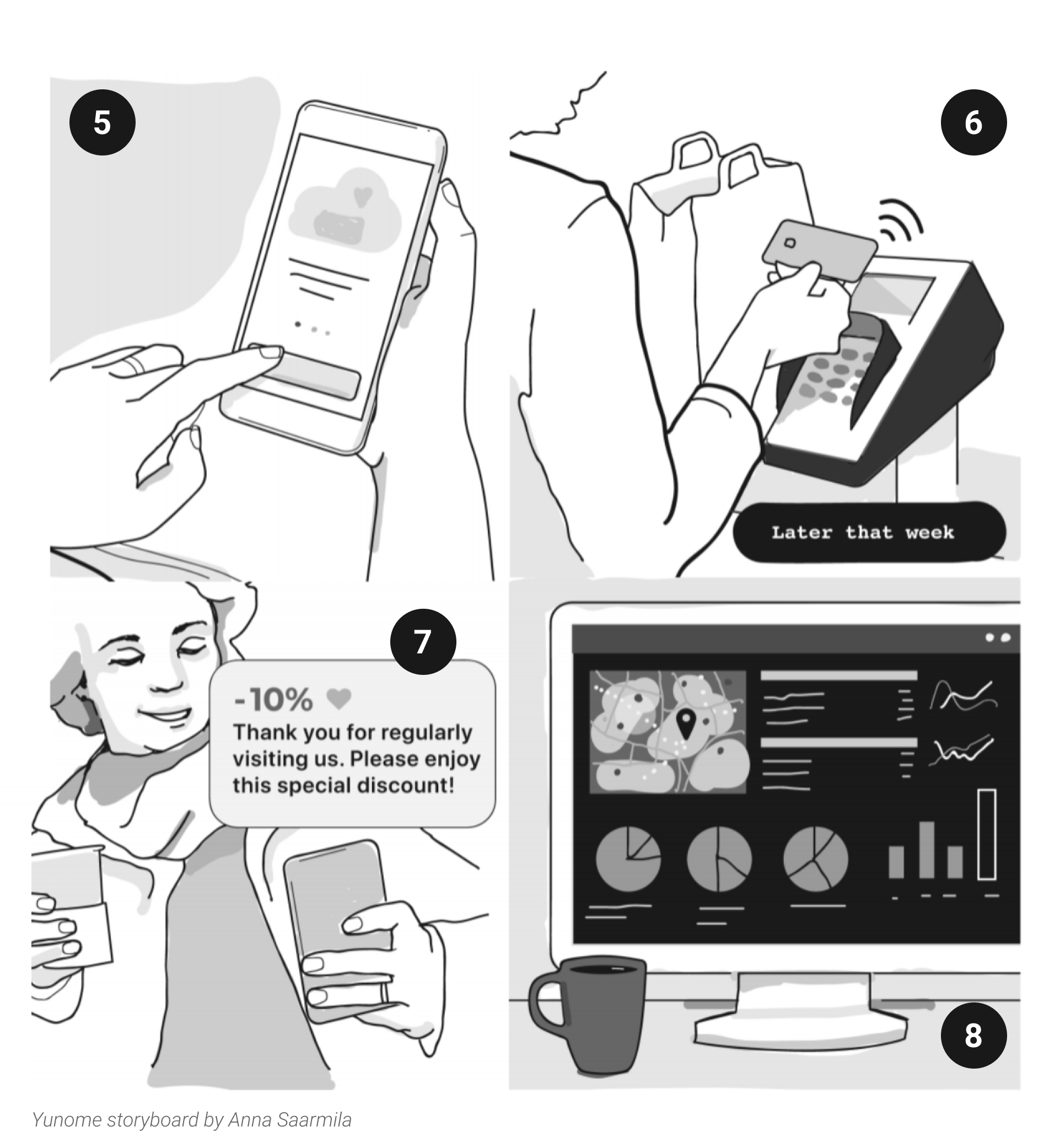
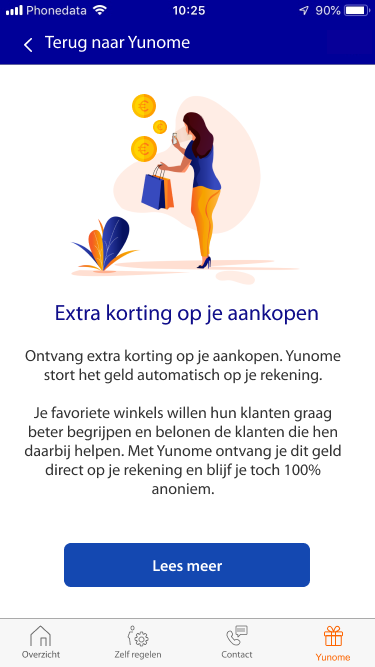
The proposed solution: a debit card-based system enabling automatic loyalty point accumulation, providing brands with anonymised market insights in return.
Research & Experimentation
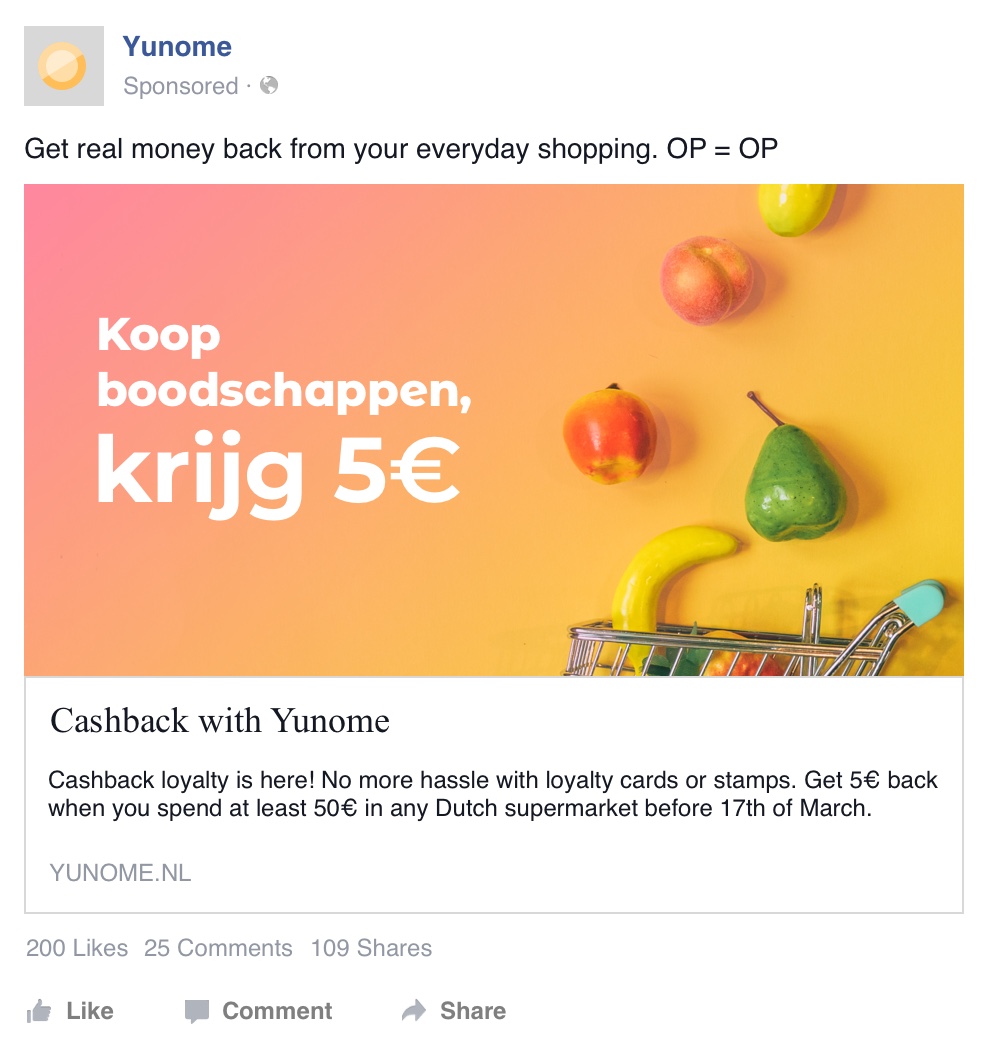
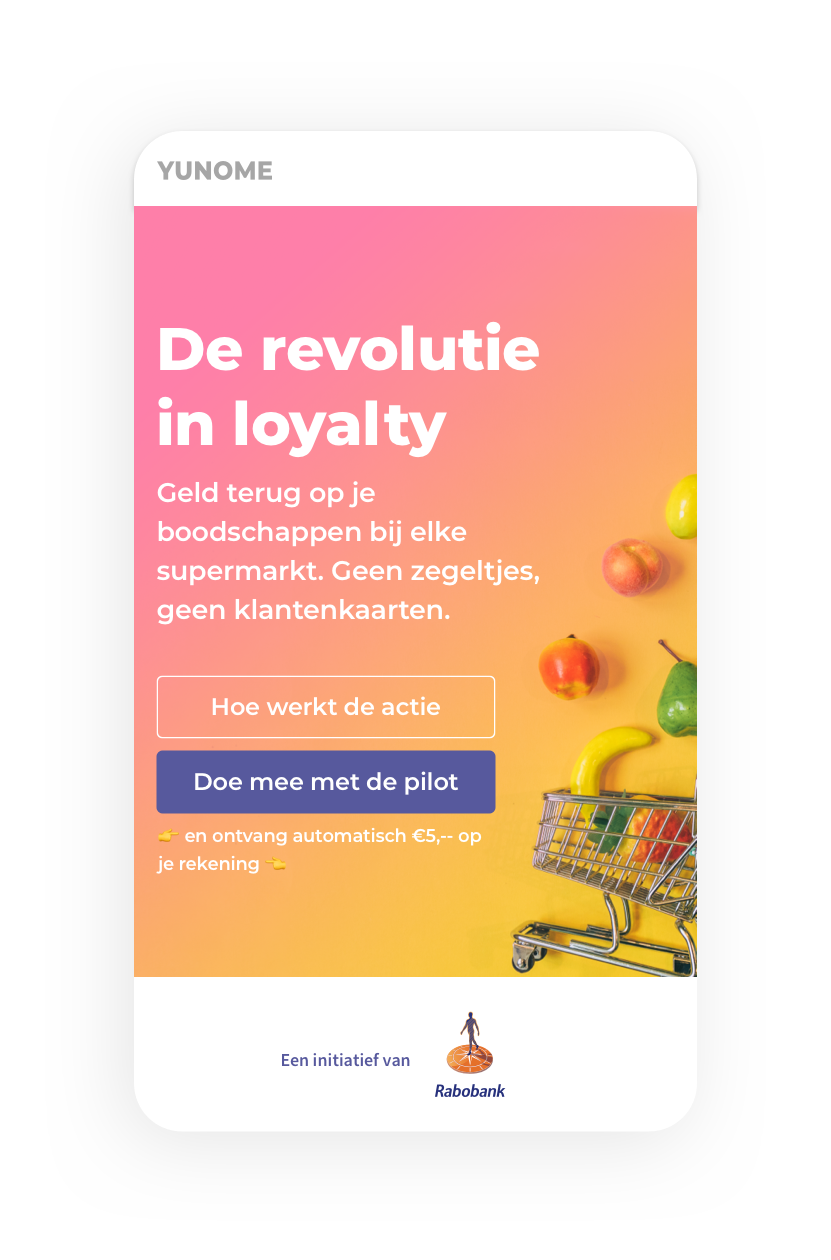
Facebook ad experiments
Five experiments tested different value propositions via targeted Facebook ads to gauge interest before any product was built.
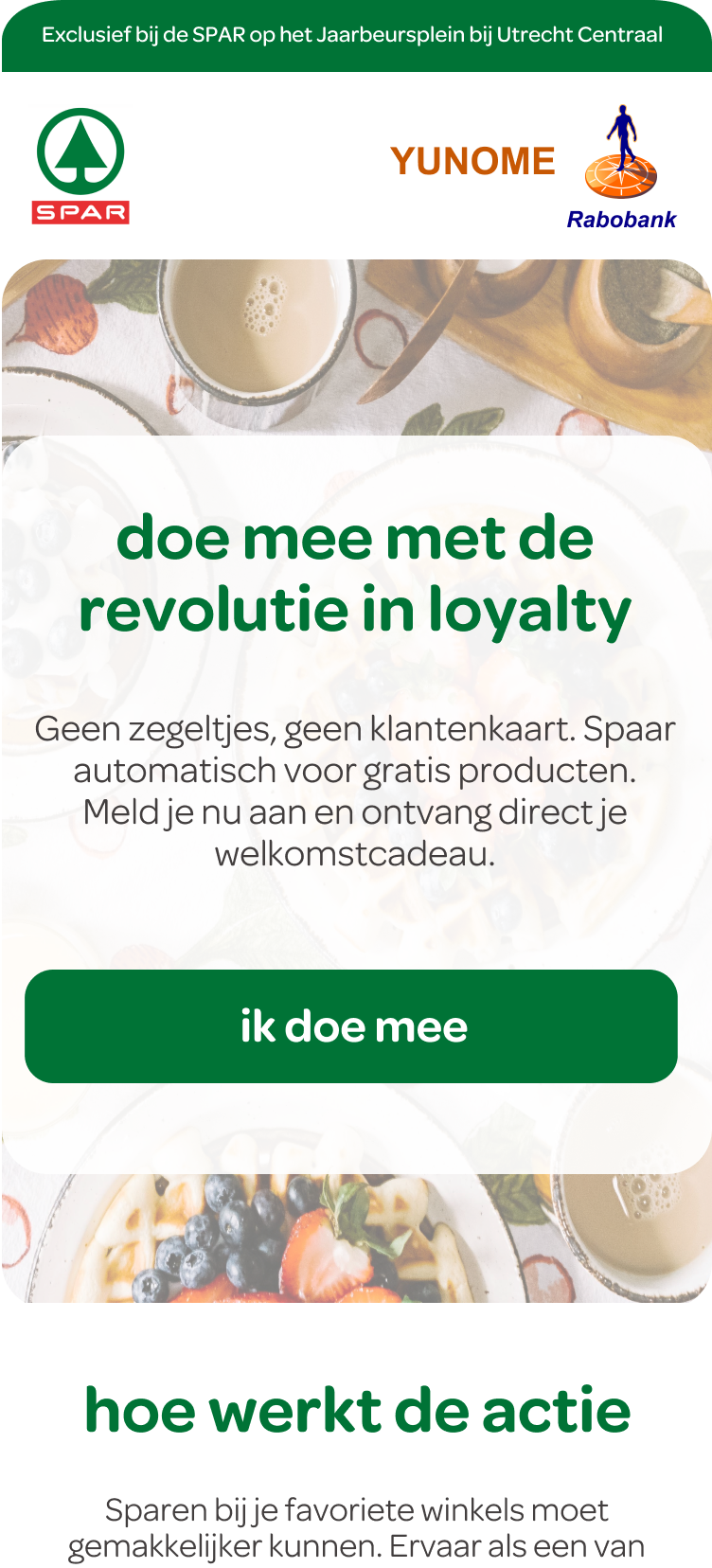
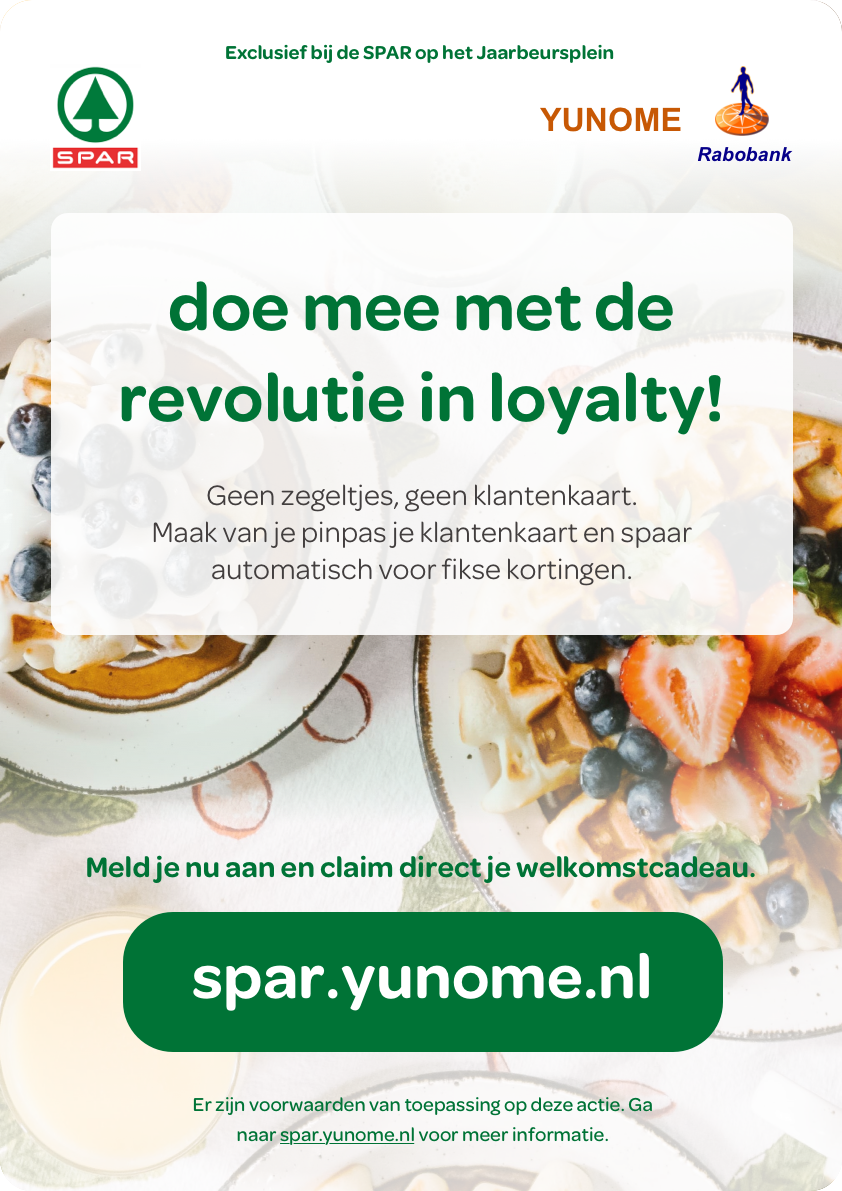
In-store activation — SPAR partnership
A real-world activation was run inside a SPAR supermarket to test the proposition with live shoppers.
User interviews
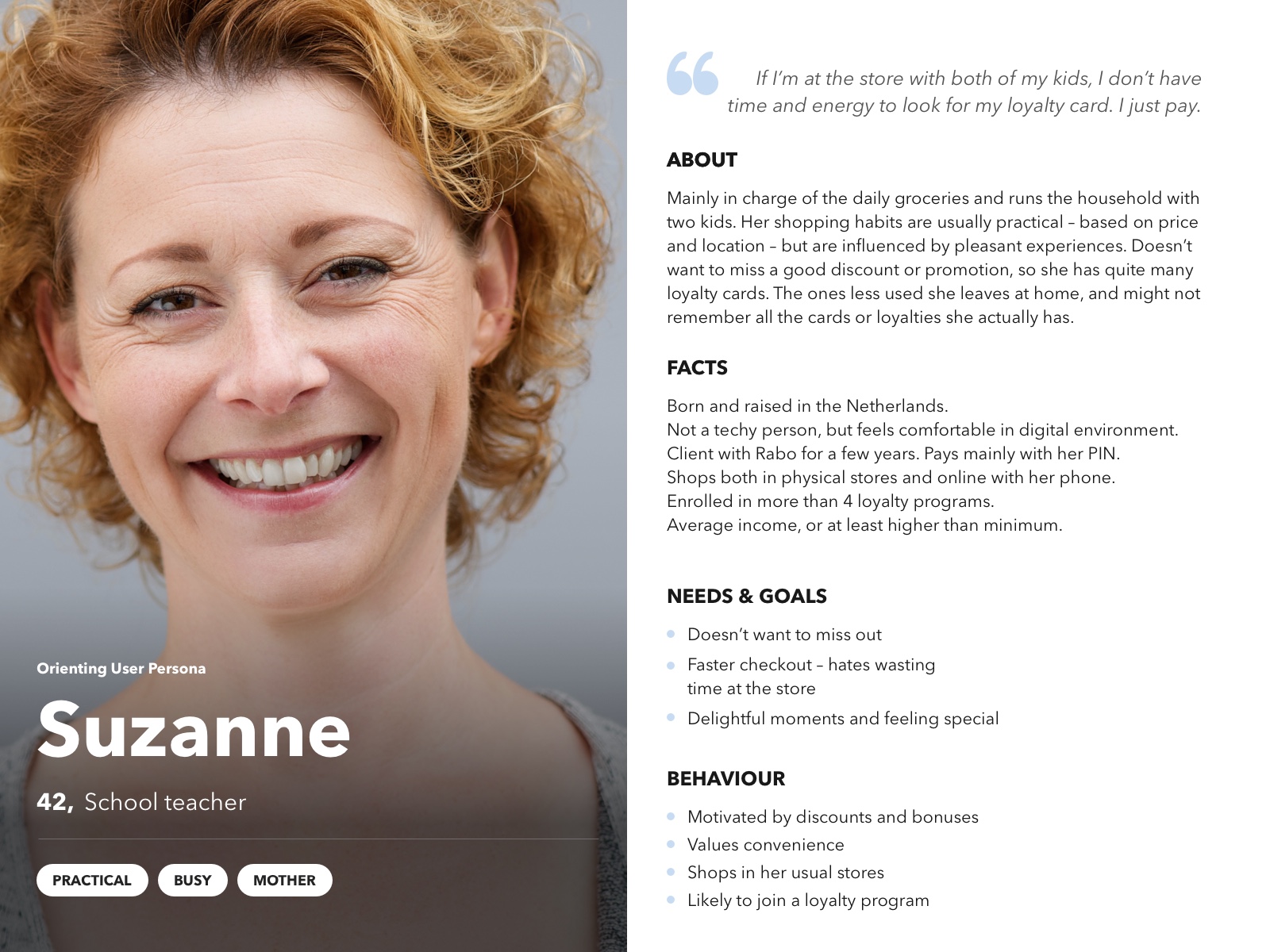
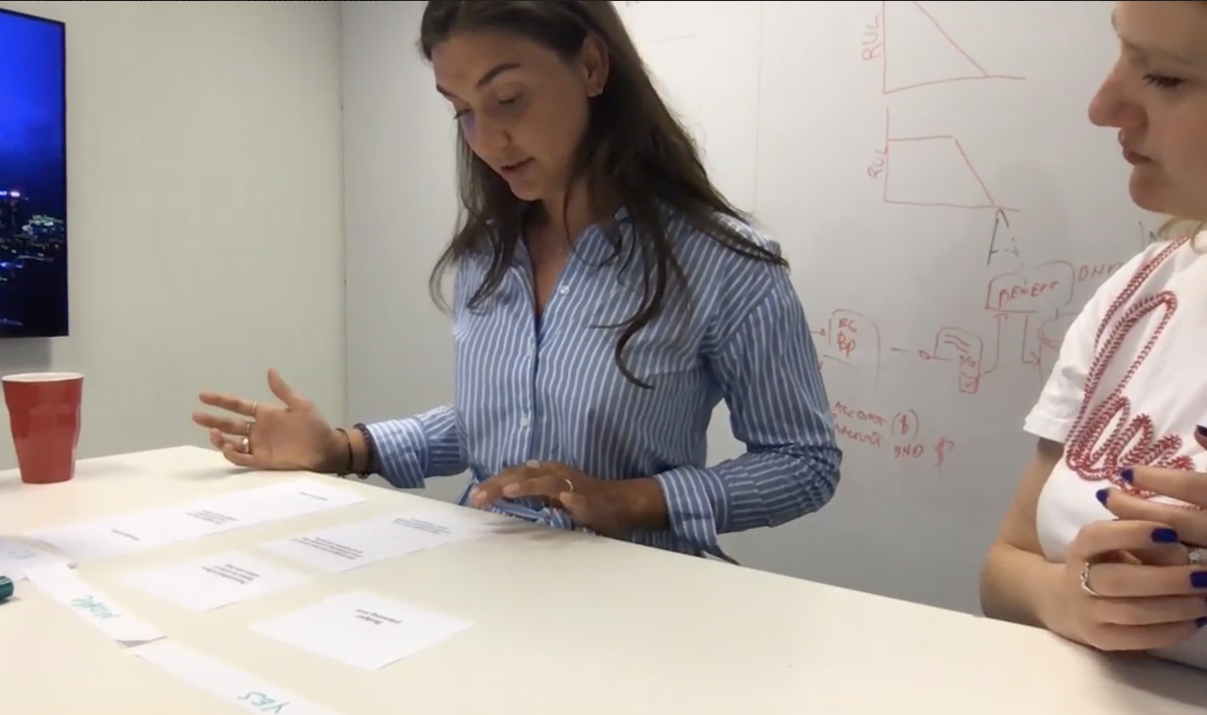
22 in-depth user interviews and card sorting exercises explored understanding, trust, and willingness to share data.
Critical Finding
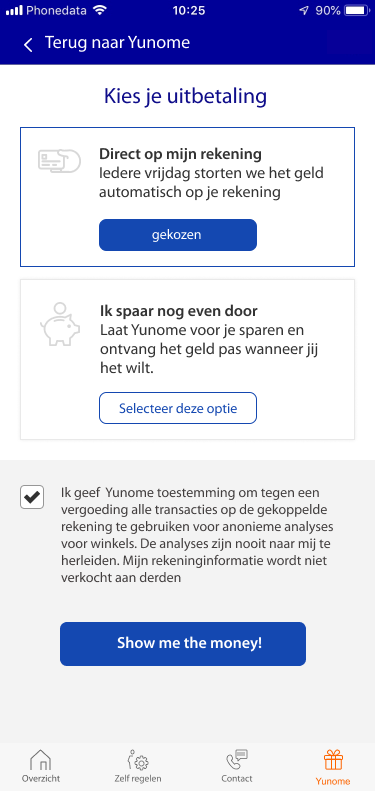
"People didn't realise that they need to give access to all of their banking transactions" — despite clear explanations on the website.
When users understood the full scope of data sharing required for cashback rewards, the majority indicated they would not have signed up. The value exchange wasn't strong enough to justify the perceived privacy cost.
Positive Discovery
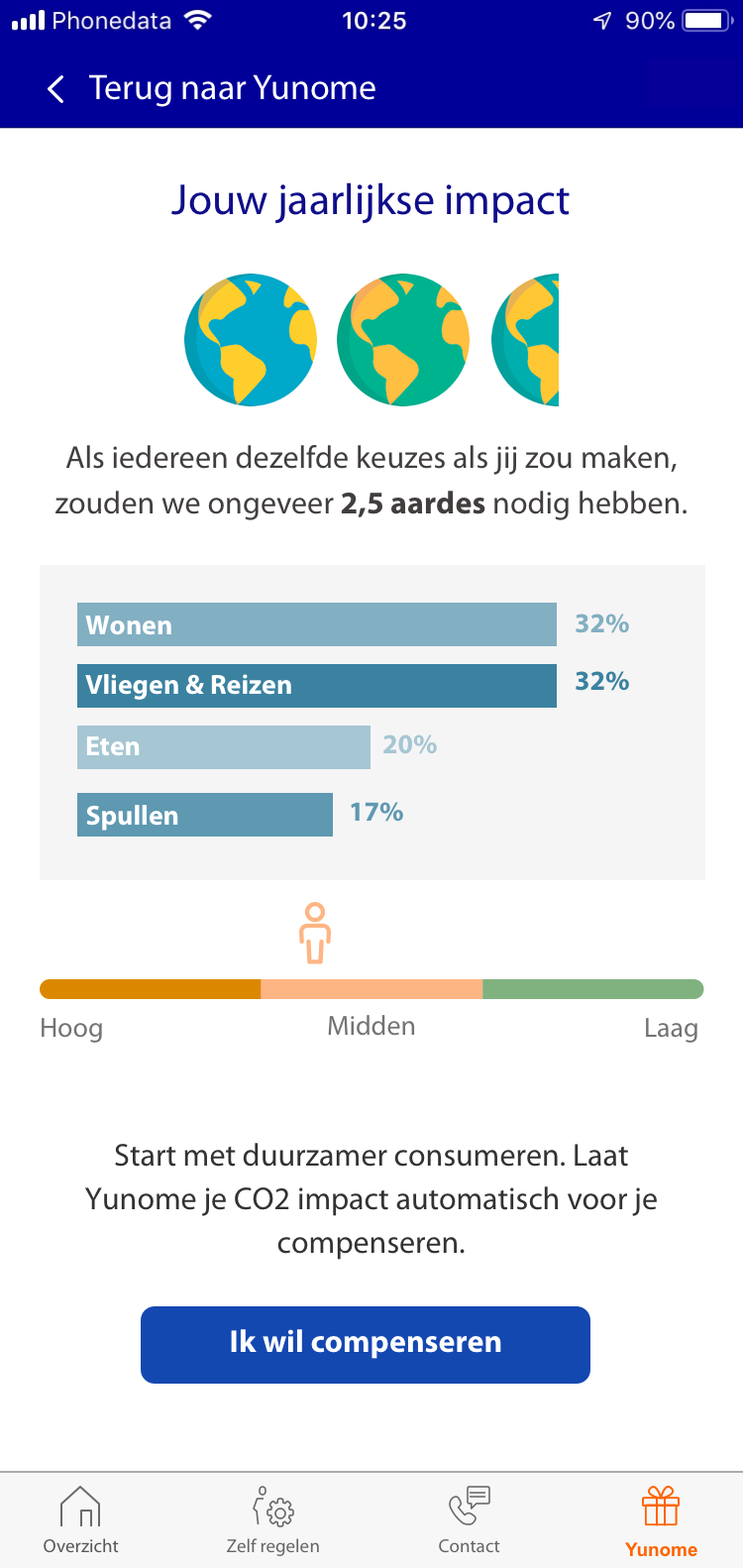
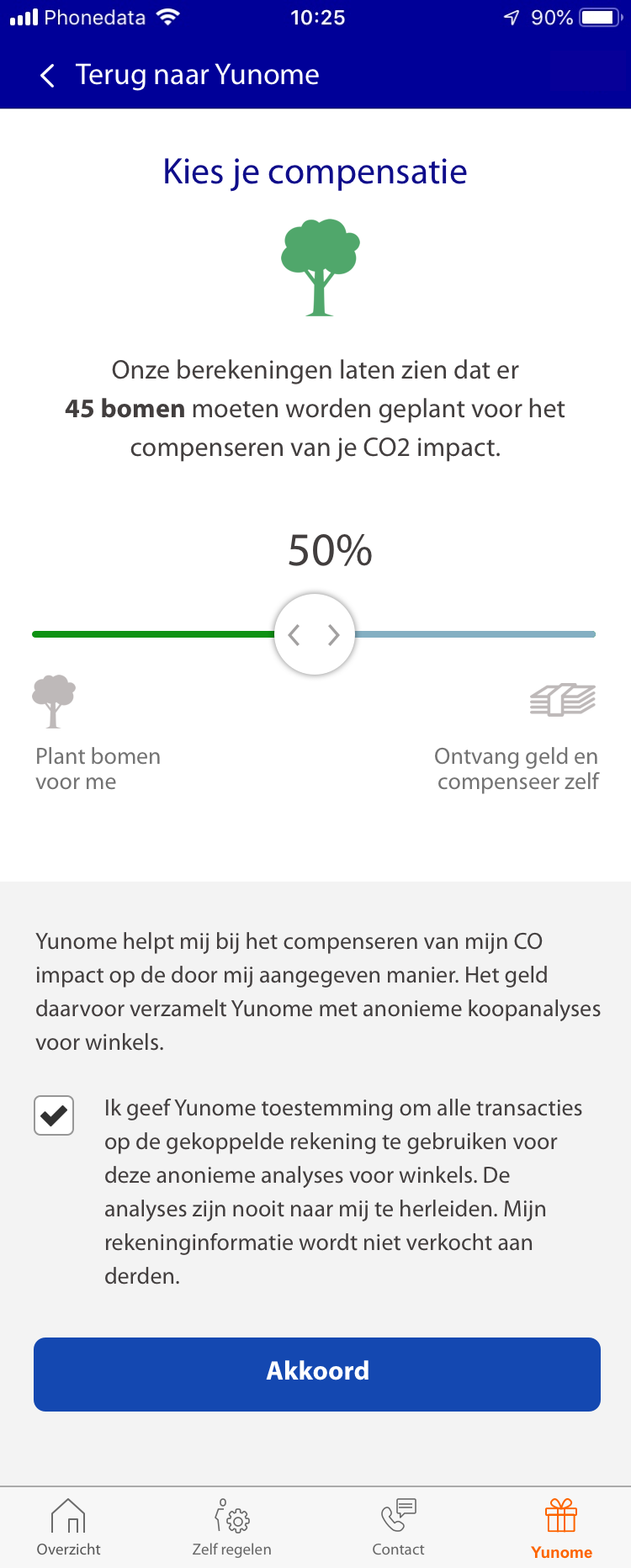
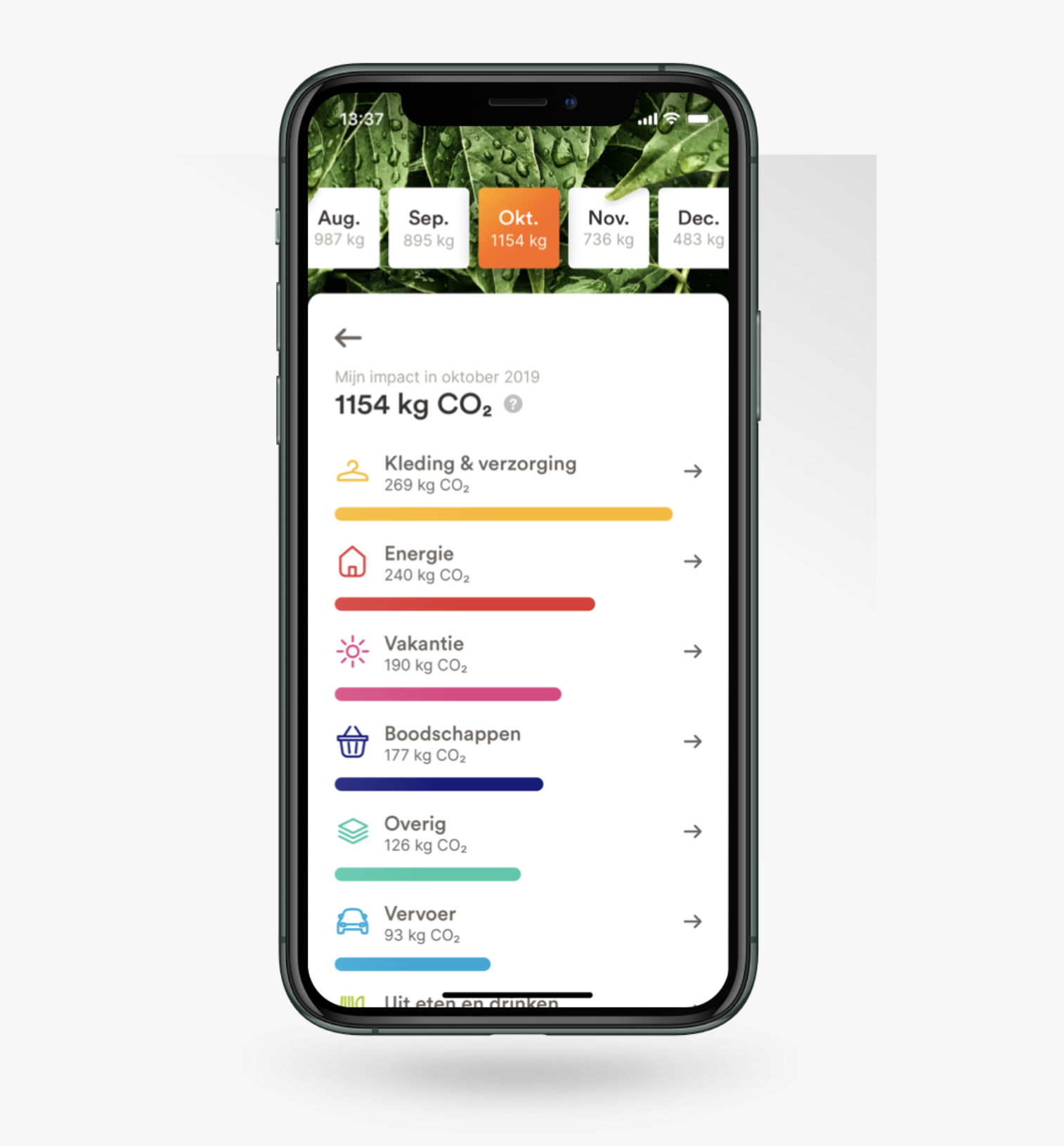
A separate signal emerged clearly from the research: participants were enthusiastic about sharing transaction data when the value proposition shifted to carbon footprint tracking and environmental impact — specifically a tree-planting buyout model.
Outcome
The team recommended closing the original loyalty programme concept. Rather than a failure, this triggered three spin-off initiatives that pursued the more viable directions uncovered by the research:
- Pin-punten — points-based loyalty model
- Go.Green.Easy — sustainable shopping companion
- Carbon Bank — carbon footprint tracking via banking data
Methods & Tools
Methodologies: Qualitative interviews, guerrilla interviews, Facebook ad experimentation, storytelling, wireframing, prototyping, personas, card sorting, service design
Tools: Sketch, Invision, Facebook Ads, Google Suite
Team
| Role |
|---|
| 2 Designers |
| 1 Product Manager |
| 2 Software Engineers |
| 1 Security Engineer |
| 1 Data Scientist |
| 1 Researcher / Experimentation Expert |
| 3 Stakeholders |
Testimonial

Lucia Collará, Lead Product Manager @ Mobiquity
Testimonial on research quality and design execution.