Grocery shopping in 2030 - BD research
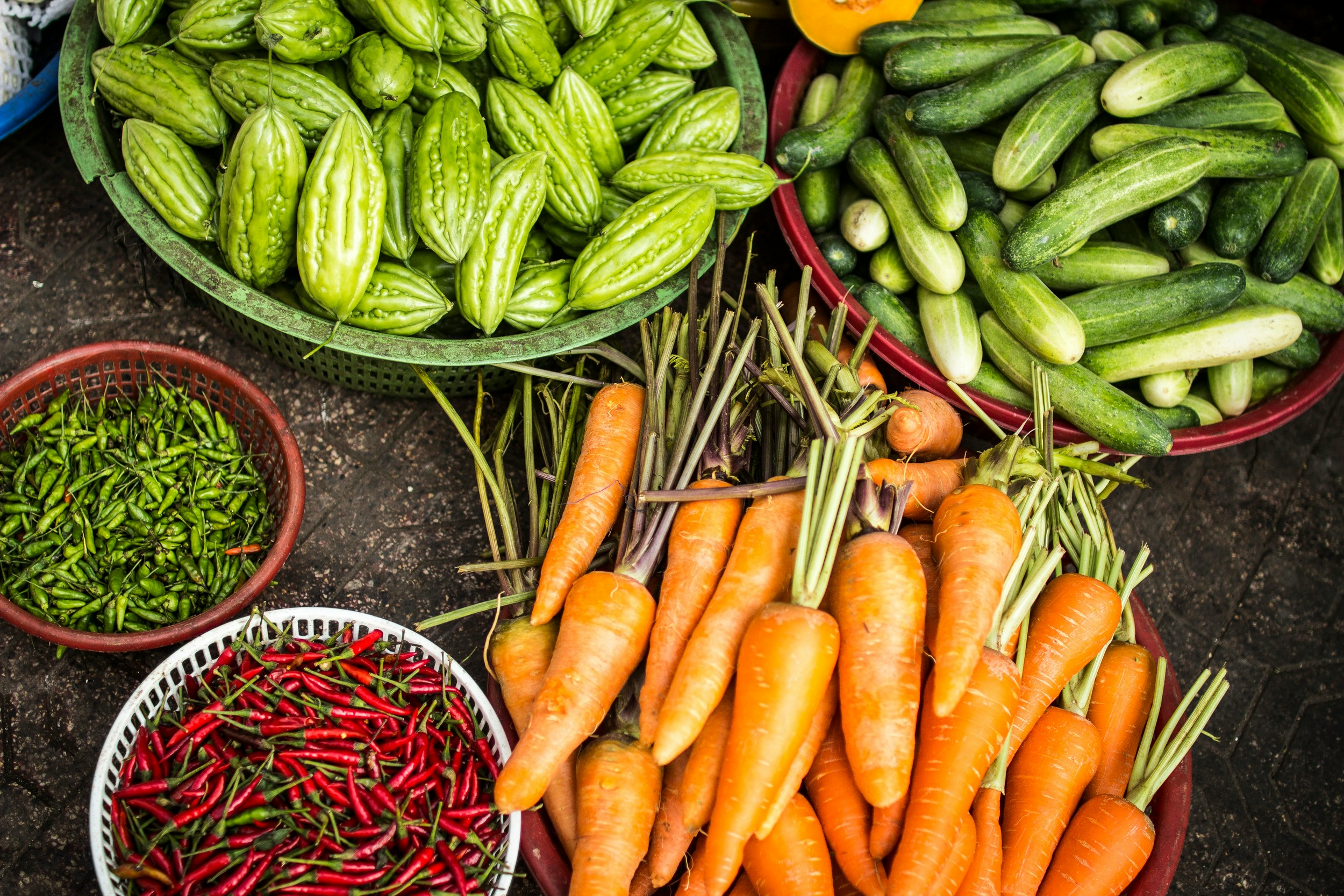
Researched the future perceptions of grocery shopping and awareness of regenerative farming
Client: frog design (business development project)
Duration: August 2023 – January 2024
Role: Led quantitative and qualitative research, derived insights and presented recommendations
Impact
Research established grounds to explore regenerative farming as a potential business opportunity for Capgemini's agriculture clients in the Netherlands — shifting it from being dismissed as uninteresting to consumers into a validated strategic direction.
Challenge
Understand current fresh produce shopping habits and future expectations of customers in the Netherlands, and assess whether regenerative farming could become a meaningful part of that picture.
Key outcome: "Customers are considering two factors when buying food: price and nutrition, while businesses are looking for ways to offer healthy produce."
Background
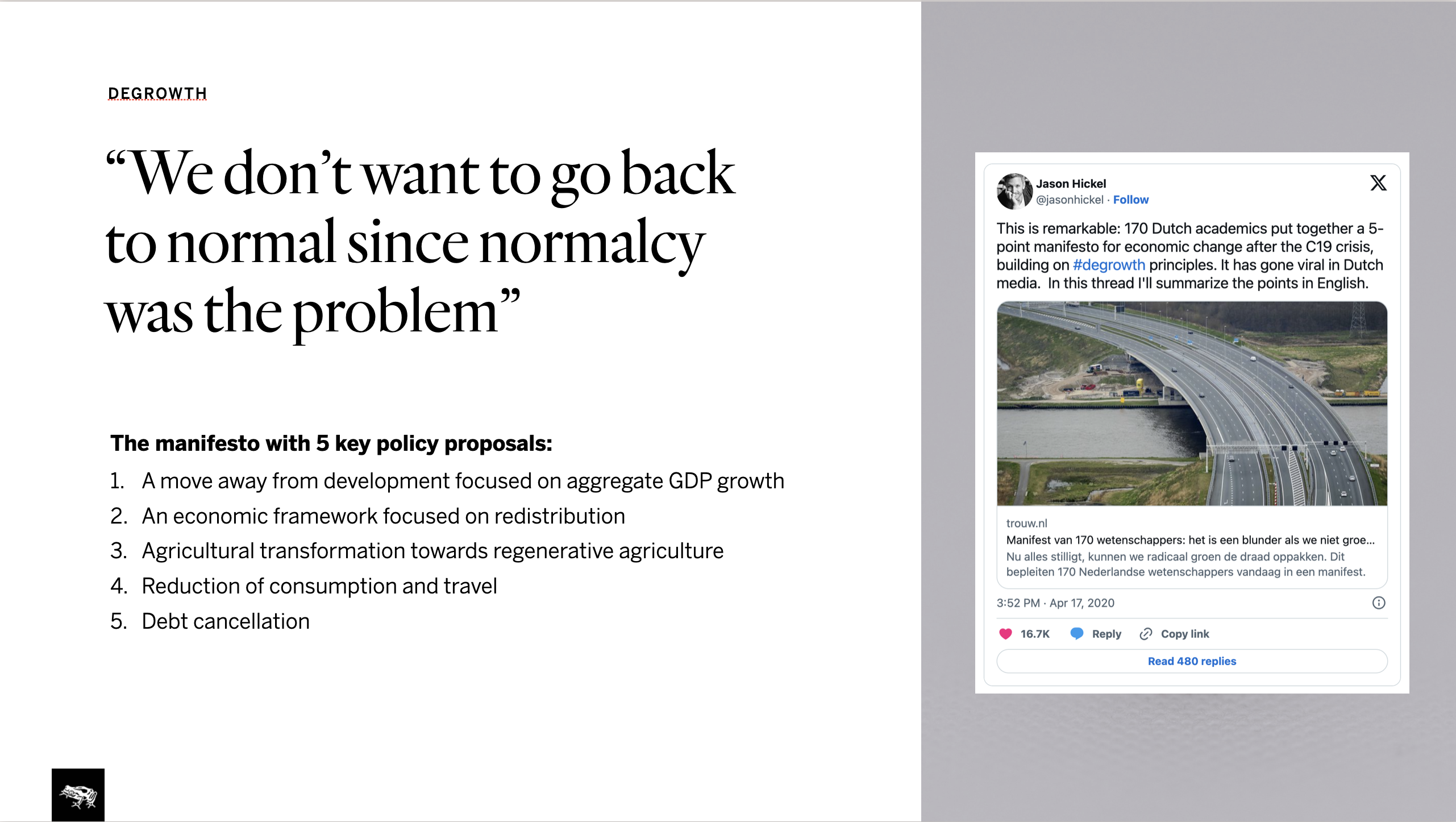
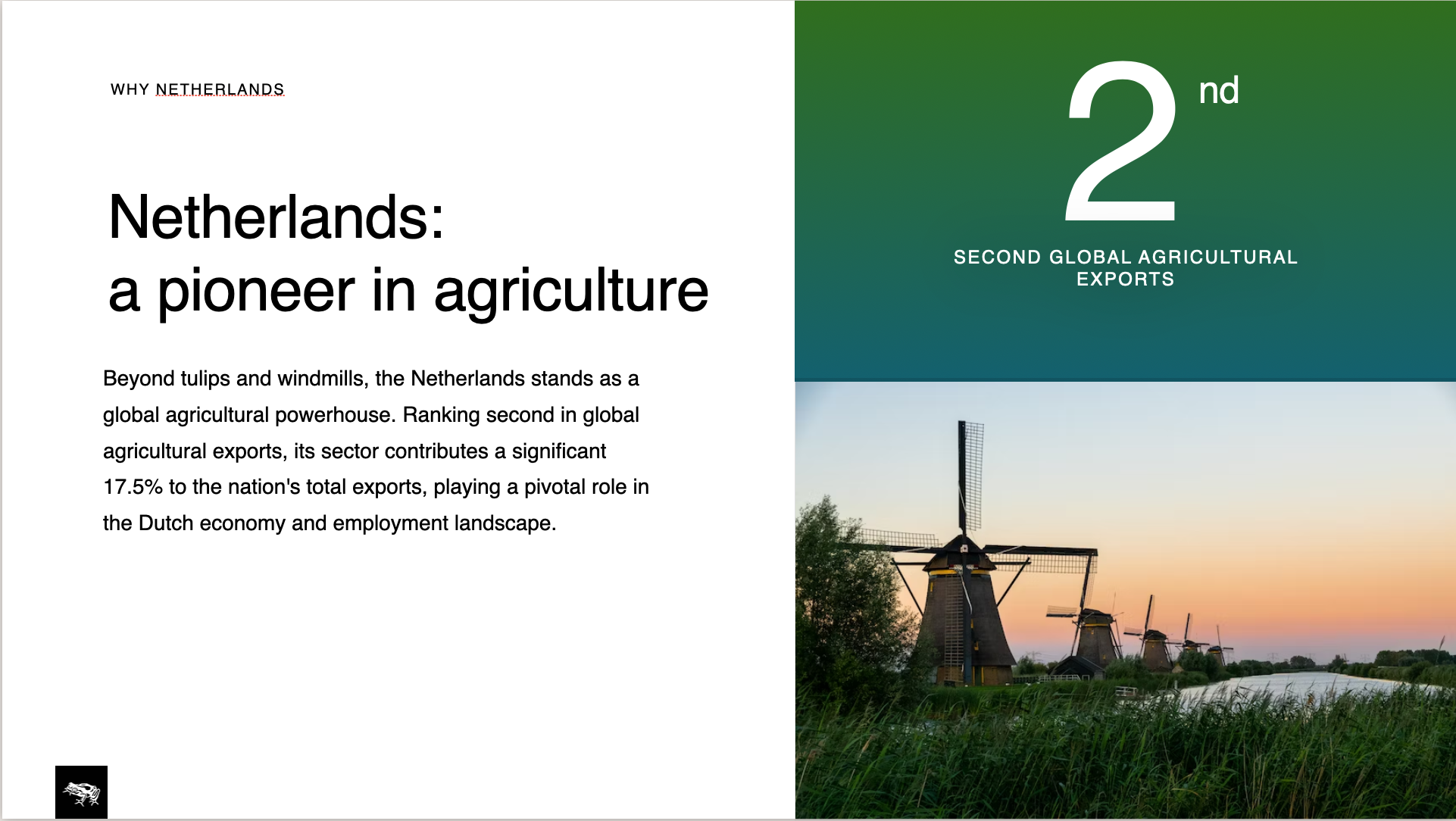
The research drew inspiration from the Degrowth manifesto and a Dutch scientists' policy proposal on agricultural transformation. As the world's second-largest food exporter, the Netherlands faces mounting pressure from climate change and soil degradation — making regenerative agriculture a timely area of investigation.
Regenerative farming improves soil health through cover cropping, crop rotation, and minimal soil disturbance — a systemic alternative to conventional practices.
Hypothesis
Educated and wealthy consumers prioritise nutritional value and climate impact when purchasing food, and this could influence supply chains toward more sustainable sourcing.
Research Approach
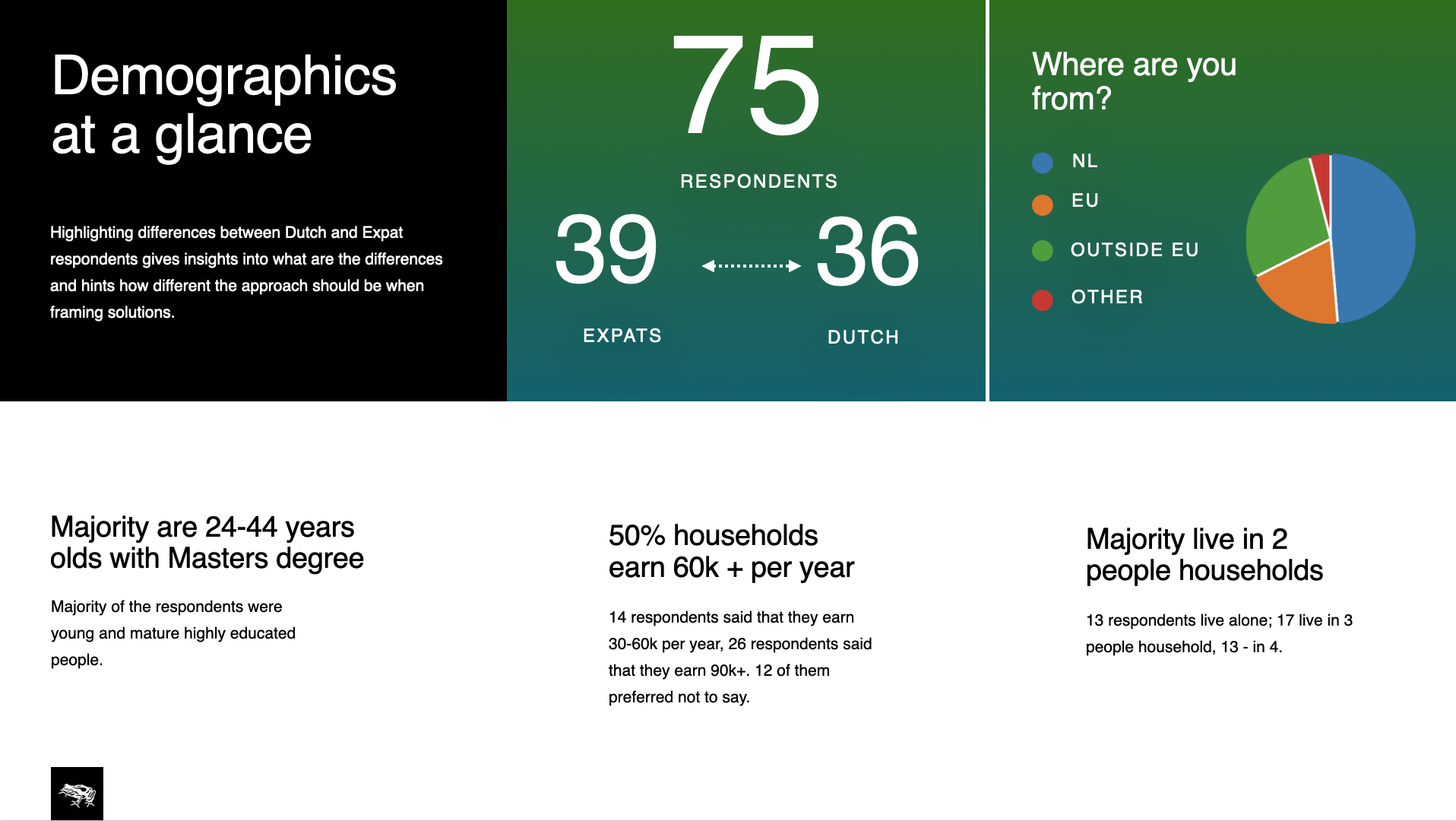
The study combined a consumer survey with qualitative interviews across four small and medium enterprises, capturing perspectives from consumer, supply chain, and farmer angles — including a food forest operator and a practising regenerative farmer.
Consumer Survey Findings
Finding 1 — Price-Health Balance
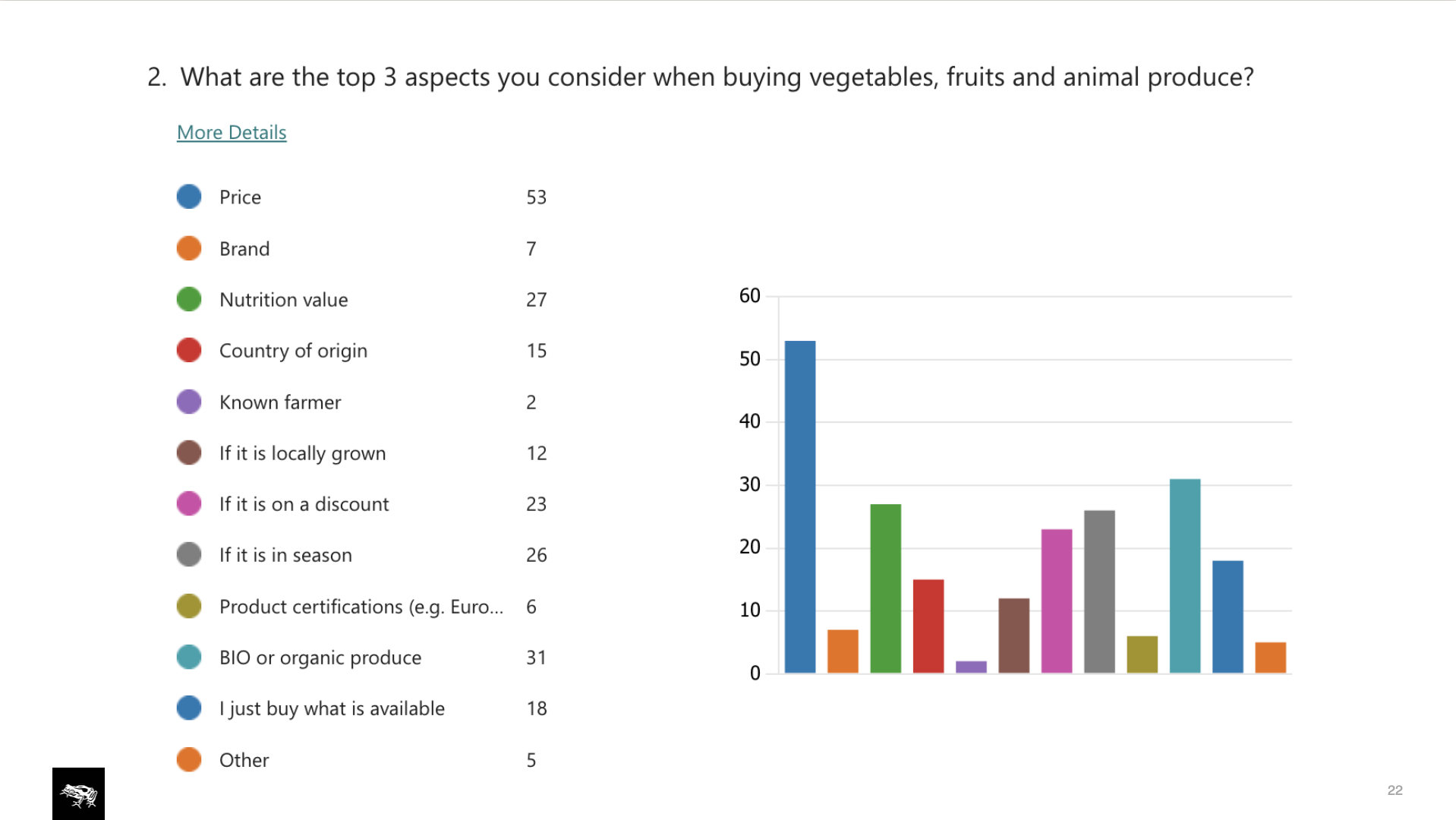
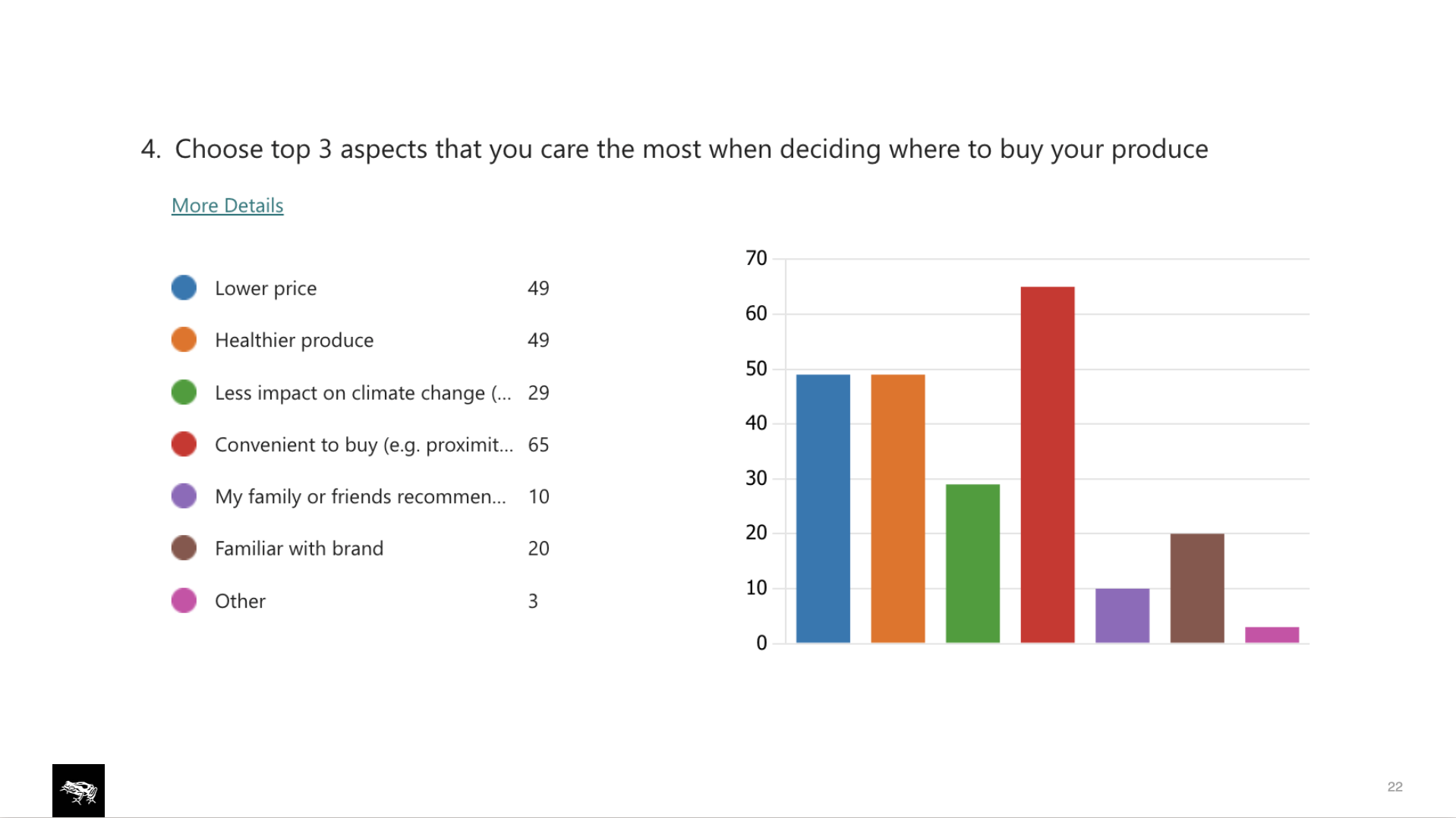
Price, convenience, and healthiness are the top deciding factors when buying food. Cultural differences matter: expats in the Netherlands prioritise nutritional value over discounts more than Dutch-born respondents do.
Finding 2 — Limited Farming Knowledge
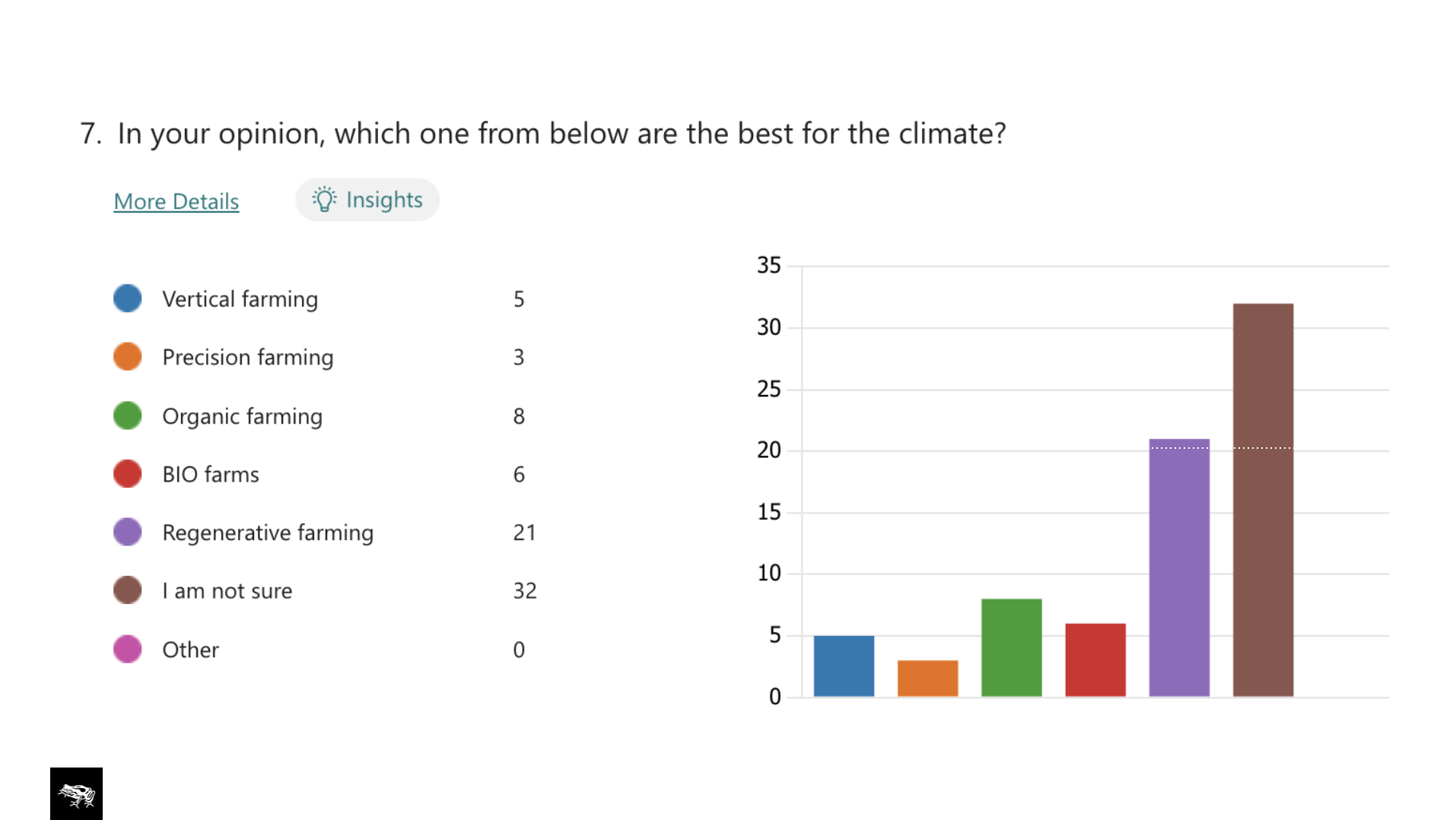
The majority of respondents were unsure which farming practice is better for soil health and the planet. People acknowledge that agriculture contributes to climate change, but practical farming education is largely absent.
Finding 3 — Pessimistic Future Expectations
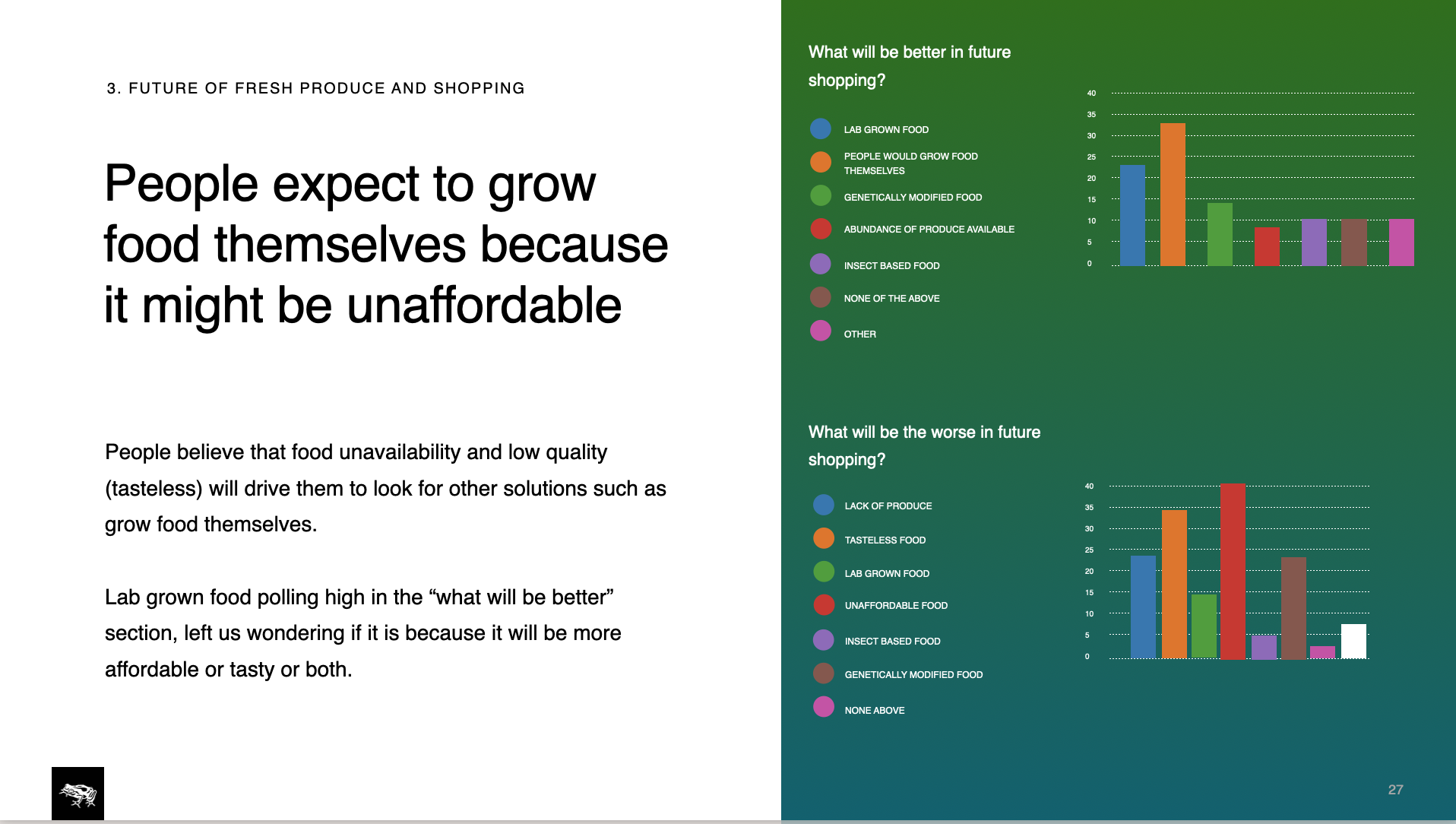
Consumers anticipate a future of unaffordable, tasteless, and genetically modified food with shortages. They expect to grow food themselves and anticipate increased government regulation.
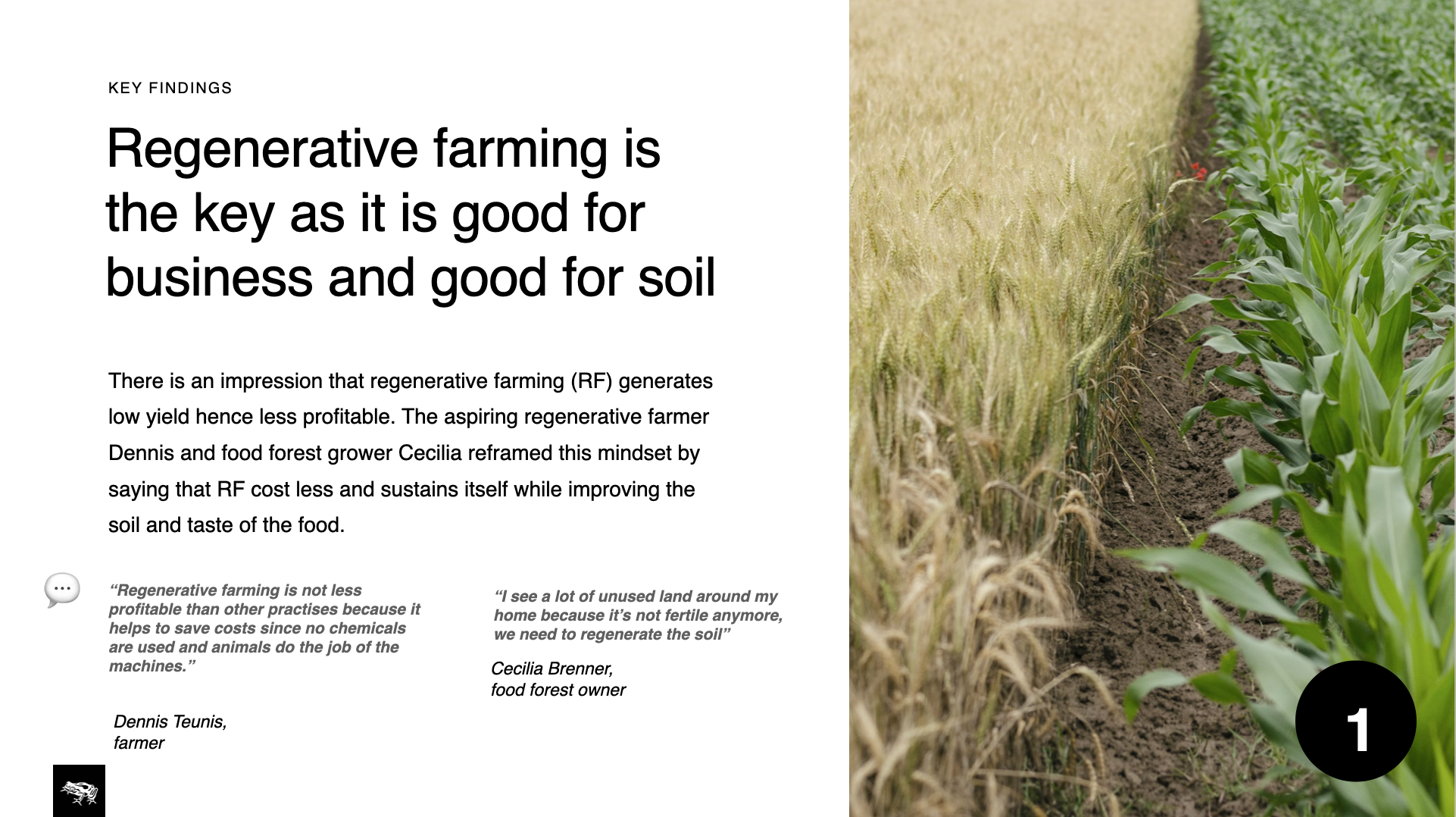
SME Interview Insights
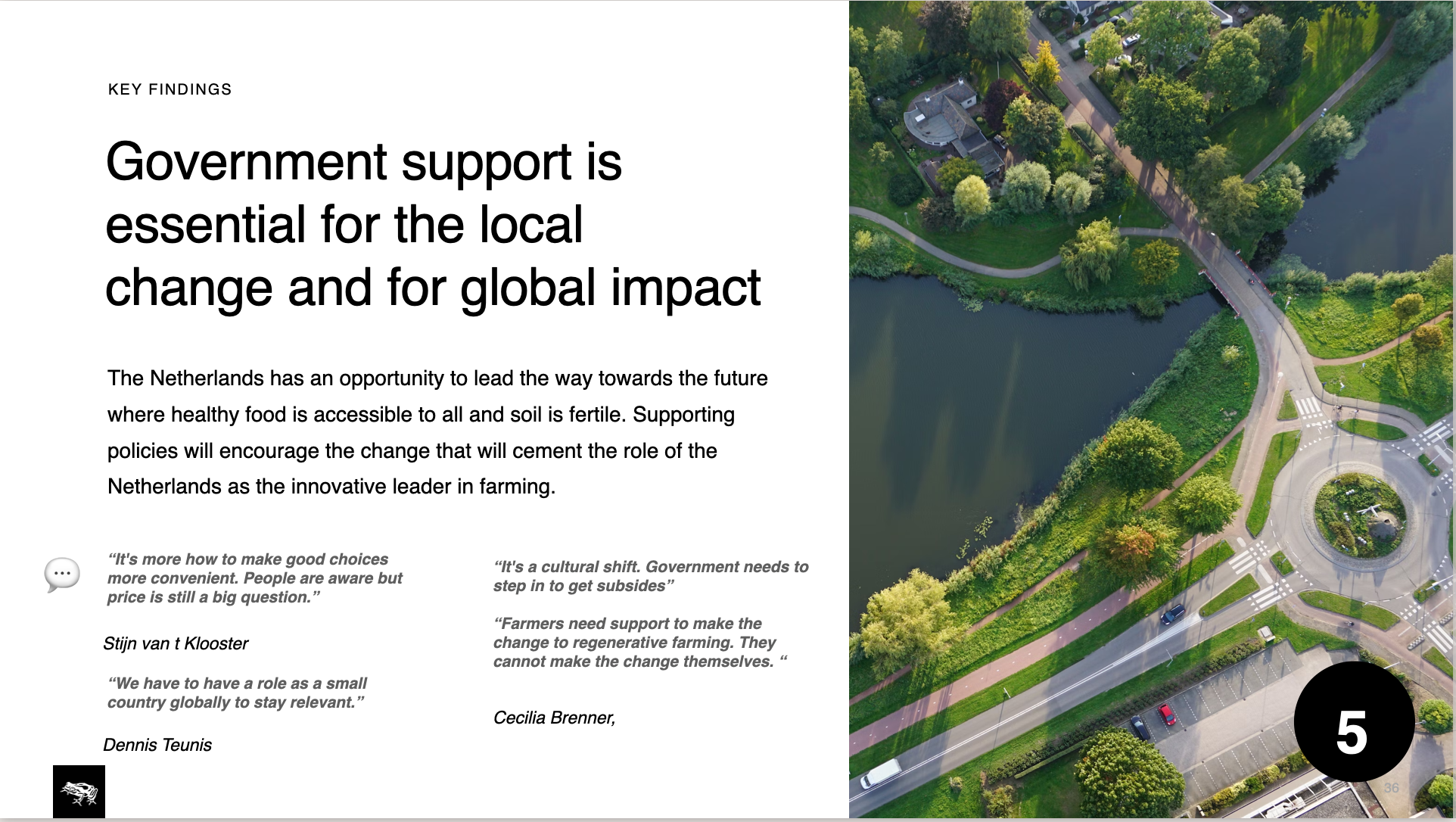
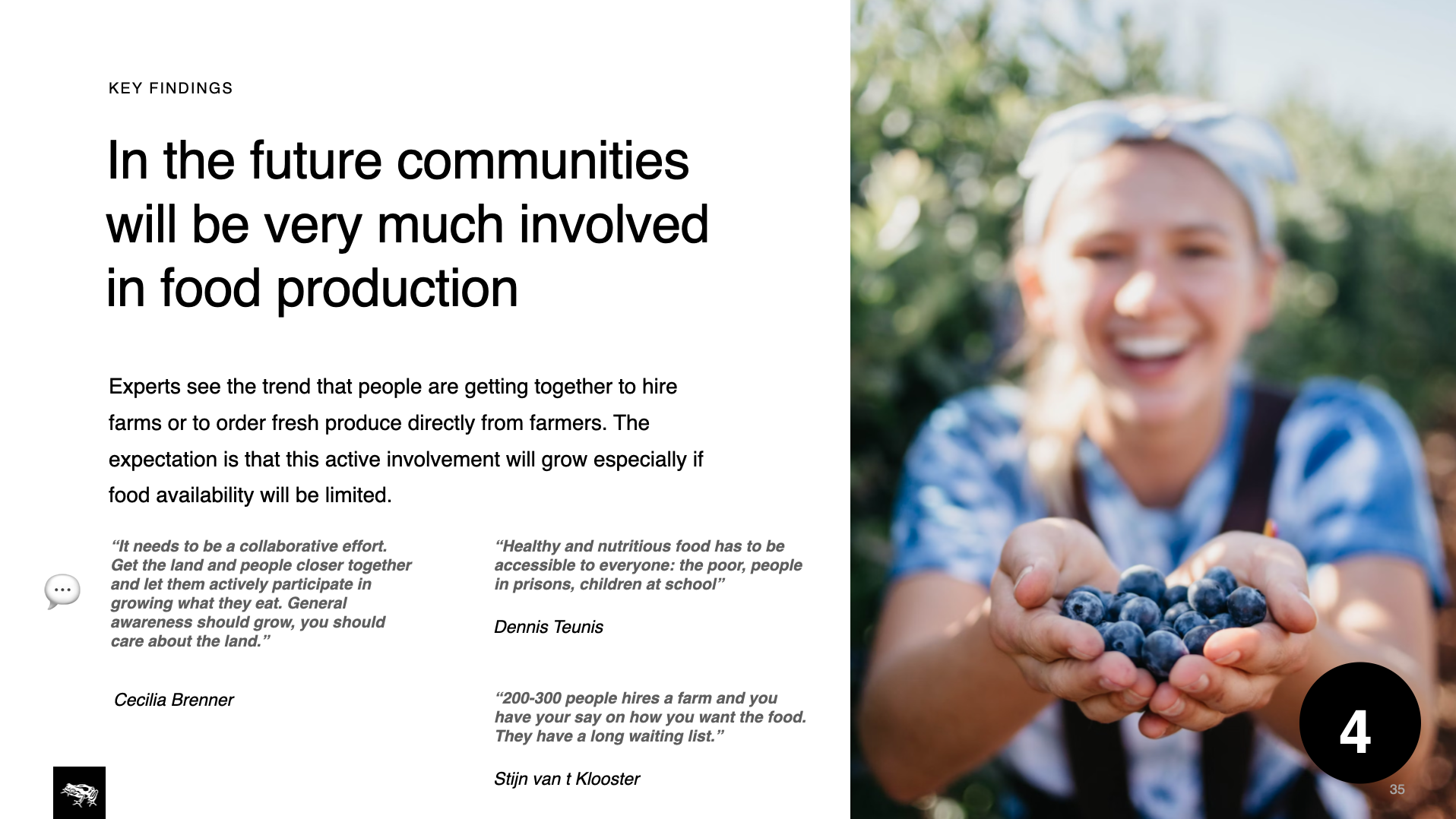
Four SME interviews validated the hypothesis that regenerative farming represents a systemic solution rather than a niche trend.
Key findings from interviews:
- Regenerative farming produces abundance with lower ongoing expenses
- Consumer interest in food origins and sourcing is growing
- Real examples exist of direct farm purchases and collective growing initiatives
- Systemic change requiring broad stakeholder engagement is necessary
Next Steps
The research surfaced four critical questions to explore in follow-on work:
- What is the financial viability of regenerative farming at scale?
- What government support mechanisms exist or are needed?
- How can behavioural change be driven across the full food system?
- What are the current realities and transition impacts for farmers?
Methods & Tools
Methodologies: Consumer survey (quantitative), qualitative SME interviews, insight synthesis, strategic recommendations
Frameworks: Degrowth manifesto, systems thinking, futures research