Crafted the award winning strategy and redesigned the B2B platform
Company
ANIMOB
Year
Jul 2025 - Present
Role
Strategy, research, service design, product design, communication
Impact
Conversations with potential clients are more productive as it is clear what value ANIMOB can bring to them. 3 year contract has been signed with GALP.
Founder clarity about the business, internal processes and the future direction.
Challenge
Clarify what ANIMOB is, why clients should be interested, what is the USP, redesign the website and platform to ignite sales and user experience.
Outcome
Pitch deck, Sales materials, designed processes, redesigned website, redesigned platform.
Part 1
Company repositioning
The context
The initial founders of ANIMOB were working on the idea for 4 years when I joined. They built the website, the pitch decks, tried collaborating with agriculture farmers and solar parks - finished a paid pilot in a solar park.
I joined the startup through the 6 month Venture Building programme organised by EIT Food TeamUp.
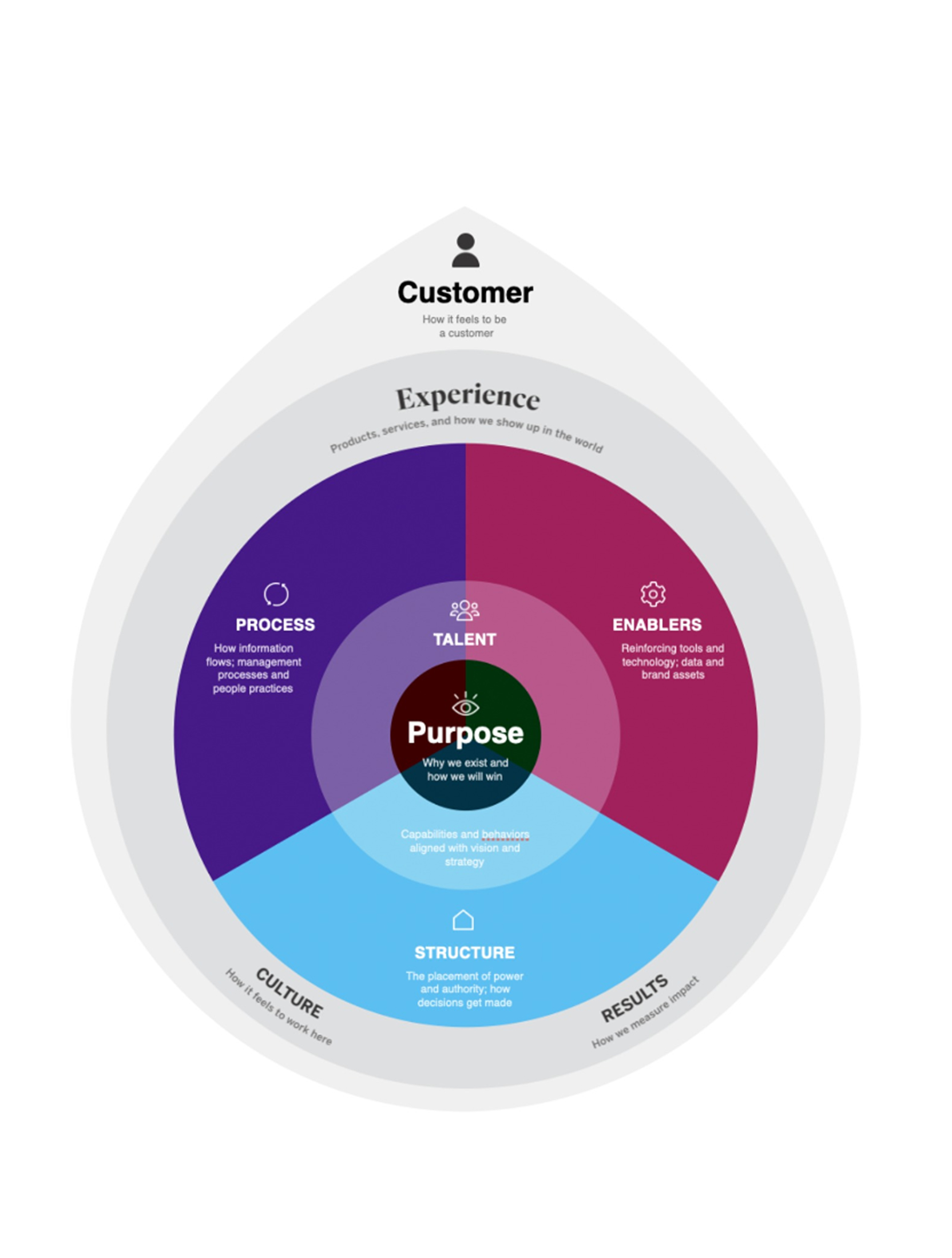
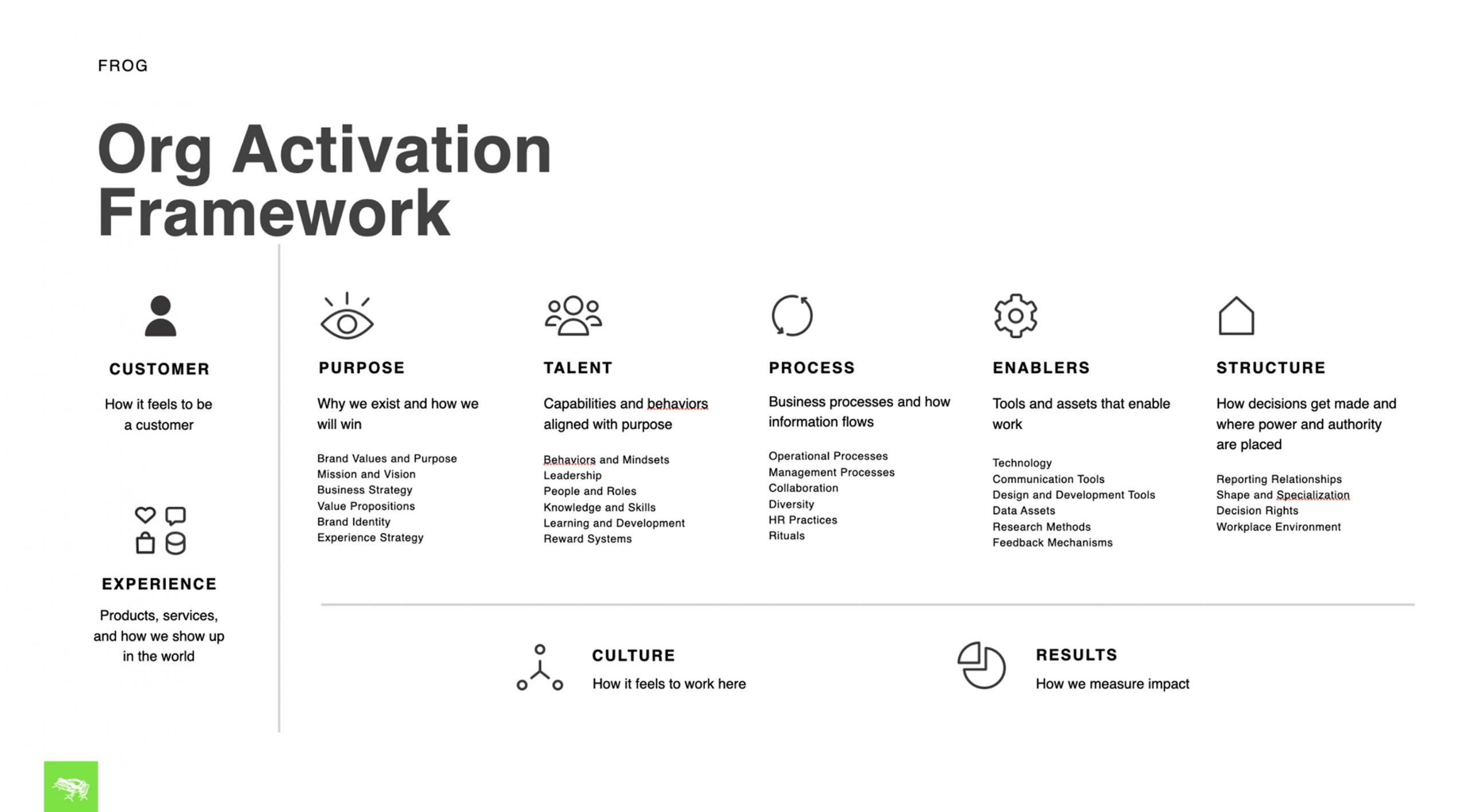
Organisational activation framework @ frog
Understanding what was done until now
I've led conversations, mapping workshops with the team as well as reviewed the existing presentations and documents to understand what is the company maturity level in the organisational activaton framework.
I pitched the startup myself and listened in when the CEO was pitching to hear the questions from the audience to understand what was not clear to them.
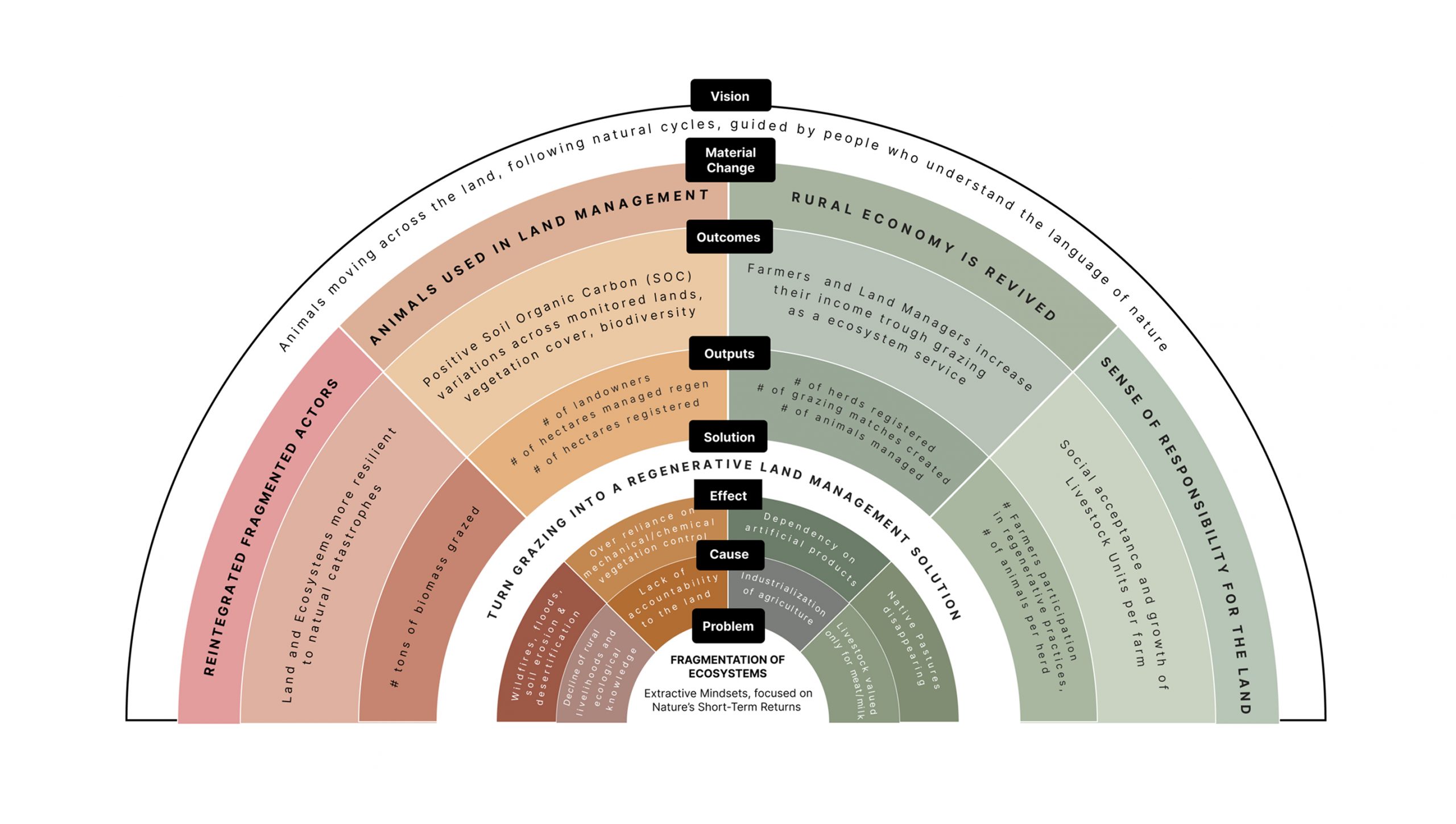
Theory of change helped to frame company direction
Mapping the situation as-is
I started by making market segment map and stakeholder map to understand who besides customers is involved in the business operations.
Service blueprint showed many gaps and assumptions in the current internal and client-facing processes.
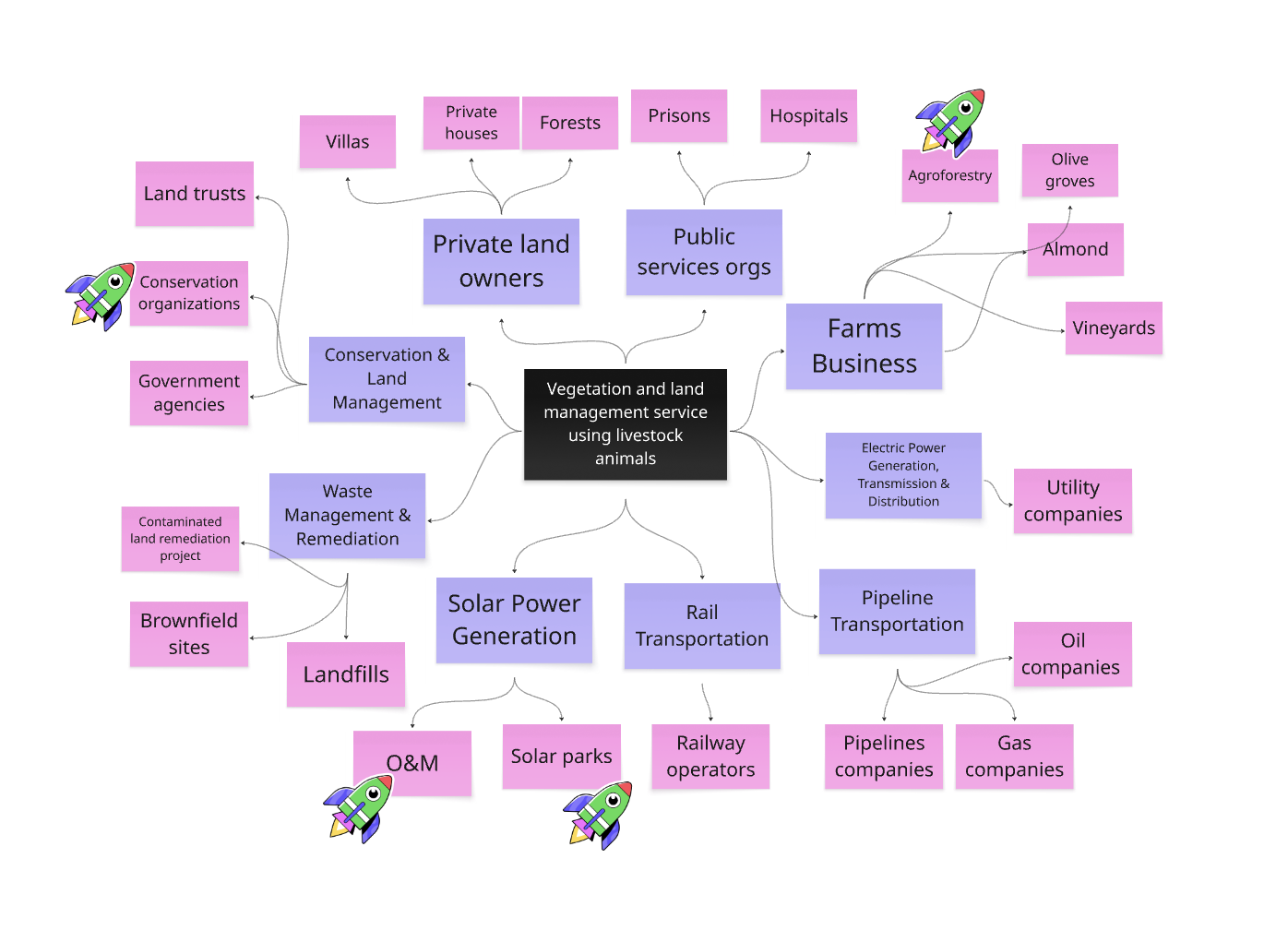
Market segmentation with the chosen segments
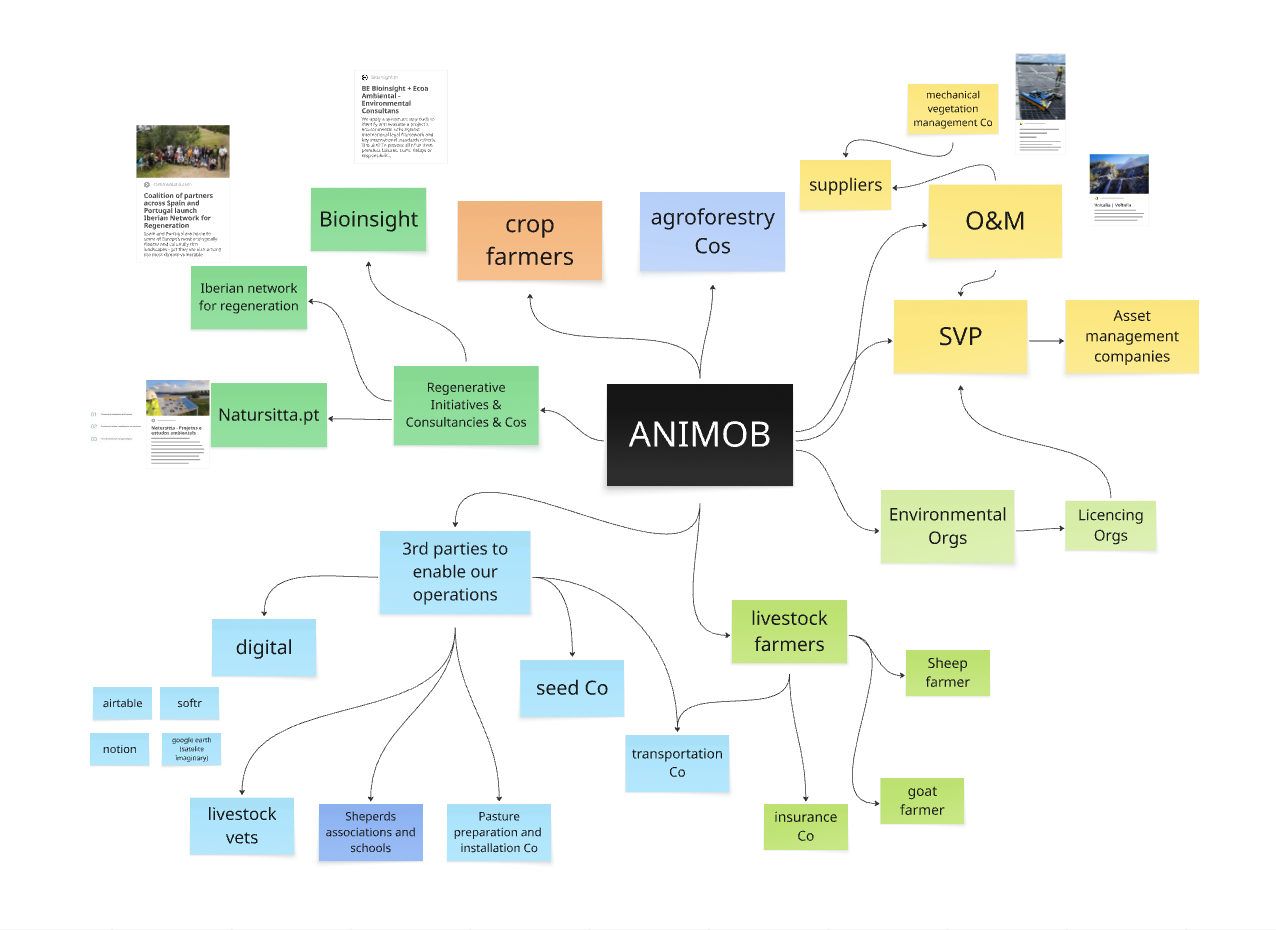
Stakeholder map
I started with these challenges:
- The founders didn't have a clear picture what ANIMOB is: a service or a platform. The company is providing a land management service, but in presentations it was "A matchmaking platform for landowners and livestock farmers".
- It was hard to explain what was the problem that ANIMOB solves as it is two layered: a) tackles climate change and social problems b) address client struggles on their lands.
- Value proposition for landowners and livestock farmers was vague and focused on high level environmental and social impact.
- Gain trust and show what design strategy can do for business as the founders were not familiar with design strategy role.
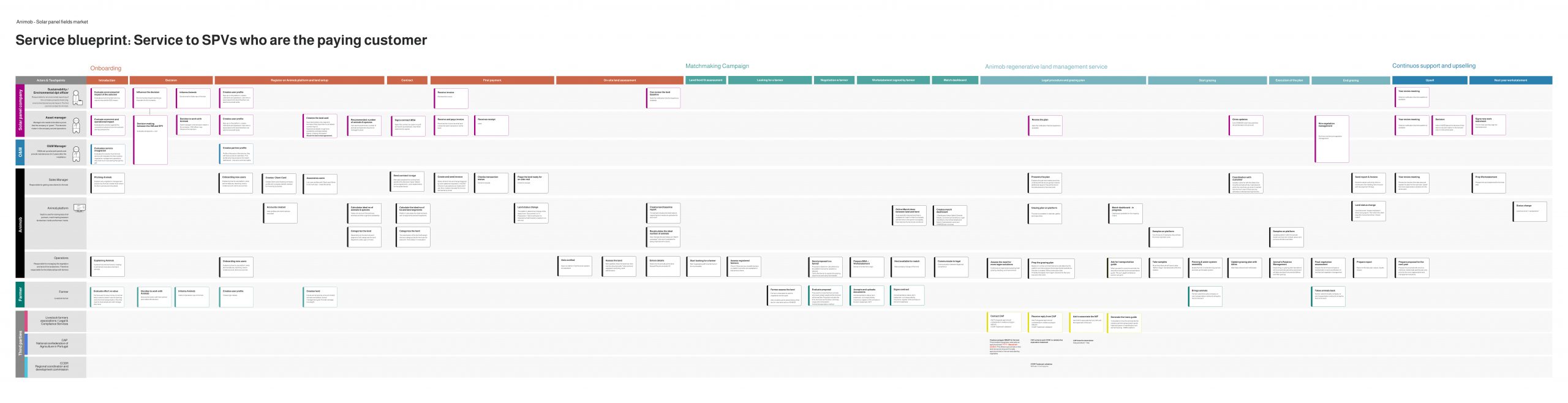
Service blueprint showed that there are many unanswered questions
Asking questions for productive discussions
I have started by organising discussions about ANIMOB core business, what is the differentiation, why clients do not say "take my money".
My goal was to uncover the client pains that are big enough that they would pay to get it solved by us.
Theory of Change helped to define ANIMOB vision and mission. While the "Supermario analogy" helped during the value proposition discussions to explain the value of having a clear value proposition.
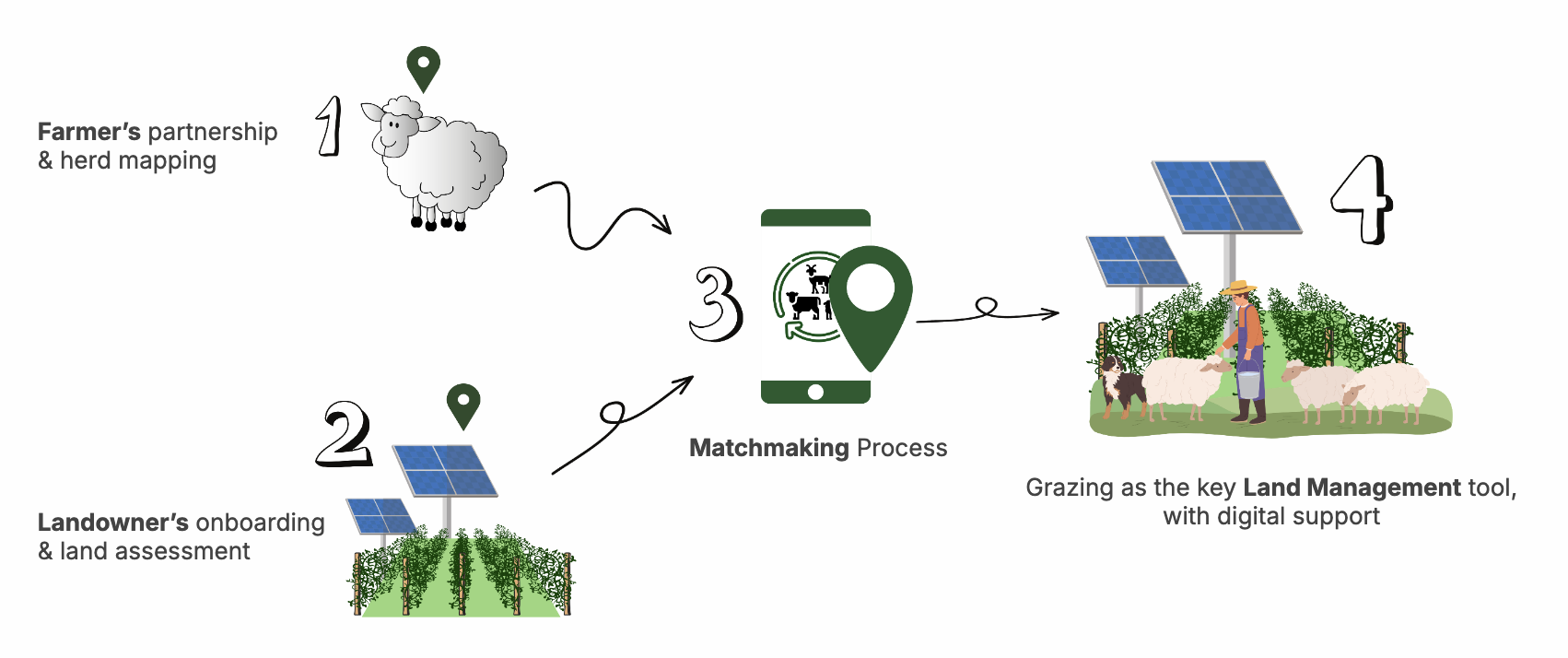
Previous ANIMOB service visualisation focusing primarily on Matchmaking
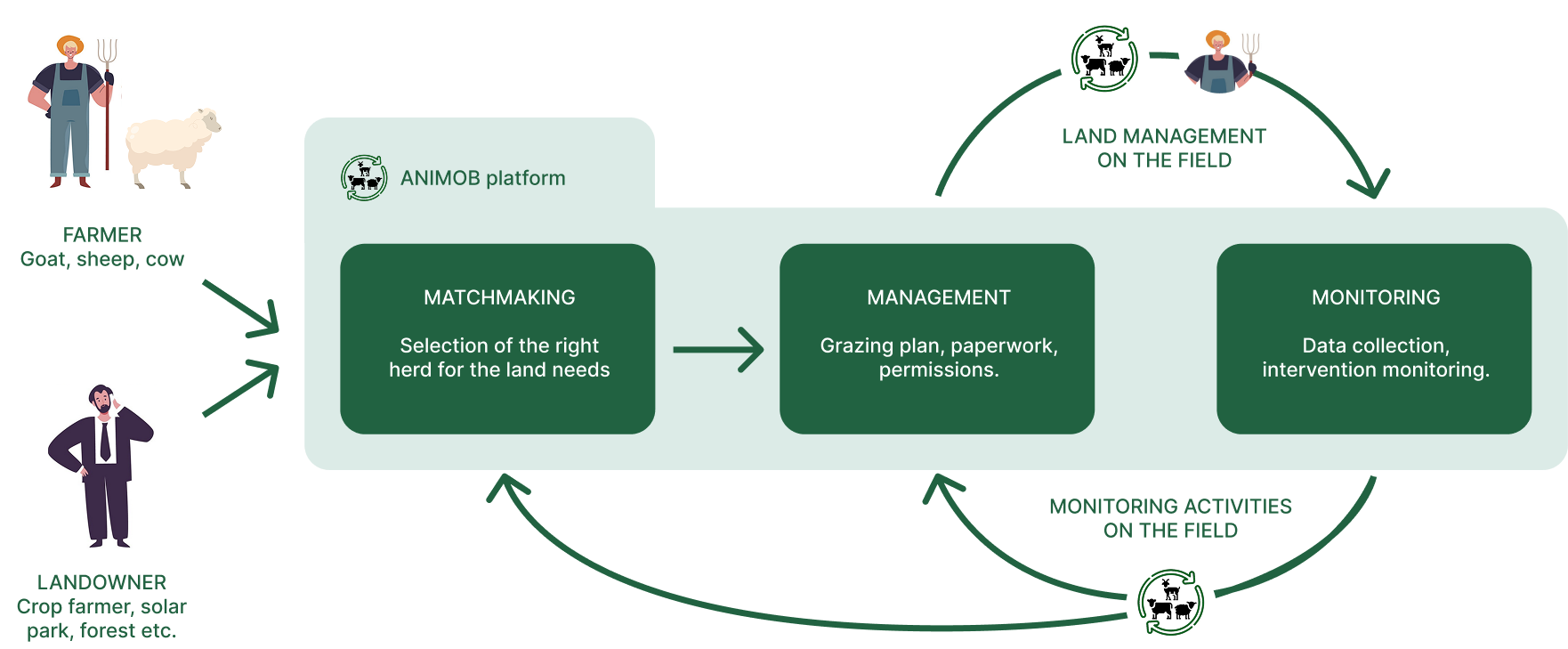
Redesigned ANIMOB service visualisation reflecting 3 aspects of the service
Explaining complex ideas
ANIMOB tackles complex problems like forest fires, soil erosion, biodiversity loss and rural abandonment. The company aims to change the mindset about land management and livestock farmer's role in a society.
The challenge was to find the way to explain the complexity on a slide in a clear way. Visual diagrams and illustrations helped to achieve just that.
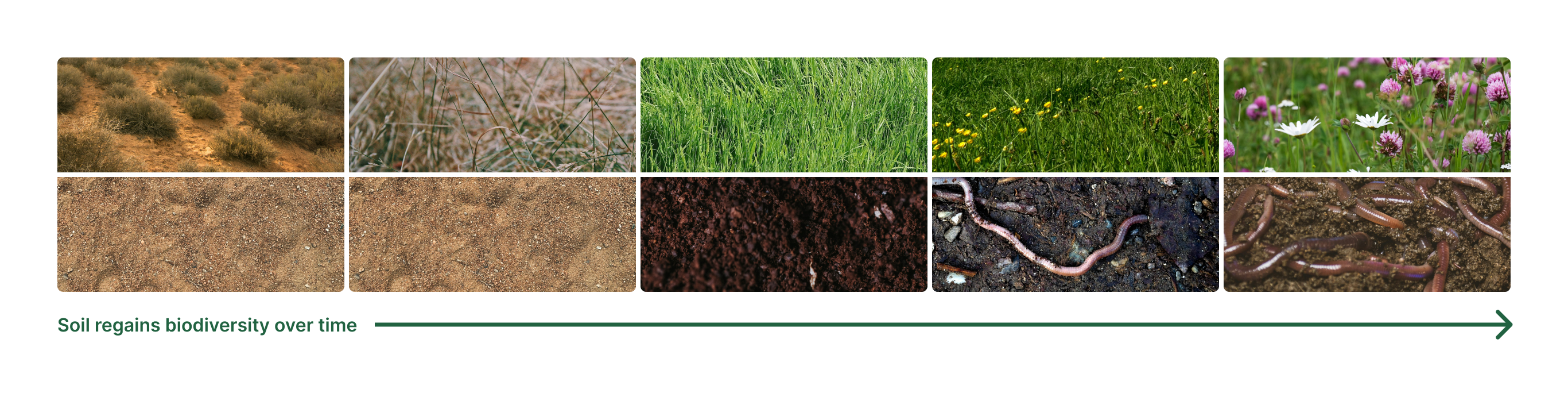
Showing how a pasture is changing when soil health is improving
Verbalising what ANIMOB is
When company vision, mission or a one sentence company description is too vague, people interpret it differently and endless discussion arise.
From my experience, the best is to run the discussions, listen in and look for details that are unique to the company. Then organise a workshop when the team members need to read throug the writen visions, vote on the ones they like and through facilitated discussion glue parts from different versions to a completely new one.
Then the vision feels like their own, this improves adoption of the change.
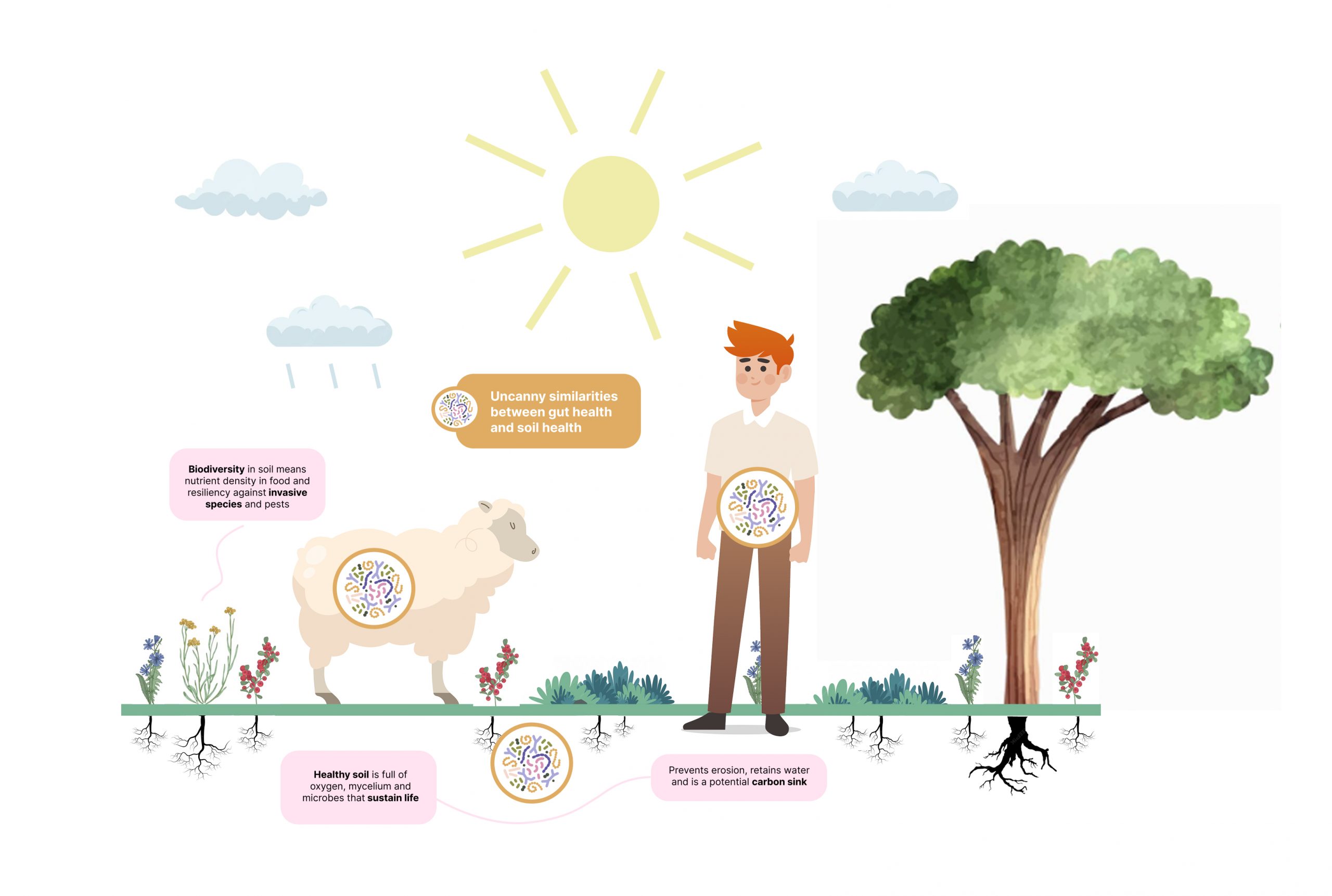
Explanation how soil health is connected to animal and people health
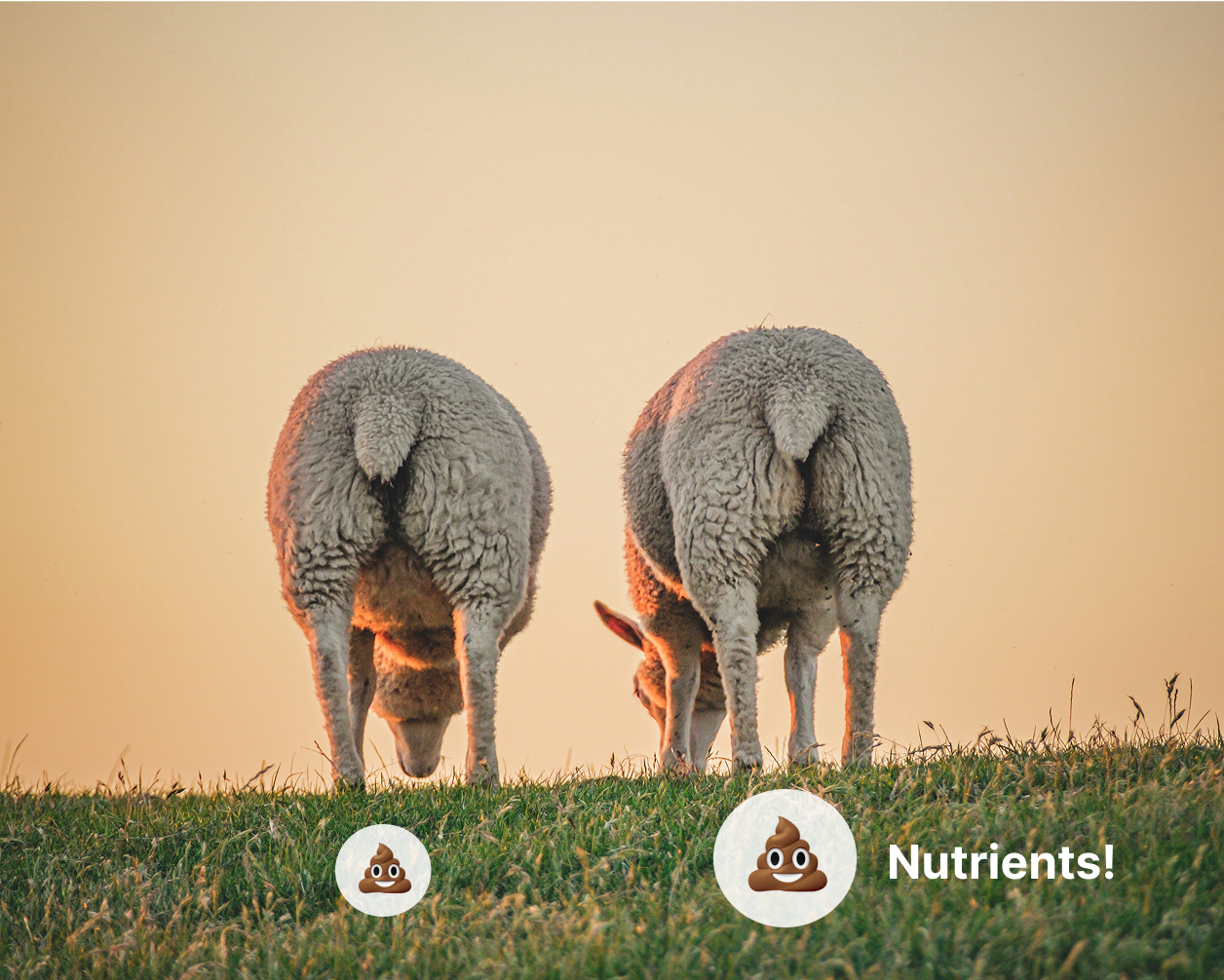
Visualising the main roles of animals on the land
The main changes
From presenting ANIMOB as a Matchmaking/Dating app for landowners and livestock farmers we shifted to realisation that we are providing a land management service first.
We reached the agreement that the platform is an enabling tool that will evolve into a SAAS solution over time.
We defined out vision, mission, USP and the value that we bring to our clients and partners (landowners and livestock farmers).
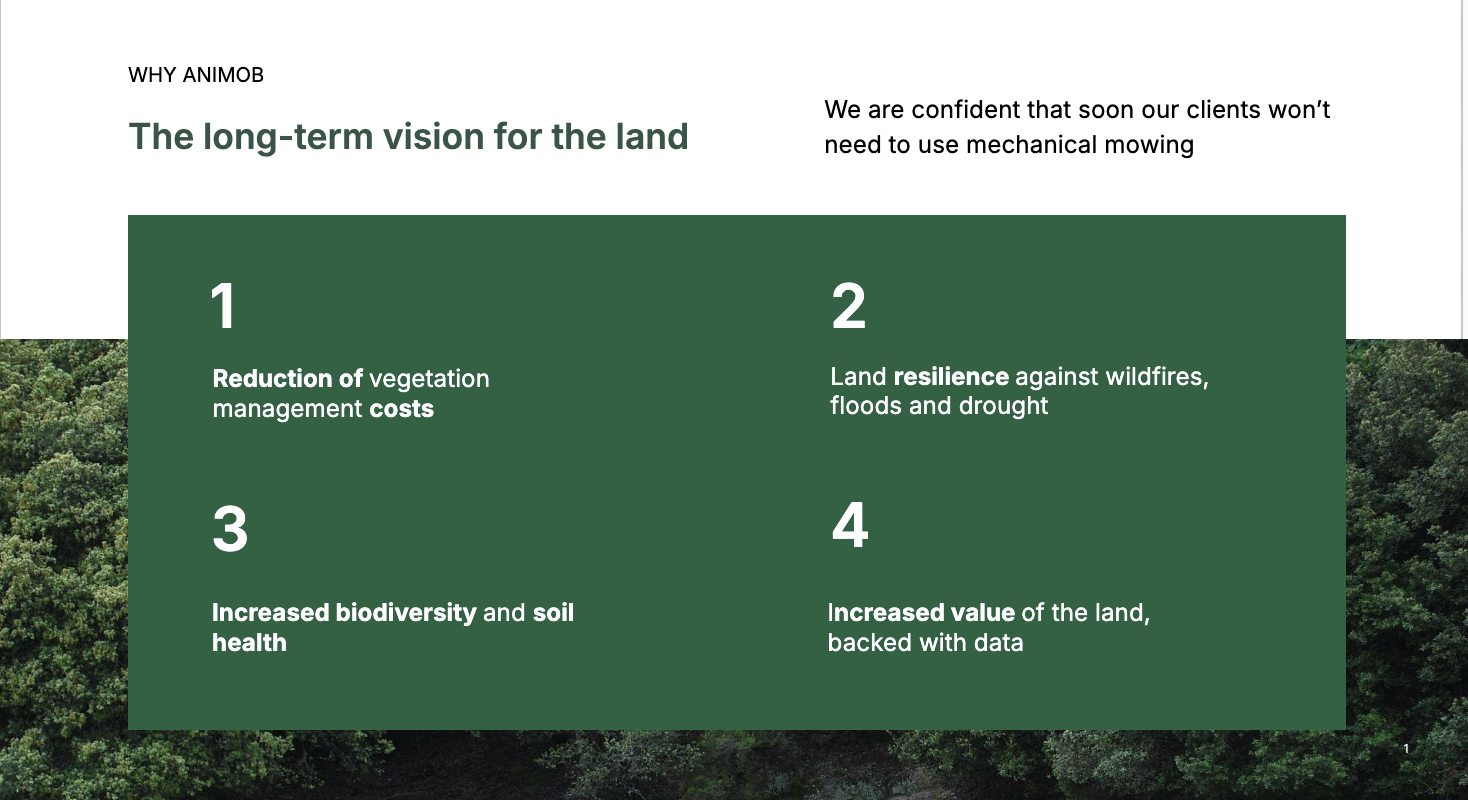
The main 4 things that landowners truly care about
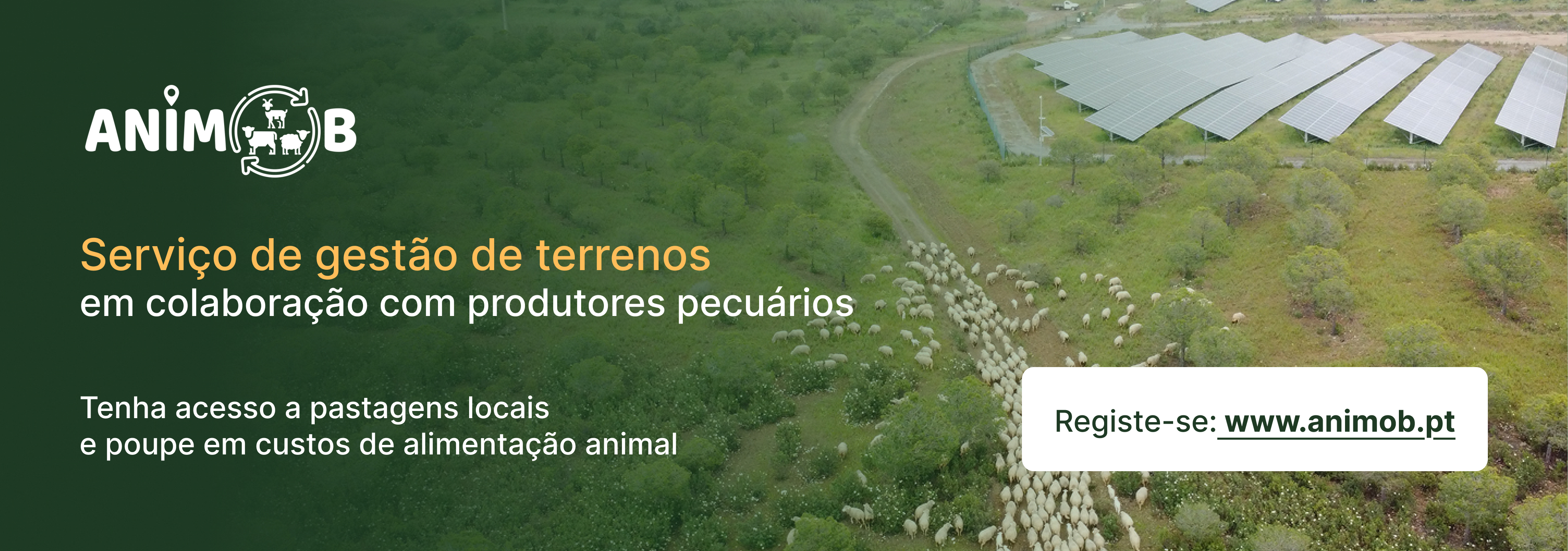
Ad design for a farmer magazine in Portugal
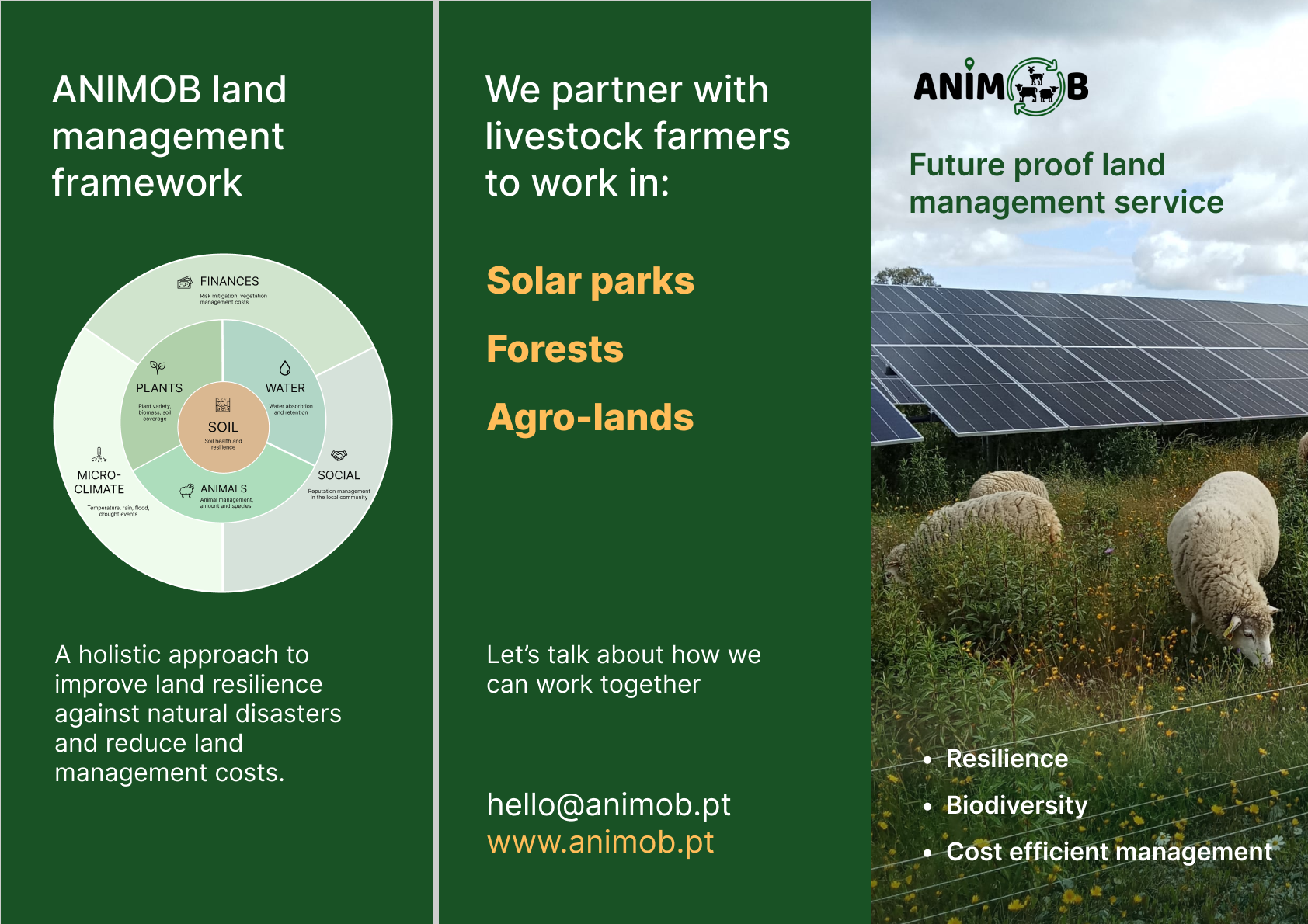
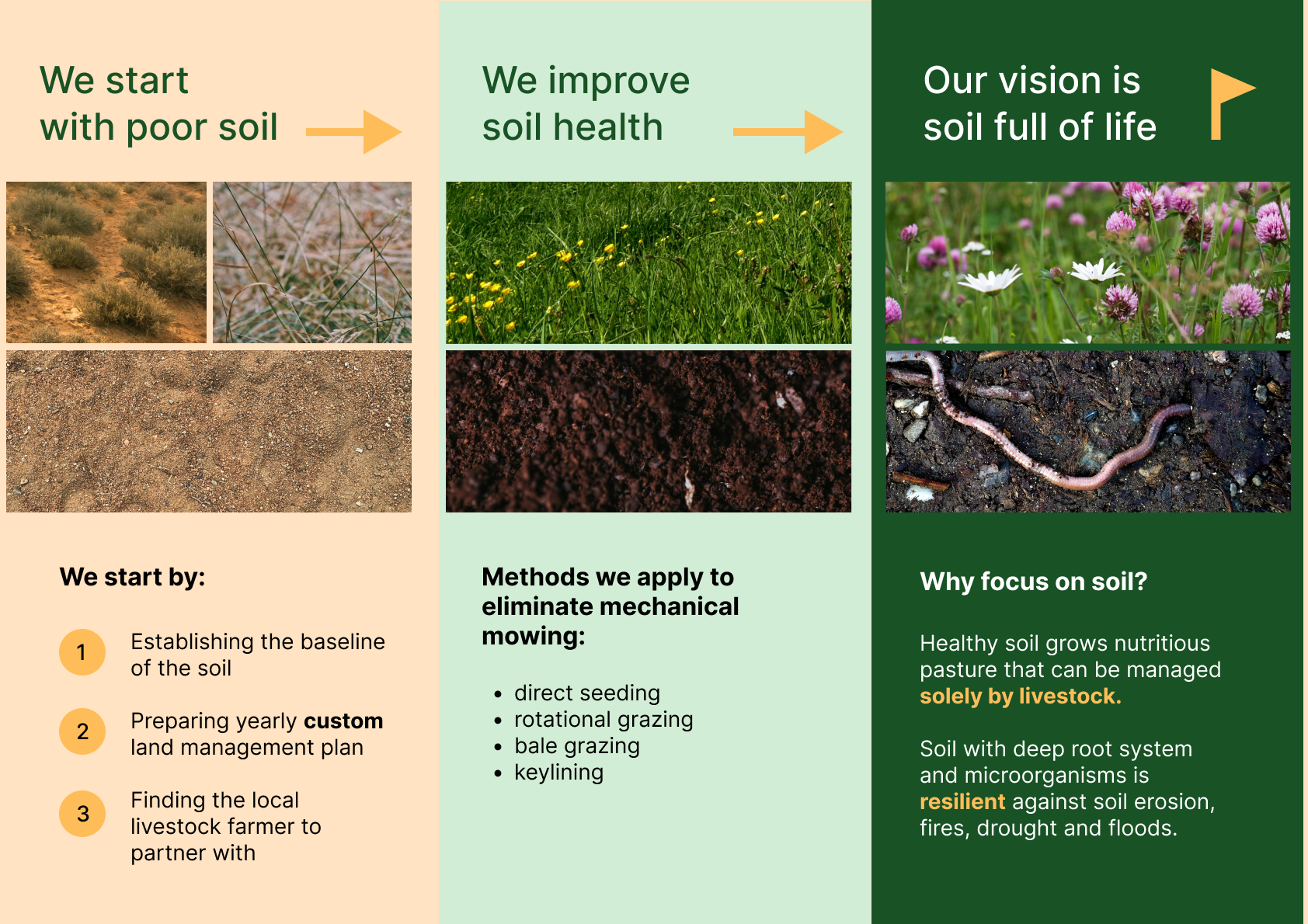
Brochure for the conference
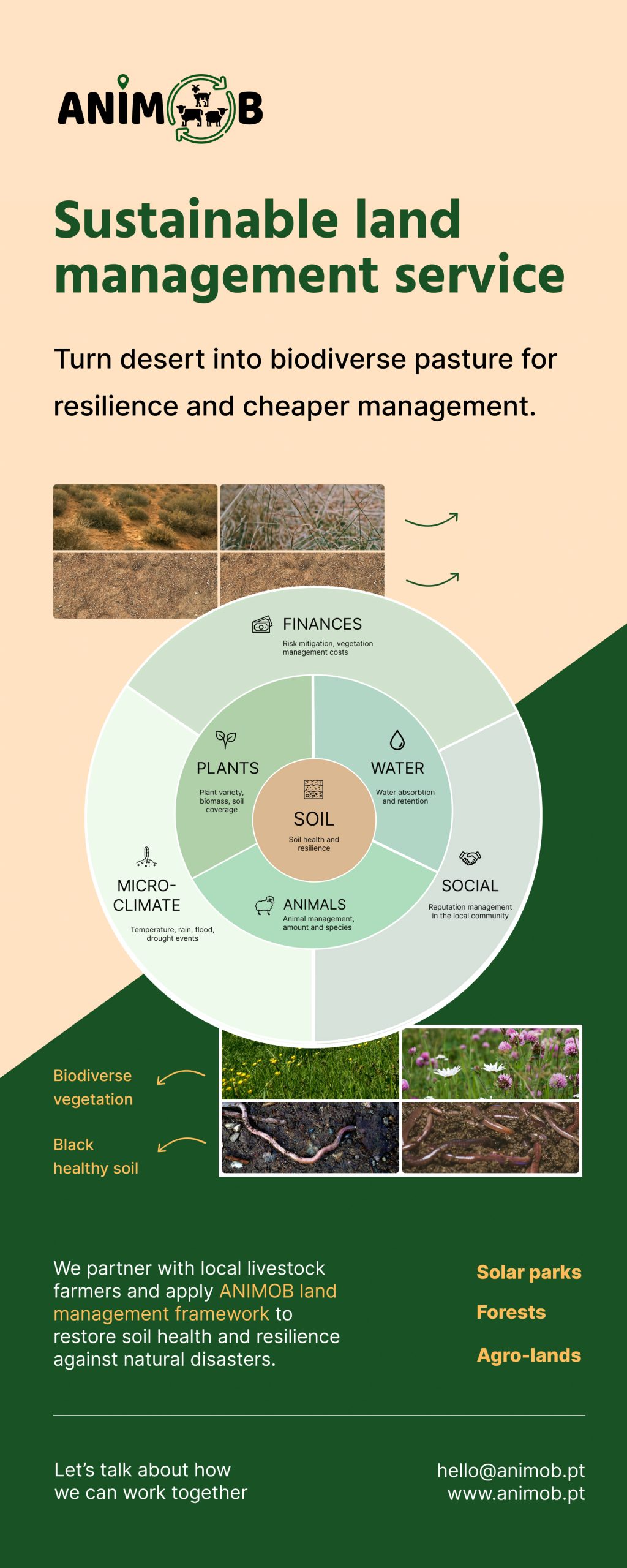
Rollup banner
Translating strategy into sales materials
I created the company pitch for EIT Food TeamUp competition and won a 3rd place prize of €15k.
I prepared sales pitches for different client segments, company brochures to send for reading, designed sales proposal, ads for magazines and redesigned the company website.
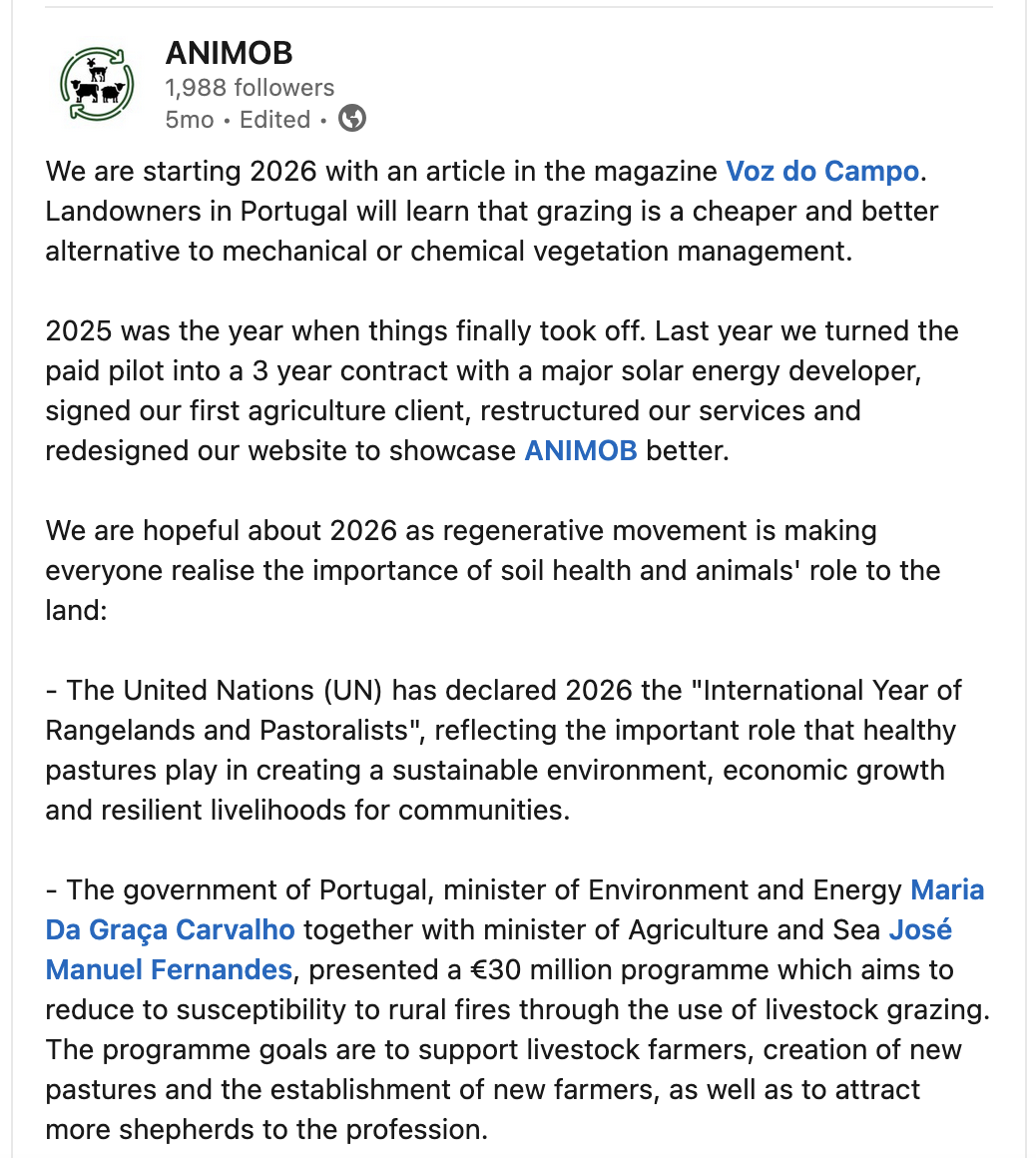
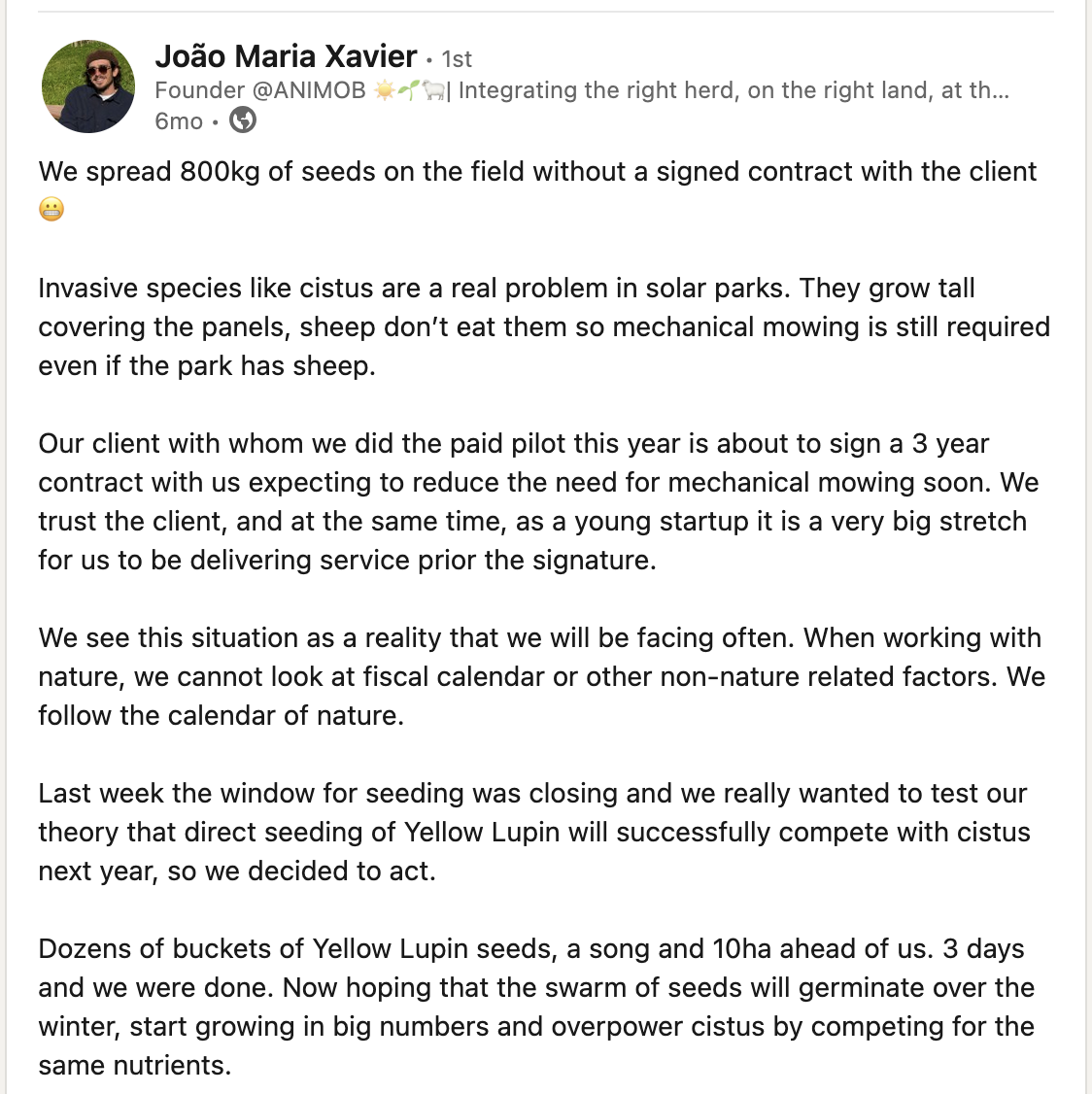
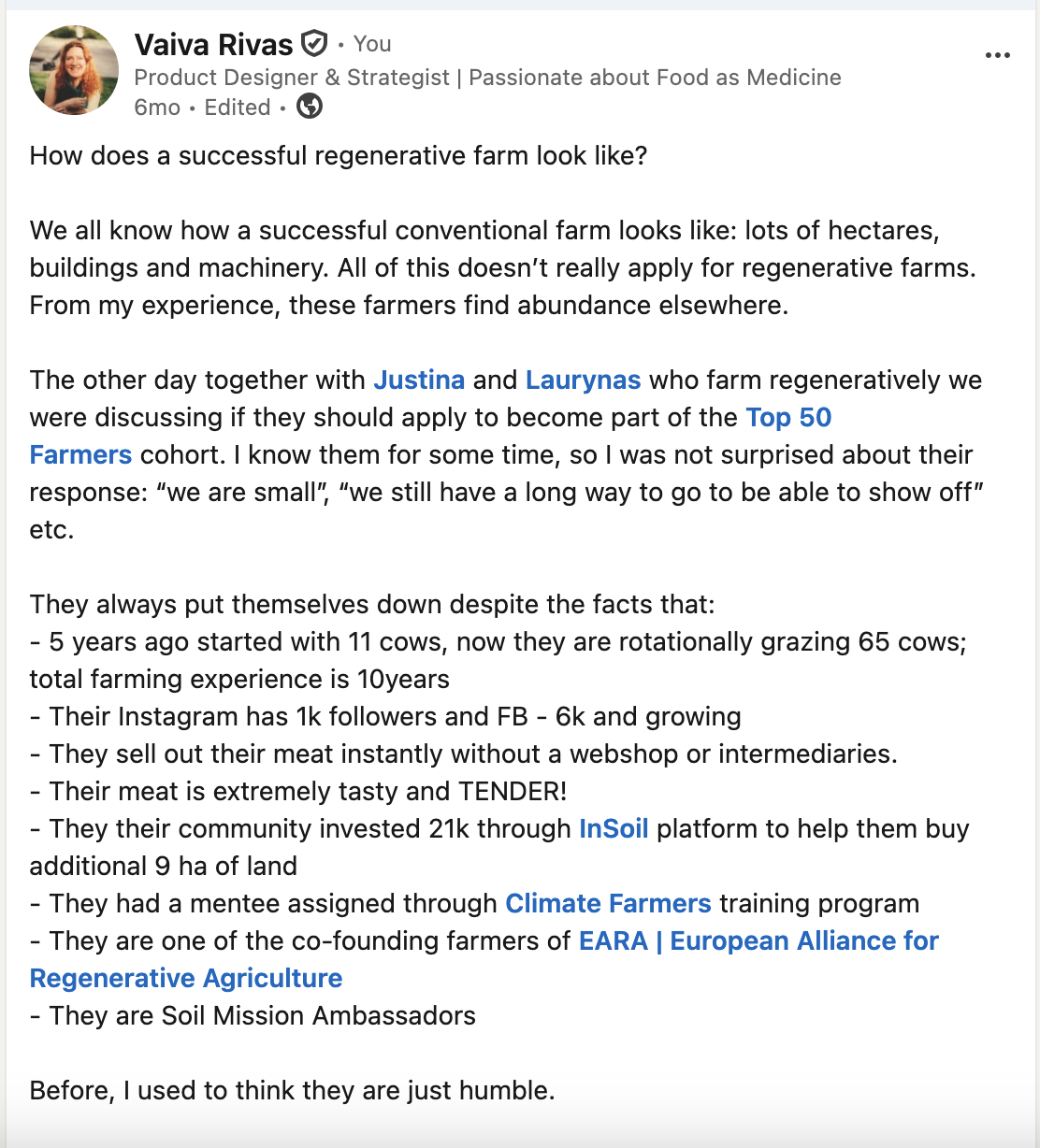
Communication strategy
I took ownership for communications. The posts written by me grew Linkedin followers, attracted invitations to speak at conferences and to join accelerator programmes.
At the time we thought that the best would be to post from João's or my accounts, but sometimes tested the traction of posts posted on ANIMOB.
Part 2
Website redesign
Existing website audit
Reviewed the existing website and discussed with the team what works, what doesn't and why. We have agreed on the changes that need to be done including the information architecture of the website.
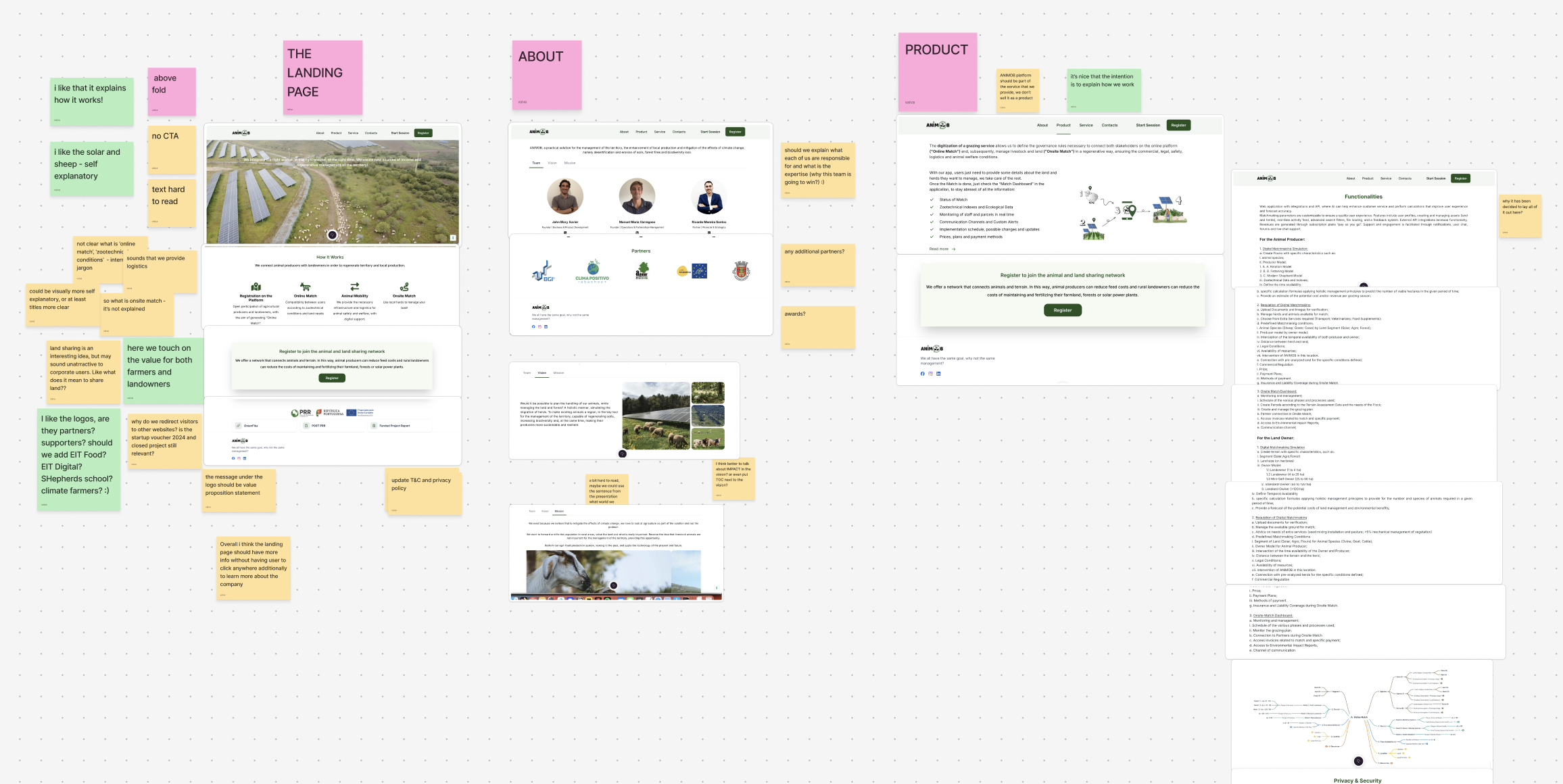
Website audit and notes from the discussion with the team about required changes
Challenge 1
Get clients excited about service value that takes years to achieve
I positioned th long-term results of the service as a Unique Selling Point. Long-term vision over short-sighted, reactive results offered by competition.
I listed the long term results as well as immediate benefits that the client will get once they start working with us.
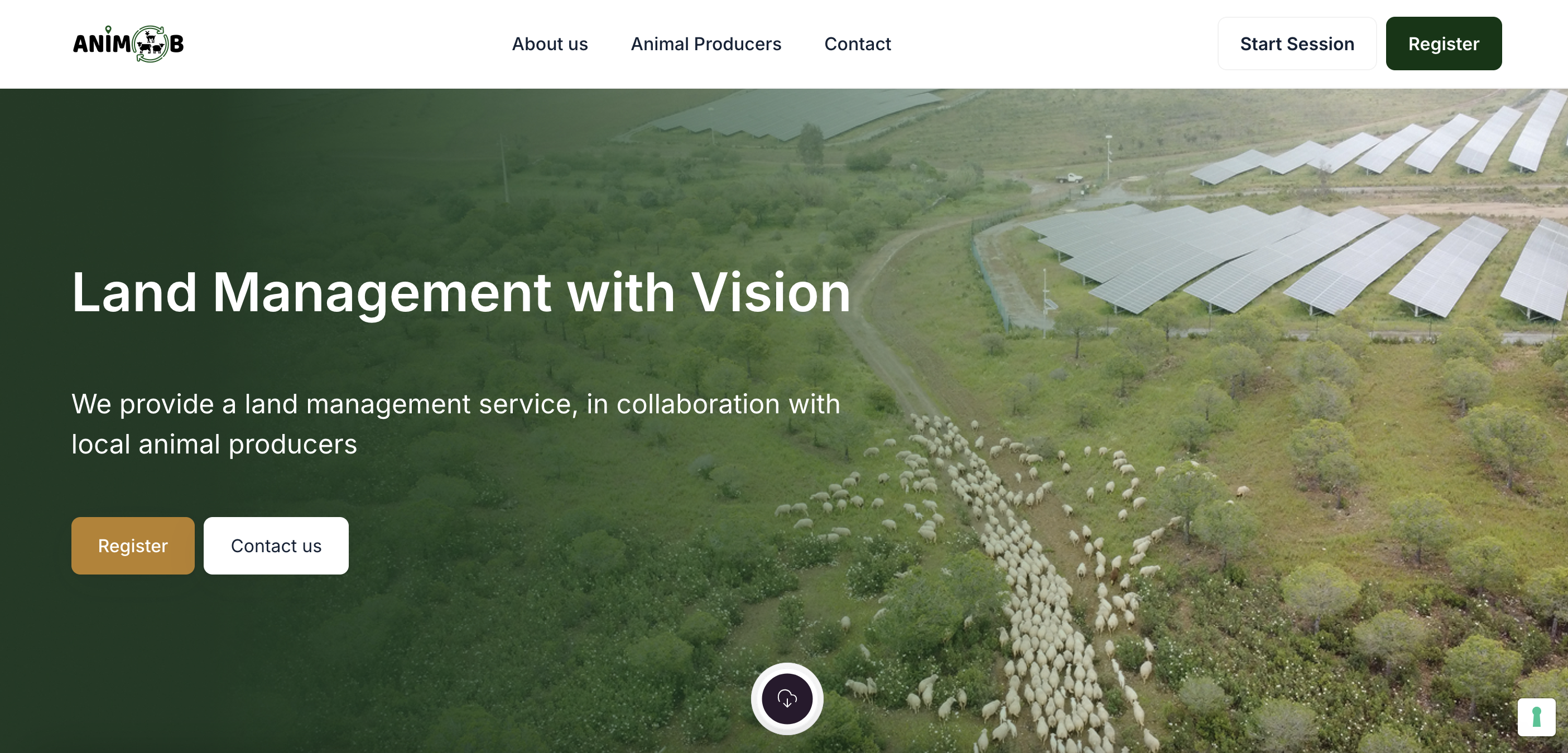
We convey that we work on clients' land with the long term vision in mind
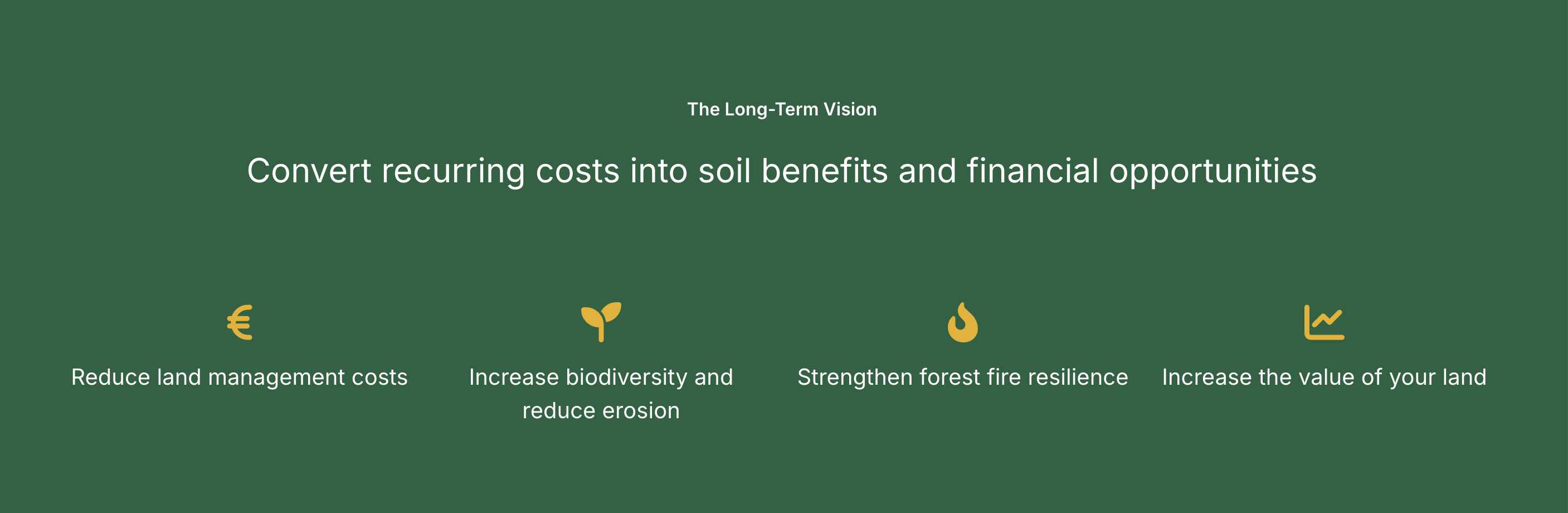
Besides cost reduction we provide ecosystem services that are valuable to clients
Challenge 2
Explain why our service cost - we are not just putting sheep on the land
The fact that we can reduce or eliminate the need for expensive mechanical mowing appeals to landowners.
I designed the dynamic way to show and explain different methods and technology that we use to achieve the results that competitors or local farmer cannot.
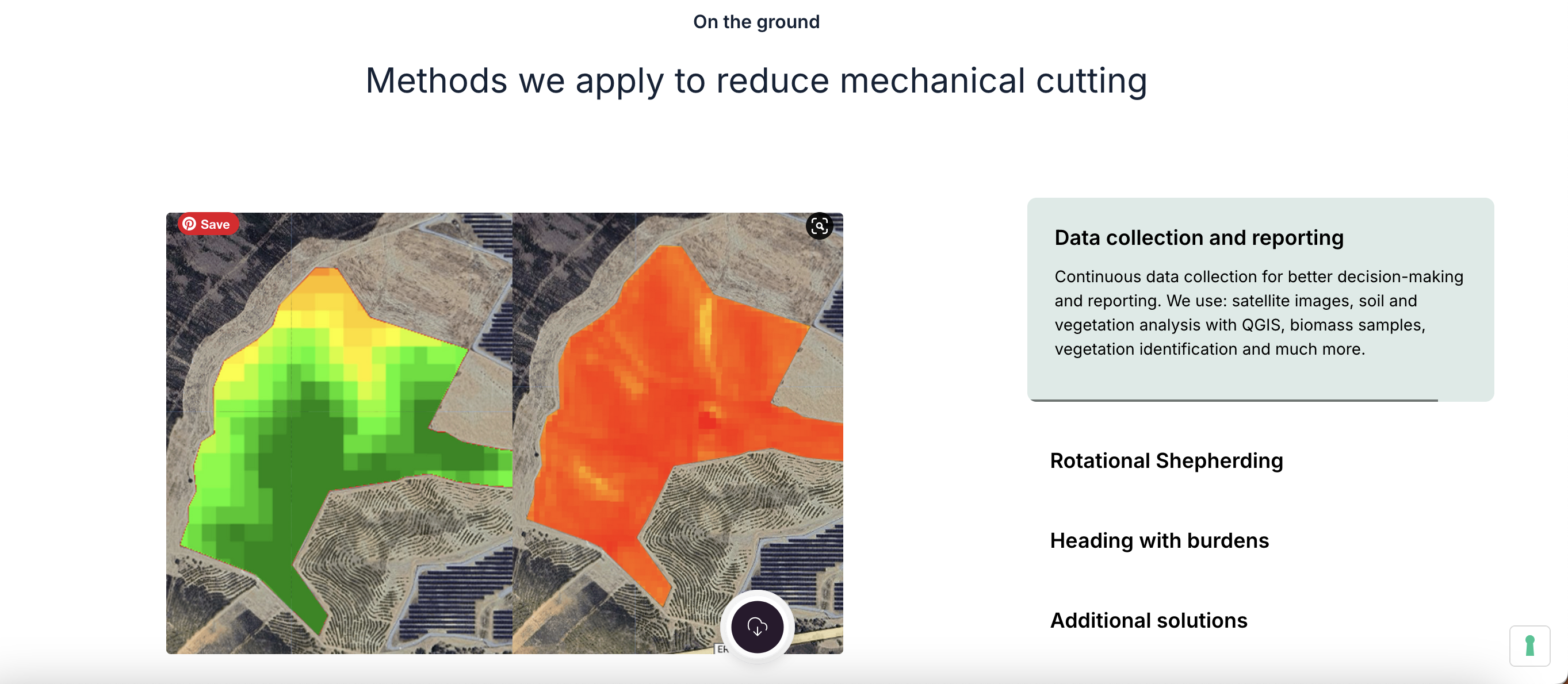
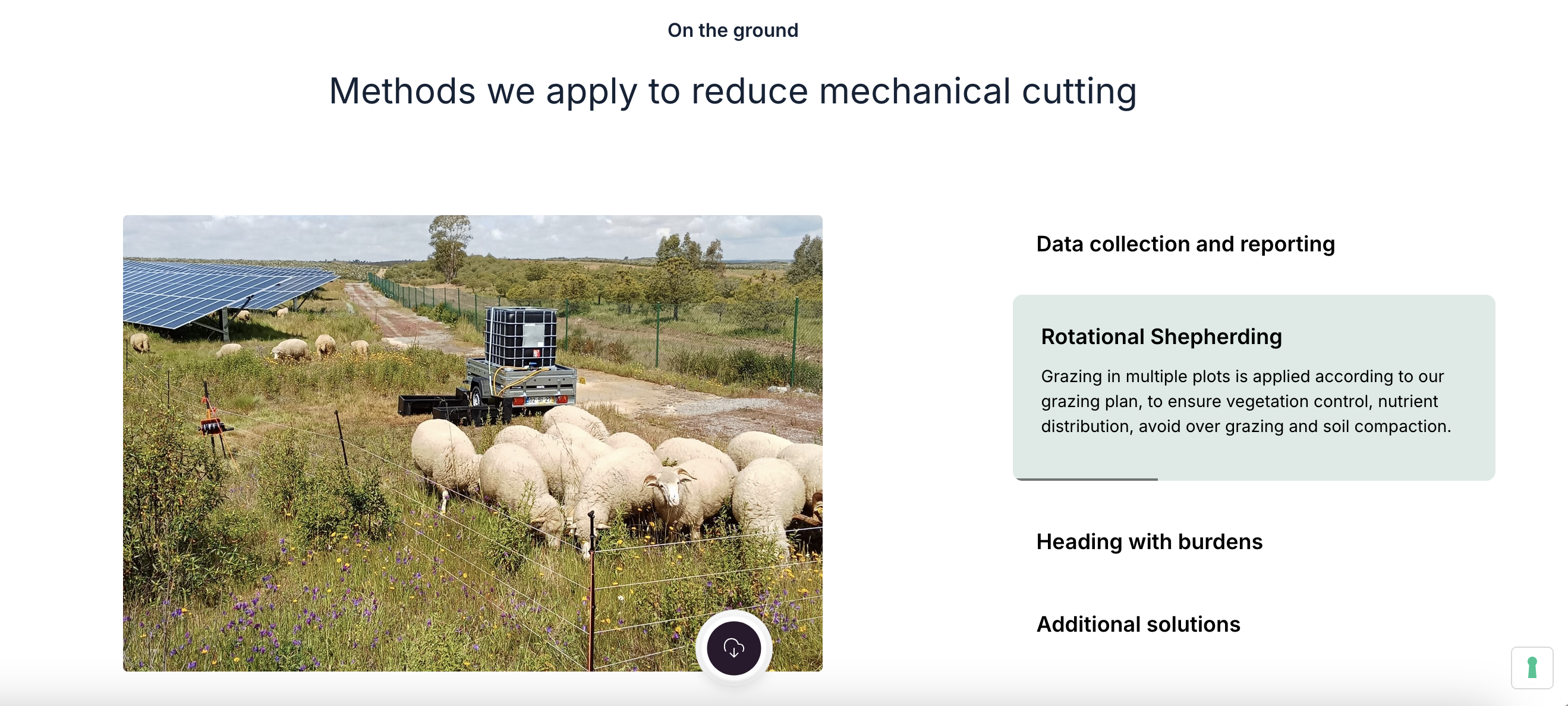
Showing different methods and technology that we use to achieve long-term results
Challenge 3
Explain to Livestock farmers how we work and why they should partner with us
Livestock farmers are normally from older generation who understand information that is written clearly. Therefore I kept the Livestock farmer page quite simple, with more explanatory text.
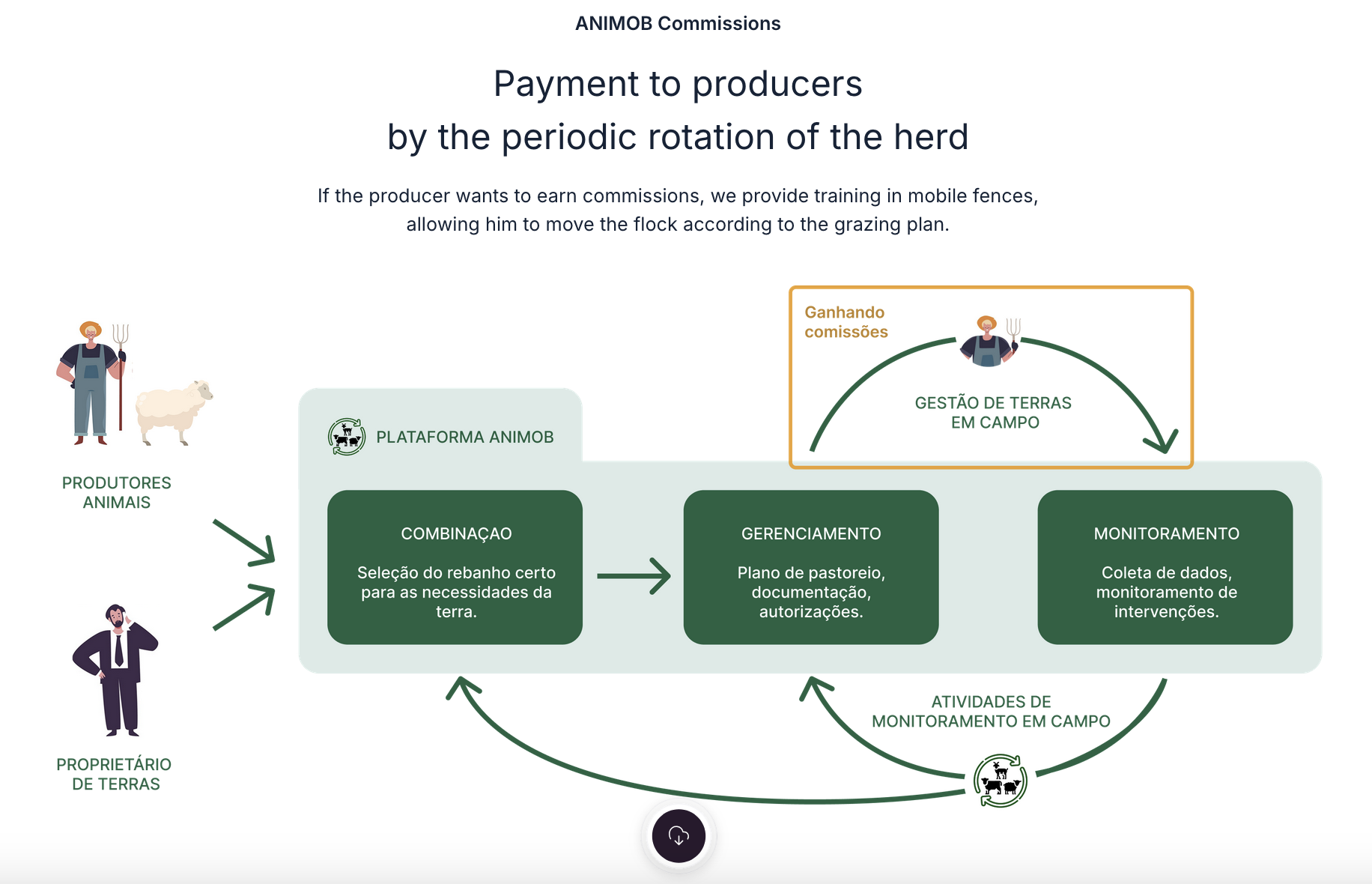
Also adjusted the How We Work illustration to show for what part of the work livestock farmers can earn commission if they follow grazing plans.
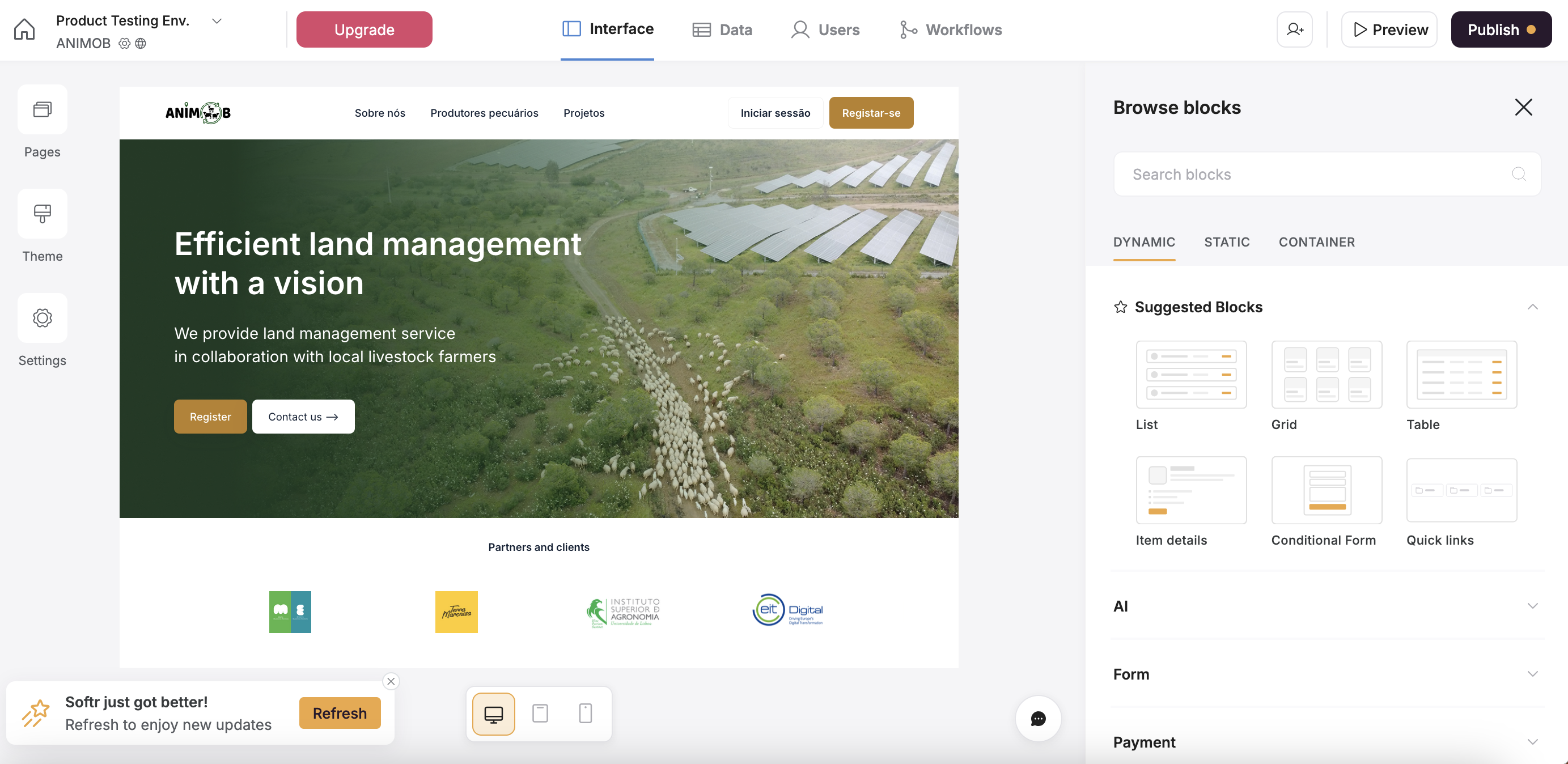
I designed and implemented the changes using the no-code tool Softr
Part 3
Platform redesign
Coming soon
Team operations
Team setup
1 Strategist (me)
1 Zootechnical Engineer (CEO)
1 Agronomist (CTO)
Methods and practises
Data analysis
User journey mapping
Behavioural archetypes
UX/UI design
Service design
Strategy
Workshop design and facilitation
Tools
Figma
Miro
Softr
Notion